
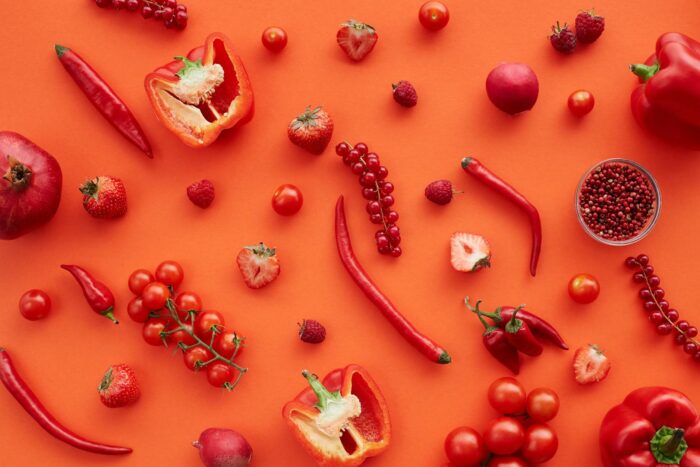
When someone mentions red food, apples, strawberries and tomatoes come to mind. In reality, the red color in plants hides far more than a pretty garnish: vitamins, minerals, dietary fiber and phytochemicals all come in the same package. Red food is a simple way to make your daily menu healthier without complicated diets.
Below we look at what the color red actually means and how to bring it into your kitchen without sacrificing any flavor.
Red foods and phytochemicals
Phytochemicals aren’t classic nutrients: a lack of them doesn’t cause disease the way a vitamin deficiency does. They are, however, associated with a lower risk of cancer, heart disease, high blood pressure and diabetes. Each subgroup does its own job, which is why variety counts for more than a large amount of one miracle plant.
Red onion is a good source of allicin, which works against viruses and fungal infections. Onion is easy to add to almost any savory dish, from soup to bread. Anthocyanins give berries and fruits their red and light-blue shades, from blackcurrants to pomegranates, and support the body during periods of stress.
Lycopene has been talked about the most lately. It is found in tomatoes and watermelon and is associated with a lower risk of prostate cancer. An interesting nuance: lycopene becomes more active when cooked, which is good news for everyone who loves spaghetti sauce or tomatoes baked in a dish.
Phenols are another group of antioxidants, found in particularly high amounts in red grapefruit, watermelon, cherries and ordinary red apples. Also worth mentioning are red cabbage, raspberries, red bell pepper, red grapes, pomegranate and, yes, red wine in moderate amounts.
Dietary fiber and red foods
The recommended amount of dietary fiber is 2040 grams a day. That sounds like little, but if your menu consists mainly of white bread and fast food, you won’t get even half of it. The simplest solution is to put more fruit, vegetables and whole grain products on the table.
Dietary fiber is divided into soluble and insoluble types. The soluble kind helps lower blood cholesterol levels and balance blood sugar, while the insoluble kind keeps the gut moving. You need both.
Among red foods, red beans are the clear leader, with about 7 g of dietary fiber per half cup. Apples, raspberries and strawberries provide pectin, which creates a feeling of fullness and aids digestion. Every red fruit, vegetable or legume pulls your daily dietary fiber intake toward the recommended range.
Vitamins and minerals
Red plants are also a decent source of vitamins and minerals. Rhubarb provides a surprising amount of calcium, about 52 mg per half cup. Raspberries and red beans are also good sources of calcium. For people who can’t tolerate dairy, that is worth its weight in gold.
Vitamin C is abundant in the red kitchen. One cup of strawberries already covers nearly 80 mg, and grapefruit, tomato and red bell pepper also do their part. Red beans bring along iron, which is otherwise quite hard to get from plant foods. Beta-carotene, the precursor of vitamin A, is in turn plentiful in tomatoes.
Long-term deficiency of vitamins and minerals can end quite unpleasantly. Chronic vitamin C deficiency leads to scurvy, and iron deficiency to anemia. Antioxidant vitamins (C, E and carotenoids) reduce the risk of heart disease and cancer when levels are low.
One practical tip: if you cook red beans together with tomato, part of the iron is released into the sauce and your body can absorb it better. A simple soup, a big win.
How much red food per day?
The general recommendation is 59 servings of fruit and vegetables a day. If at least three of those servings are red (for example, tomato on a breakfast sandwich, a handful of strawberries at lunch and a serving of red beans in the evening), the foundation is strong. You fill in the rest with the other colors of the palette: green, orange, purple.
In Estonia, the seasons play a role. In summer and early autumn you can get local raspberries, strawberries and tomatoes straight from the market. In winter, many people rely on frozen berries and red cabbage, which works too, as nutrient loss is minimal.
FAQ about red food
Does cooking ruin the nutrients?
Some vitamin C is lost during boiling, but lycopene and beta-carotene actually become easier to absorb when cooked. Balance comes when your menu includes both raw and cooked red foods.
Does red wine count as healthy red food?
A moderate amount of red wine contains polyphenols, but the overall risk of alcohol shouldn’t be ignored. There’s no point in turning to wine for the sake of your health: berries and grapes provide the same antioxidants without the alcohol.
Are frozen berries as good as fresh ones?
Yes. Berries are usually frozen at peak ripeness and nutrient loss is small. In winter they are often an even better choice than fresh produce from a greenhouse.
A wide selection of vitamin supplements HERE
translated from M&F magazine
Author: Mo
Source: WHO – physical activity.
Come and work out! ArtGym




