Sauna and training: what your body needs to know
A sauna seems simple to many people: you climb onto the bench, sweat, and come out feeling lighter. In reality, heat is a serious strain on the body, especially if you had a hard workout earlier that day or have a long race ahead.
This article will help you understand when a sauna supports how you feel and when it can get in the way of recovery. A sensible sauna visit doesn’t have to disappear, but its timing and temperature matter.
Why does a sauna affect the body so strongly?
Most people believe that a sauna visit is beneficial and makes you tougher. The same idea was once put forward by “Arter”, a supplement of Postimees. The piece featured, for example, Minister of Economic Affairs Meelis Atonen, a big sauna fan, who skips the sauna two or three days a year. These are the days followed by a serious test of yourself, such as a marathon or another prolonged physical effort.
“That is the time for gathering energy,” said Atonen. If you have to push harder than usual for two hours in a competition, it makes no sense to wear the body out with heat beforehand. Atko-Meeme Viru, professor emeritus at the University of Tartu and a sports physiologist, considered this the right decision.
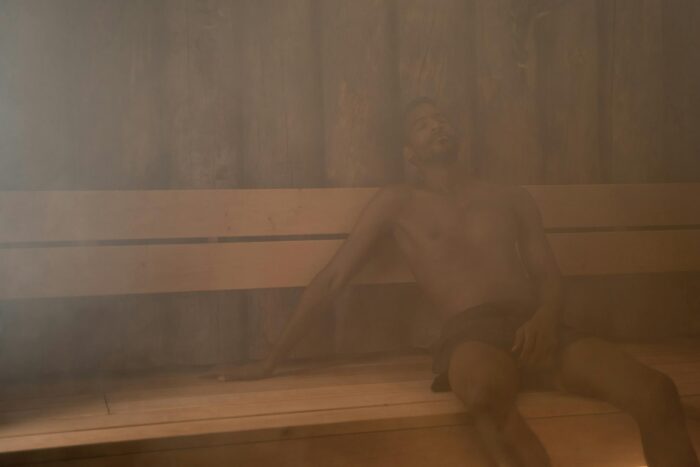
The simple truth: a wet sauna is not rest for the body while you are sitting on the bench. Hot air makes the blood vessels dilate. The heart has to work harder so that the lungs, brain and other vital organs get enough blood. That is why a sauna can feel good, yet it is still a strain.
Viru described the sauna as a biological stressor. This means the body responds to heat with quite large changes, including hormonal ones. The feeling of relaxation often comes after the sauna, not during it. It feels good to sense that the tension has passed and the body is calming down.
Sauna, sweating and fluid balance
Sweating isn’t just about losing water. Along with sweat, the body also loses sodium and potassium salts. These mineral salts have to stay at a fairly precise level in the body, because nerves, muscles and the heart depend on them.
So what actually happens? After a sauna, the body wants to restore its water reserves. That is why drinks seem especially good, whether it’s water, mineral water or, for some people, beer. But if you drink a lot and don’t get salts back, the concentration of mineral salts can drop even further.
This is where hormonal mechanisms come into play, helping to restore the level of mineral salts. Viru warned that such effects can also bring unfavorable changes, such as a rise in blood pressure. Viru also mentioned the formation of calcification foci and the fact that fluid retention can develop in the abdominal cavity, which in popular speech is sometimes linked to the so-called beer belly.
The solution isn’t complicated: don’t drink liters upon liters mindlessly after the sauna. You do need fluid, but it is worth pairing it with salty food. The original advice was simple and homespun: even a pickle after the sauna helps keep the salt balance in check.
How does a sauna fit in after training?
After a hard workout, the heart has already done its work. If you add the heat of the sauna room right on top, it faces a second strain. Professor Helmut Laane, who studied the effects of the sauna, held that you should go into the sauna only two hours after a strong effort.
That doesn’t mean the sauna should be off limits after every gym workout. The difference is whether you did calm movement or genuinely heavy training load. If your heart rate stays elevated for a long time, your head is buzzing or your body feels dry, rushing onto the bench isn’t a smart decision.
In other countries that have no sauna tradition, athletes have also used a hot tub for recovery. The original advice was to do it so that the heart area stays out of the water. The idea is the same: you can use heat, but there’s no point in giving the heart too much extra work.
A sauna visit can still do the muscles good. Strong exertion can end in a muscle cramp, which is linked to a disturbance in mineral salt metabolism and changes in the microstructures of muscle fibers. Some fibers in the muscle don’t relax properly. In that case, heat can help the muscles relax.
Sauna in practice: temperature, weight and cold water
For weight loss, a wet sauna is a poor tool. Yes, for a short time the scale may show, say, two kilos less. That comes mainly from fluid loss, not from fat loss. Thirst forces you to drink back what you lost. If you avoid drinking, the blood becomes thicker and the heart has to work harder again.
Sauna types differ too. Infrared, Turkish and other saunas act differently, but all of them put strain on the body. In a steam bath and a Turkish sauna, high humidity hinders sweat evaporation and heat release. That way the risk of overheating can arrive faster. In a smoke sauna, a certain amount of carbon monoxide may linger in the air.
You don’t need to play the hero with temperature. In a dry sauna, a sensible limit is 90, at most a hundred degrees. In steam baths and wet saunas, no more than 75-80 degrees. There is no point at 130 degrees, because the body gains nothing from it. You simply raise the risk.
An ice hole or snow can have a hardening effect on the blood vessels. Vessels that dilated in the heat narrow in the cold, which could be called a kind of vascular gymnastics. But a sense of moderation applies here too. Three dips in the ice hole would be enough. The same idea can be replaced by rolling in the snow, if conditions allow.
FAQ: sauna and training
Does a sauna help you recover faster after a workout?
Sometimes it helps the muscles relax, but right after a strong effort a sauna can put too much extra strain on the heart. It is safer to wait at least two hours.
Can you really lose weight in a sauna?
Not from fat. Your weight may drop briefly, for example by two kilos, but that is mainly fluid. When the fluid comes back, so does the weight.
What sauna temperature is sensible?
In a dry sauna, 90 degrees is usually enough, at most a hundred degrees. In steam baths and wet saunas, it is best to keep it to no more than 75-80 degrees.
Author: joker– not a translation, but quite interesting
Source: WHO – physical activity.
Come and work out! ArtGym