
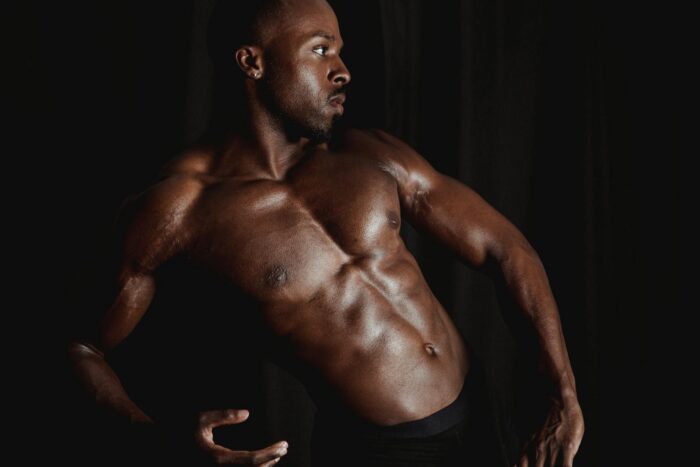
Shawn Ray: back on stage without steroids
Shawn Ray was a name that made bodybuilding fans sit up and take notice again in 2004. He wasn’t simply promising a modest comeback: he wanted to show that you could pursue peak condition without playing the steroid game.
The original story appeared amid fierce debate about size, health and fair competition in professional bodybuilding. Ray’s message was simple: winning on stage should take more than the heaviest body. A complete physique, symmetry and good judgment should count too.
Why Shawn Ray’s comeback struck a chord
Flex painted a vivid picture at the time: a man getting out of his rocking chair, brushing off the cobwebs, grabbing his posing trunks and fueling up on protein shakes. It was a stylistic flourish, of course, but the point was clear. Ray was coming back.
Ray said the decision came down to timing. The autumn shows, including the GNC Show, looked like an opportunity. If he qualified, Mr.Olympia could also be in his sights. In his own words, it was “now or never.”
Although he hadn’t been actively posing since the 2001 Mr.Olympia, he hadn’t disappeared from bodybuilding. He had placed fourth there. Since then, he had appeared in campaigns, athlete showcases and presentations in various countries. In other words, Ray hadn’t gone into hiding. He just wasn’t on stage.
Shawn Ray and the classic bodybuilding physique
Ray’s strength had never been mass alone. His physique was described as compact, symmetrical and worthy of a champion. He was an IFBB professional bodybuilder who competed in 13 Mr.Olympia contests and finished in the top 5 twelve times. That’s no coincidence. Reaching that level takes years of work, precision and stage awareness.
This is where the story gets interesting. Ray was around 170 cm tall and weighed about 97 kg. He said plainly that he couldn’t compete with 125 kg “monsters” who looked as though they were about to explode. Frankly, that still sounds familiar today. The same question keeps coming up in bodybuilding: is bigger always better?
For Ray, the answer leaned toward no. His concern wasn’t just aesthetics. He saw the sport moving in a direction where the conversation increasingly revolved around drugs, Synthol and bodies that no longer looked healthy. He called it a situation getting out of control.
What was beginning to change in bodybuilding
The backdrop at the time was troubling. Flex Fheeler, a close friend of Ray’s, had undergone a kidney transplant the previous year. Don Long had undergone the same procedure the year before that. Tom Prince developed serious kidney problems, followed by other illnesses that eventually forced him to step away.
These stories were more than backstage rumors. They made fans and athletes question the price of pursuing the top. When a sport starts taking a toll on an athlete’s health, something is wrong.
Still, Ray saw signs that the tide might be turning. Dexter Jackson, weighing 103 kg, won the GNC Show in 2003 and the Ironman Pro Invitational in 2004. The 2003 USA champion Richard Jones also fitted into that picture. Ray felt that his type of physique might be gaining favor again.
What Shawn Ray wanted to prove
Ray didn’t talk about his comeback purely in terms of competitive ambition. He said he intended to prove that he could reclaim his place clean. That was the heart of his comeback: showing that bodybuilding could be approached more healthily and with a clearer head.
The simple truth is that bodybuilding needs muscle, but muscle alone doesn’t make an athlete great. Conditioning, proportions, confidence on stage and a long career matter too. In that sense, Ray was old school. He loved the sport, competed for over two decades and promoted it along the way, often to audiences who didn’t always understand bodybuilding.
This story was about more than one man’s return. It was a comment on an entire sport. Can professional bodybuilding value symmetry as much as size? Can health go hand in hand with peak condition? Those questions remain today.
FAQ
Did Shawn Ray step away from bodybuilding after the 2001 Mr.Olympia?
From the stage, yes, but not from the sport. He continued to appear in campaigns, athlete showcases and activities promoting bodybuilding in various countries.
Why did Shawn Ray talk about returning without steroids?
He wanted to show that you could pursue world-class bodybuilding with a healthier mindset. His criticism focused particularly on the obsession with size and the excessive emphasis on drugs.
Why did Dexter Jackson’s example matter to Ray?
Weighing 103 kg, Dexter Jackson won the GNC Show in 2003 and the Ironman Pro Invitational in 2004. That signaled to Ray that a more compact, aesthetic physique could succeed on stage again.
Author: joker
Source: WHO – physical activity.
Come work out! ArtGym




