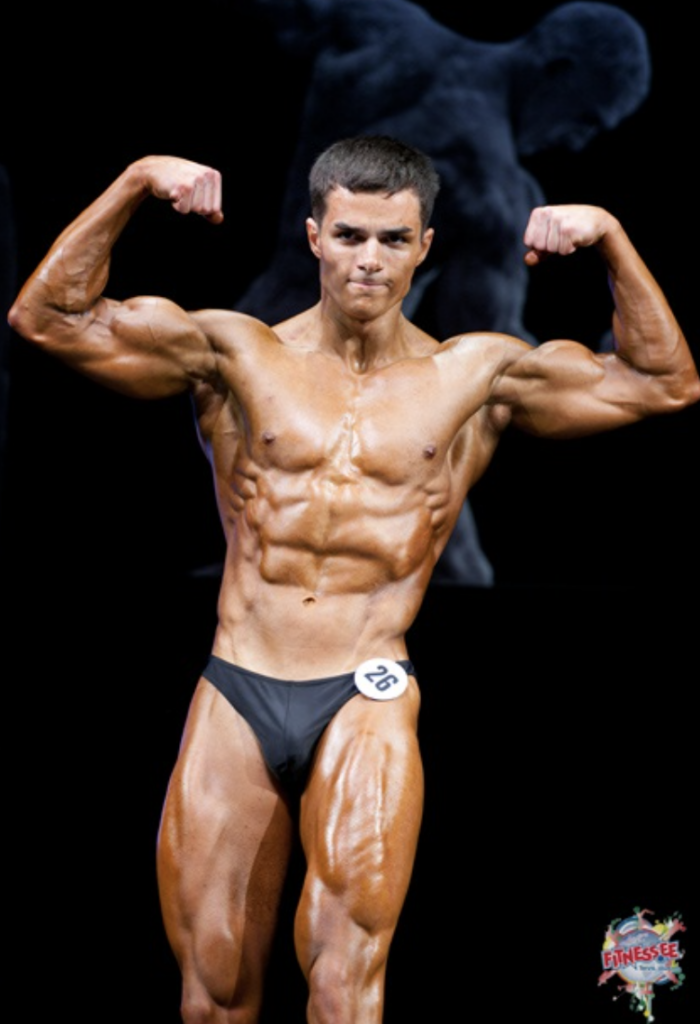
Siim Savisaar is an athlete who doesn’t sugarcoat much: getting in shape takes work, repetition and better choices. Here is his story of competing, dieting around family life, training and the advice he would give his younger self.
Siim Savisaar and the road to competition
Age: 30
Height: 178cm
Weight: 79
His move into competition didn’t begin with a grand declaration or a lengthy plan. Siim Savisaar says plainly that it simply seemed like an interesting outlet beyond the monotony of training in the gym. It’s a familiar feeling for many. You go to the gym, finish your sets and get stronger, but at some point you start wondering: what next?
Competition gives training a structure. You’re no longer working out just to tick off another week. You have a date, a stage and a standard to measure yourself against. That can be tough, but it also makes things very clear. Siim’s greatest achievement is a silver medal at the 2018 European Championships. Good intentions alone won’t get you a result like that. Behind it are long stretches of having to do even the boring things well.
Before the gym and contest preparation, he had a background in other sports. He swam for several years during his school days and has since taken up disc golf and squash as hobbies. That says quite a lot. Body awareness, endurance and the ability to push yourself don’t develop only under a barbell. Sometimes they come from the pool or the court.
Why Siim Savisaar still wants to improve
Motivation is often discussed in overly grand terms. As though it were always there, just waiting for someone to pick it up. Siim’s answer is more measured: he has already come a fairly long way, and continuing feels logical. Knowing that there is still room to improve gives him an extra push.
It’s a practical outlook. Once you’ve been training for years, you can no longer ride the wave of rapid beginner gains. You aren’t adding weight every week, and your reflection doesn’t change overnight. Motivation then has to come from somewhere else. From improving your technique, for example, taking a smarter approach to recovery or feeling less anxious about your diet.
To unwind, he would happily choose some time in the sun abroad. A massage or a spa visit also does the job. Closer to home, it’s simpler still: taking his young daughter out in her stroller makes a pleasant change from the gym. Honestly, that’s a useful reminder. When your whole life revolves around training, food and weight, your perspective tends to narrow.
Nutrition, family and getting in shape
Is it really possible to get in shape while juggling family life? Siim’s answer is yes, but not while everything else stays the same. Dieting is something you have to learn, and it’s never easy. With experience, you learn to manage yourself better and become more capable of handling things at home, too.
The main sacrifices have been a few missed events and slices of cake passed up. That sounds minor, but in everyday life, these are precisely the choices that count. A friend’s birthday, a family celebration, an evening craving for something sweet. Getting in shape doesn’t happen only in the gym. It happens in the kitchen and in your weekend plans, too.
When it comes to his everyday diet, Siim says he wants to keep things reasonable. He doesn’t scrutinize every gram, because that doesn’t feel mentally sustainable. He does, however, make sure he gets enough protein and that his carbohydrates come from reasonably good sources.
The simple truth is that most people don’t fail because they’re missing some secret trick. They fail because they can’t maintain a routine. Sensible food choices, enough protein, better carbohydrate sources and less random snacking already make a big difference.
When discussing his favorite foods, Siim doesn’t pretend that athletes live on dry chicken alone. He enjoys well-prepared paella, steaks and shashlik with a tangy vinegar marinade. For something sweet, crème brûlée and warm cinnamon buns are always welcome. It makes the conversation relatable. Being in great shape doesn’t mean food has to become a punishment.
Siim Savisaar on training and recovery
Siim describes his training simply: he tries to train often, train well and be smart about technique. That last part matters. Many people know how to push themselves, but not everyone knows how to do it in a way that benefits their body over the long term.
From time to time, he experiments with different exercises or small adjustments. He calls this plasticity. It’s a good principle: training doesn’t have to be chaotic, but it shouldn’t be set in stone either. If a movement doesn’t suit you, you find a better angle. If progress stalls, you review your tempo, technique, volume or recovery.
Otherwise, he does deadlifts or barbell presses like everyone else. That sentence neatly captures an important point. A top-level physique doesn’t always require exotic exercises. Often, it requires doing ordinary exercises better, year after year.
If he could offer advice to himself 10 years younger, the message would be brief: learn to train smarter; otherwise, keep doing what you’re doing. That’s a valuable thought for recreational exercisers, too. More isn’t always better. Better is better.
The supplements he mentions include protein, carbohydrates, vitamins and pre-workout stimulants. There is no need to mystify them. Supplements can support a plan, but they cannot replace it. If your sleep, diet and training are all over the place, no powder will save the day.
Practical tips for getting in better shape
Siim does not look up to any one particular person. When it comes to physique, he is not a fan of anyone in particular. An impressively developed body can be an inspiration, but he also points out a darker side: there is little clean sport at the top. It is a sobering perspective that helps keep expectations realistic.
Three tips for anyone who wants to get in better shape:
- Being disciplined with your diet is hard, but it pays off over time.
- Not all workouts are equal. You need to learn to push yourself properly and train intelligently.
- There is probably a coach out there who knows more than you do and whose advice would be worth seeking.
These tips are not complicated, but they are easy to underestimate. Discipline does not mean you have to be perfect every day. It means getting back on track even when one day has gone off the rails. Training intelligently does not mean taking it easy. It means your effort has a purpose.
FAQ: Siim Savisaar and getting in shape
Can you get into competition shape while raising a family?
You can, but it takes agreed expectations and good support. You will miss some events or pass up some slices of cake, but the plan becomes easier to manage with experience.
Do you need to track your food down to the gram?
Not always. Siim Savisaar emphasizes keeping things sensible: enough protein, better carbohydrate sources and an approach you can sustain mentally.
What is the most important training advice for a beginner?
Learn to push yourself, but do it intelligently. If you are unsure whether your technique or plan is working, ask a coach who can watch you move for advice.
Author:Turg.Fitness.ee
Come train! ArtGym