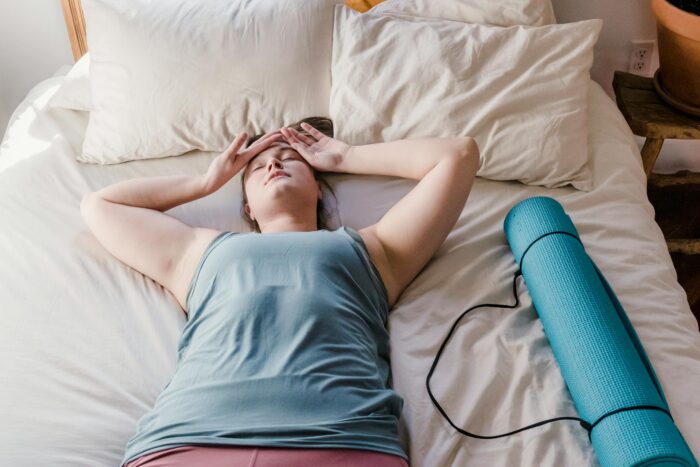
Sleep and muscle growth: the foundation of recovery
Sleep is one of the simplest recovery tools there is, yet it’s the first thing people tend to cut back on. If a workout breaks down muscle and nutrition supplies the building material, a night’s rest gives your body the time when the repair work actually happens.
The original point still stands: good sleep supports recovery from training, mood, appetite and everyday energy. Melatonin may help in some cases, but the real work comes from your sleep rhythm, light exposure and evening habits.
Why does sleep affect muscle growth?
After a hard strength workout, muscle doesn’t grow in the gym but during recovery. Training sends your body a signal: it had to cope with this training load, and next time it should be stronger. After that signal, your body needs rest, food and enough sleep.
While you sleep, your body isn’t switched off in the sense that nothing is happening. Quite the opposite. Your nervous system calms down, energy stores are replenished, muscle tissue can repair micro-tears, and your body keeps in order the rhythms that also influence appetite and mood. When sleep is constantly too short, it usually shows up well before your strength numbers drop: concentration is worse, sugar cravings grow and your workouts lack sharpness.
Some people claim that only 3-4 hours of sleep a day is enough for them. There may be a rare exception somewhere, but most people who train don’t belong in that group. If the goal is proper recovery, most people still need about 8 hours of rest to wake up fresh and function normally again the next day.
Sleep, melatonin and your evening rhythm
Melatonin is a hormone produced by an endocrine gland in the brain. Put simply, it helps your body work out when it’s time to wind down and fall asleep. It’s part of your daily rhythm, not just a matter of pills.
Very practical things can disrupt melatonin production: an overly intense workout late in the evening, a bedroom that’s too bright, alcohol and some medications, such as ibuprofen and aspirin. When your natural melatonin rhythm gets thrown off, it can affect your mood, appetite and general sensitivity. Some people become irritable, others feel groggy all day.
Honestly, there’s nothing mystical about it. If you go to a very hard workout late in the evening, come home wired, scroll through a bright screen and sleep in a half-lit bedroom, your body gets several conflicting signals. Your head wants to rest, but your nervous system is still at work.
How to improve your sleep
The first step is light. Your bedroom should be as dark as possible. If streetlight shines in through the window, blackout curtains or a sleep mask will help. Your phone shouldn’t be the last thing you look at before falling asleep, because both the brightness and the content keep your brain awake.
The second step is the timing of your training. If you can choose, do your heavier strength workout during the day or earlier in the evening. Not everyone can change their work schedule freely, but even a small shift can help. Late in the evening, a calm walk, mobility work or light stretching suits many people better than maximal effort.
The third step is alcohol. Alcohol late in the evening may make it feel like you fall asleep faster, but sleep quality often suffers. Sleep becomes more fragmented and the morning can be harder, even if the number of hours slept looks sufficient on paper.
The fourth thing is the morning. It’s worth getting out of bed right after you wake up. Lingering in bed and dozing off again can leave you feeling more tired. Your body needs a clear rhythm: awake is awake, sleep is sleep.
Melatonin: when can it help?
Products that boost melatonin may help some people sleep longer and more deeply. They’ve been discussed especially for jet lag symptoms, for example after a long trip, when your body can’t immediately tell when it should sleep and when it should be awake.
The original article made an important point: melatonin has to be taken at the right time. Travelers who have used it for a couple of days before the trip may not get as good a result as those who use it on the day of departure. This doesn’t mean everyone should take melatonin. Rather, it means that timing matters.
Be cautious with regular use. If you constantly rely on outside help, it may start to interfere with your body’s own hormonal system. If a sleep problem lasts a long time, it makes sense to discuss it with your family doctor or a sleep specialist rather than simply adding a new aid every evening.
A practical checklist before bed
- Make your bedroom as dark and cool as possible.
- Avoid very intense workouts late in the evening.
- Don’t use alcohol as a way to improve your sleep.
- Put your phone aside before going to bed.
- Get out of bed after waking up; don’t linger.
- Keep your sleep schedule as consistent as possible on weekends too.
A simple truth: if your recovery is poor, the problem may not be your training program. Sometimes the program is fine and your nutrition is more or less in order, but sleep remains the weak link. In that case, the biggest gain comes not from a new exercise but from a better night.
FAQ: sleep and training
Can 3-4 hours of sleep be enough for someone who trains?
For most people, no. Some can get by on short sleep for a while, but with strength training, work and everyday stress, the body usually needs more time to recover.
Does melatonin build muscle?
Melatonin is not a muscle-growth supplement. Its role is tied to your sleep rhythm. If it helps a particular person sleep better, better sleep may support recovery indirectly.
What should I do if I wake up tired even after 8 hours of sleep?
Review your light exposure, alcohol, late workouts, screens and sleep regularity. If the tiredness persists, it’s worth seeking medical advice, because the cause may not be just the length of your sleep.
Author: Tim Scheet, translated by Aktivist
Source: Turg.Fitness.ee
Come and train! ArtGym