Small group strength training at your gym
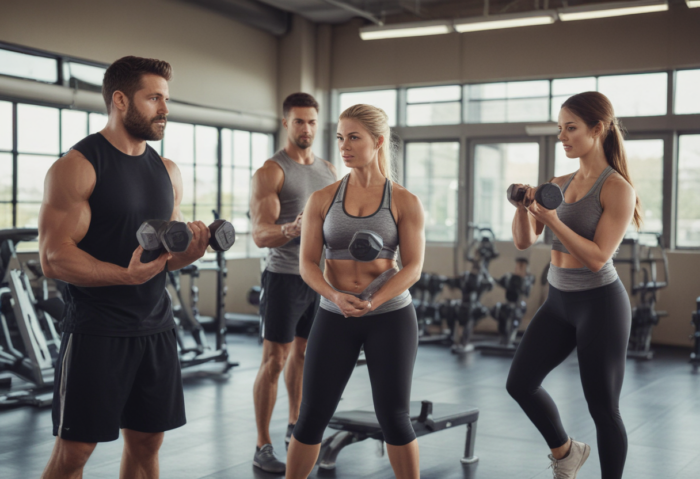
Strength training doesn’t have to mean struggling under a barbell on your own. In a small group, the trainer can keep an eye on technique, everyone trains together, and gym space is used more efficiently.
The Fitness.ee archive once featured an announcement for a Hammer Strength Clinics training course in Helsinki. Instead of keeping outdated registration details, let’s take a practical topic from it: how to combine traditional gym training, a small group and genuinely useful coaching.
Why does strength training in a group work?
It’s a familiar sight in the gym: you do a couple of sets on a machine, check your phone, move to the next machine and repeat. For some, this works. But many lose focus before the workout even gets going.
A small group gives this a simple structure. The trainer chooses the exercises, explains the tempo and makes sure the training load is neither too light nor excessive. Meanwhile, the fundamentals of gym training remain: you lift, press, pull, squat and learn to use your body better.
This works particularly well for a fitness club looking to offer something between personal training and a large group class. In smaller gyms, it can matter even more, because every square meter needs to earn its keep.
The simple truth is that when you understand what you’re doing, you stick with training longer.
How should you structure small group strength training?
A good group workout isn’t just circuit training with a couple of heavier dumbbells thrown in. Strength training needs a clear goal. Is the aim better technique, a stronger lower body, a foundation of exercises for beginners or an increased training load for more advanced participants?
Start with a simple plan
The best plan for a group leaves little room for confusion. For example, one main lower-body movement, one press, one pulling exercise and one core exercise. If every station needs a lengthy explanation, the trainer’s time goes into putting out fires instead of coaching.
For a beginner, it’s often enough to learn proper technique for squats, hip thrusts, bench presses, cable rows and plank variations. For more advanced participants, you can add weight, tempo work, pauses and more complex movements.
Keep the group truly small
If the trainer has to watch too many people at once, the point of a small group is lost. With four to eight people, it’s usually possible to correct technique, adjust the training load and answer questions. With a larger group, the session quickly becomes a standard gym class.
Frankly, you notice the difference as a client, too. When the trainer remembers that your knee caved in during a squat or your shoulder rose too high during a press last time, it builds trust. That’s where the value comes from.
Practical signs to look for
A good gym training course or group strength workout does more than sell the latest trend. It teaches trainers or participants to make better decisions. So what actually matters?
- Exercises have a clear purpose, not just a cool name.
- The trainer can demonstrate an easier and a harder variation.
- Technique is corrected immediately, not just at the end of the class.
- The training load is measurable: weight, repetitions, sets or tempo.
- The warm-up prepares you for the actual exercise rather than being a performance of its own.
In Estonia’s climate, the season also affects training. In winter, people often spend more time in the gym because it’s dark and slippery outside. In spring, they want to get in shape quickly. In summer, routines tend to fall apart. The advantage of a small group here is simple: a fixed time in your calendar helps you stay on track.
From the club’s perspective, one more thing matters. This kind of service shouldn’t be seen solely as a way to generate extra income. When group training is done well, you learn to train more independently on machines and with free weights. That improves the atmosphere throughout the gym.
FAQ: small group strength training
Is group strength training suitable for beginners?
Yes, if the group is small and the trainer gives everyone feedback. As a beginner, this is often better than trying things on your own, because mistakes are corrected sooner.
Does a small group replace personal training?
Not always. Personal training is better when your goal, injury or technique issue requires a very specific approach. A small group works well if you need guidance but also want to train with others.
What should a trainer avoid in this kind of class?
An overly complicated setup. If you spend half the time figuring out where to go and what equipment to pick up, the quality of your workout suffers. A clear plan wins.
Author: Jaanus Aus
Come and train! ArtGym