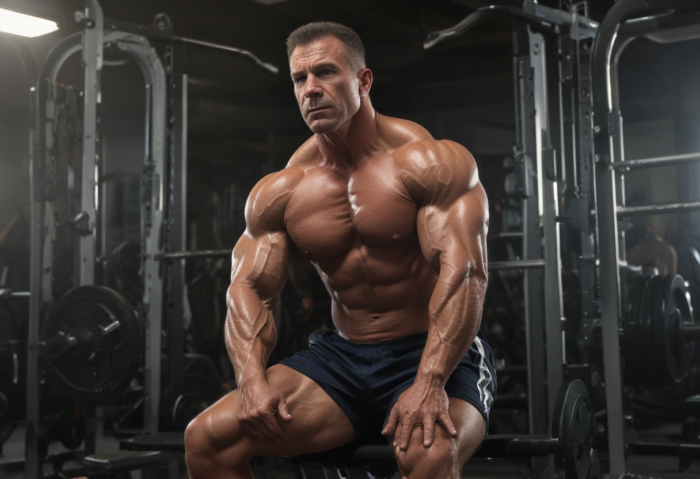
Tom Prince: when a bodybuilding career ends
Tom Prince is a painful example of how costly top-level bodybuilding can become when the body gives up before the mind does. This is not the story of one failed contest, but of a career that ended because of kidneys, pain and an honest realization.
Tom Prince and the harsh price of bodybuilding
Abridged from Flex. Mohammed Benaziza and Andreas Munzer were top IFBB bodybuilders, but their journeys ended in tragedy. Michael Francois, Don Long and Dennis Newman suffered serious health problems that cut their careers short and probably their lives too. Orville Burke fell into a coma. Flex Wheeler, one of the best bodybuilders of the era, underwent a kidney transplant.
Tom Prince belongs on that list too. Prince’s kidneys almost stopped working during the 2003 Night of Champions contest. The main culprits were painkillers and chemical additives that had been used in large amounts for years. Treatment from April to September helped as much as it could, but even afterwards the kidneys worked at only 90% capacity.
At 34, Prince spoke about it without any sugar-coating. They knew these kidneys wouldn’t carry them to 85. They would probably die sooner, at around 65. But as they put it: 65 beats 35. That line sums up the whole story fairly soberly.
What happened when Tom Prince came back?
It didn’t take long before Prince was back in the gym. After a long time away, they still weighed 300 pounds and felt almost the same in terms of strength. The difference was that training with the same weights was now much harder. Three weeks of cardio brought their body weight down from 305 pounds to 285 pounds. Strength dropped by around 15% over that time.
The hardest part was training without large amounts of ibuprofen. Now they felt every old injury. The right elbow and both knees were in hellish pain. On the way home, they iced their joints. The worst was the left shoulder. Sleeping at night was impossible; they tossed and turned and woke up screaming.
Training partner Bob Cicherillo could show up at the gym about 20 minutes later, because Prince was still warming up their shoulders. That detail says a lot. When a warm-up takes that long, the problem is no longer just conditioning or willpower.
Prince initially planned to make a comeback at Night of Champions, but later chose the Ironman Pro Invitational. There were two reasons. First, the contest was close to home, and a doctor was nearby. Second, the NOC was still several months away, and they didn’t know whether they could put up with the shoulder pain for that long.
Diet, bloodwork and the inner battle
Prince started the diet on November 23, four days before Thanksgiving. Throughout the diet and contest prep, one hard question kept running through their mind: take steroids again or not? The temptation was strong, because the old athletic identity doesn’t simply disappear.
In the end, Prince used only 20% of the amount taken while preparing for the 2001 NOC, where they placed 3rd. This time, bloodwork was done every month. Prince even said it was almost comical: there was less gear going in than women use. The conclusion was harsh but instructive. They kept muscle even on smaller amounts and realized that ever more doesn’t mean ever better.
In February, Prince began cutting carbohydrates, with calories at around 2700. Once cardio became a daily habit, blood sugar swung sharply. Energy vanished. They asked their wife Rebecca for support, because going it alone wouldn’t have been possible. During the diet, they couldn’t sleep peacefully. They would get up at half past three at night and watch TV like a zombie until Rebecca woke up.
Tom Prince, water and the final decision
FEBRUARY 19. Two days before the Ironman, Prince was massive, but still carrying water across the back. Drastically cutting water is dangerous for damaged kidneys, because the kidneys regulate the balance of water and electrolytes. Using a diuretic would have been a risk too. Prince tried the old-school way: restricting water and salt.
The day before the contest, Prince felt strong spells of weakness. They raised their carbohydrate intake to avoid fainting. It was the third time during this diet that they did the opposite of what they would normally have had to do. Honestly, the whole preparation was one big unknown: how does the body react from day to day?
FEBRUARY 20. The day before the contest, their weight was 276 pounds, clothed. It was their heaviest weight yet. Walking back to the hotel from the press conference, their lungs began to rattle. That meant the lungs were starting to swell. Fluid in the lungs showed that the kidneys were no longer regulating water the way they should.
Rebecca comforted Prince through most of the night. Prince knelt on the floor and leaned on the bed to take the pressure off the stomach and breathe a little more freely. FEBRUARY 21, 15 minutes before the presentation, athletes were pumping up and oiling backstage. Competitor number 1 also tried to pump up the muscles but couldn’t stand properly. The lungs began to rattle again.
When Dexter Jackson and Lee Priest were called to the stage, Prince did not come out after them. They sat on a bench, leaning forward and trying to breathe. Nothing had been done differently, but the closer the contest got, the more water built up. Stress, the kidneys and the limits of the body all collided at one moment.
What can we learn from Tom Prince’s story?
Once Prince reached the hotel, the gasping for breath finally eased. By morning, they were already feeling quite well. At the same time, the stress that came with bodybuilding was gone. Prince felt sadness and relief at once, because the competitive career was over.
Prince said later that they had learned a lot. They realized they could do almost anything, but it was no longer love for bodybuilding. It was no longer what they had once wanted and gladly did. Bodybuilding should be hard, yes. But it should be fun, too.
Prince did not give up. They no longer competed, but kept helping others, writing articles and training. Their new goal was to create a smaller version of themselves, at around 240 pounds, still massive at 5 feet 8 inches tall. Prince compared their training to driving a car: you just keep driving, without having to get anywhere.
FAQ
Did Tom Prince quit bodybuilding because of their health?
Yes. Kidney problems, pain and contest stress made continuing too dangerous. The final prep showed that the body could no longer handle the same training load.
Why was restricting water risky for them?
Diseased kidneys may not keep the balance of water and electrolytes well. If a competitor suddenly starts restricting water and salts, things can go downhill quickly.
Is this story useful for the everyday trainee?
It is. The simple truth: painkillers, an extreme diet and constantly forcing the body are not a sign of strength. When your health sends a warning, you have to listen.
Author: joker
Source: WHO – physical activity.
Come and train! ArtGym