At a glance:
- Weightlifting gloves are primarily useful for protecting beginners’ skin, but long-term use may reduce proprioceptive feedback from your grip.
- Wrist wraps are justified when lifting heavy loads (≥80–85% 1RM), but they do not replace actively strengthening your wrist muscles.
- Neither accessory is essential for beginners — learning proper technique and gradually increasing your training load matter far more.
- Choose equipment based on your training goals and specific needs, rather than a trending social media post.
Weightlifting gloves are one of the most hotly debated pieces of gym equipment — some people swear by them, while others argue that they do more harm than good. In this evidence-based buying guide, we examine when weightlifting gloves and wrist wraps actually help and when they are an unnecessary extra.
Do weightlifting gloves improve grip and performance?
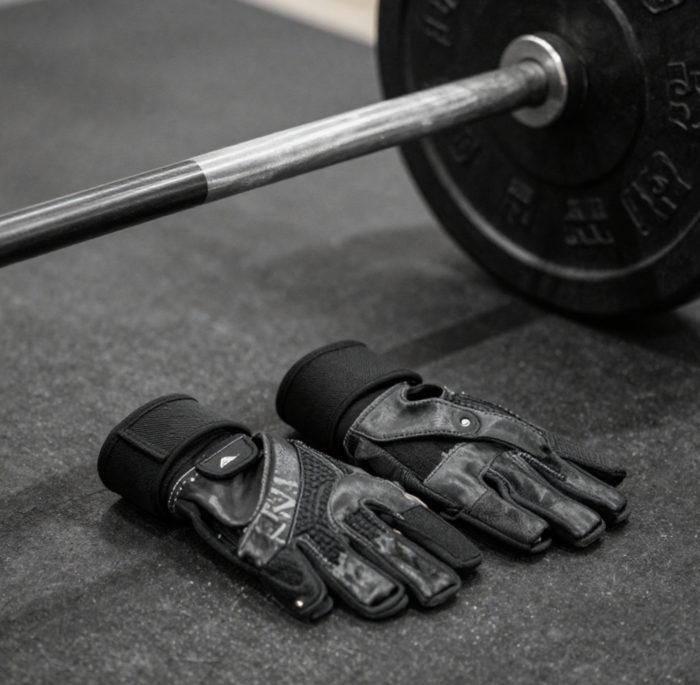
Weightlifting gloves provide a physical barrier that protects the skin on your hands and reduces friction from contact with a bar or handle. This is particularly important for beginners who have yet to develop protective calluses. Experienced lifters, however, often raise a counterargument: gloves add around 3–5 mm to the bar’s effective diameter, meaning your hand has to work harder to hold the same grip. Since strength training is based on the principle of progressive overload (Ratamess et al., 2009), altered grip mechanics may affect muscle activation patterns.
Proprioception, or your sense of body position, is another important factor: your skin gives your brain precise information about changes in the bar’s position during a lift. Gloves may reduce this feedback. The difference is negligible for beginners, but it can affect experienced lifters’ control of the weight. This is why many advanced athletes have stopped wearing gloves and prefer direct contact with the bar, which also naturally strengthens the intrinsic muscles of the hand.
Overall, weightlifting gloves are more of a comfort aid than a tool that directly improves performance. They are useful if you have yet to develop calluses or if you perform a type of lifting that involves substantial friction between your palms and the bars. If you are just starting out at the gym, we recommend first reading Why you need a personal trainer at the gym — a good trainer can also help you choose the right equipment and avoid developing bad habits from the outset.
When are wrist wraps justified?
Wrist wraps hold the wrist joint in a neutral position under maximal compressive and pulling forces — particularly during the bench press, overhead press and heavy deadlifts. The wrist and forearm are among the most common sites of overuse injuries in strength athletes (Siewe et al., 2011), making wrist wraps a useful aid in specific circumstances.
Wrist wraps are justified if you:
– regularly work at ≥80–85% of your one-rep maximum (1RM) (Ratamess et al., 2009);
– feel your wrist joint uncomfortably “giving way” under pressure towards the end of pressing movements;
– are recovering from a wrist injury and a specialist has recommended them.
However, wrist wraps should never replace actively strengthening the muscles that stabilize your wrists. See also: Do you really need a heart rate monitor right away? The same logic applies here: accessories complement your core training; they do not replace it. If you are a beginner working with loads below 70% 1RM, you generally do not need wrist wraps.
Are weightlifting gloves essential for gym beginners?
The short answer: no. The Health Board’s physical activity guidelines recommend that adults do strength training for all major muscle groups at least twice a week, without making specialized equipment a requirement for beginners. Your priorities as a beginner are learning proper technique, gradually increasing your training load and getting enough recovery.
Alongside equipment, nutrition and supplements also affect your training results. What is L-carnitine and why do you need it? provides an overview of one of the most widely used supplements in strength training, while Do you need to take vitamin D in summer too? explains why adequate vitamin intake supports your muscles year-round. These factors have a far greater impact on performance than wearing gloves.
How to choose the right weightlifting gloves and wrist wraps
If you have decided to buy weightlifting gloves, keep the following criteria in mind:
Material: Leather gloves are more durable and give you a better feel for your grip; synthetic gloves are cheaper but wear out faster and are less breathable.
Coverage: Half-finger gloves leave your fingertips exposed for better sensitivity; full-finger gloves suit activities that involve more friction, such as pull-ups and rope climbs or kettlebell exercises.
Size: The glove should fit snugly without bunching excessively around your wrist — excess material reduces the very proprioceptive feedback you want to preserve.
Built-in wrist support: Many models include a short wrist wrap section. This is a good compromise for beginners, but its limited support means it cannot replace a separate wrap when lifting heavy loads.
When choosing wrist wraps, consider the type of training you do:
– Pressing exercises (bench press, overhead press): A stiffer cloth wrap (over 2 cm thick) provides more wrist support.
– CrossFit and functional training: A more elastic, shorter wrap preserves freedom of movement.
– Deadlift: Wrist wraps are less necessary here; if grip is your limiting factor, it makes more sense to consider lifting straps.
References
- Ratamess NA, Alvar BA, Evetoch TK, et al. (2009). American College of Sports Medicine position stand: progression models in resistance training for healthy adults. Medicine & Science in Sports & Exercise. 41(3):687-708. PMID: 19204579
- Siewe J, Rudat J, Röllinghoff M, Schlegel UJ, Eysel P, Michael JW. (2011). Injuries and overuse syndromes in powerlifting. International Journal of Sports Medicine. 32(9):703-711. PMID: 21563022
Frequently asked questions
Are weightlifting gloves a better choice than bare hands?
It depends on your training level and goals. Weightlifting gloves protect beginners’ skin, but for experienced lifters, they can reduce your feel for the bar and hinder the development of the hand muscles that strengthen your grip. Bare hands are often a better choice for long-term progress.
Do wrist wraps weaken your wrists with long-term use?
No, provided you use wrist wraps only for maximal loads and also train the muscles that stabilize your wrists. Problems arise when wraps become an everyday crutch, even with light loads, preventing your wrists from getting stronger naturally.
What is the difference between weightlifting gloves and CrossFit gloves?
CrossFit gloves are usually shorter, cover only the upper part of the palm, and are intended for climbing movements. Weightlifting gloves cover the entire palm and often part of the fingers, and are designed for bar and barbell exercises. Some weightlifting gloves also have built-in wrist support.
When should you use wrist wraps versus lifting straps for deadlifts?
Wrist wraps support the wrist joint but do not help your grip. Lifting straps help you hold on to the bar longer when your grip fatigues before your back muscles do. For deadlifts, lifting straps are typically more useful than wrist wraps — unless you have a history of wrist injuries.
At what load does it make sense to start using wrist wraps?
Generally, when your working load regularly exceeds around 80–85% of your one-rep max and you feel discomfort in your wrists. Below this load, wrist support is rarely necessary and may actually slow your wrists’ natural adaptation to the load.
Come and work out! ArtGym