
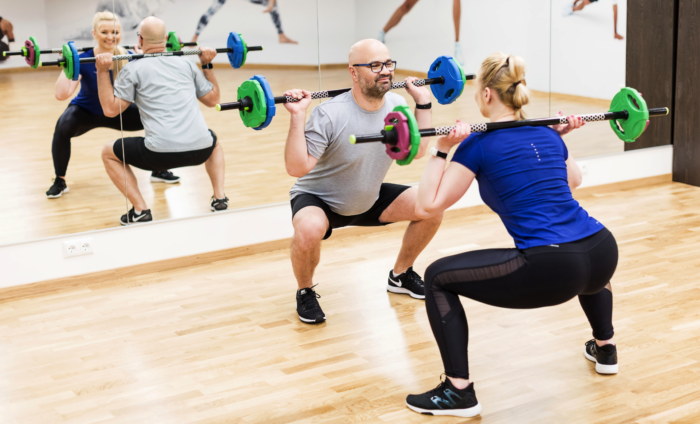
Women’s training in the gym can differ from men’s in several ways, because women and men have different physiology, hormones and goals. Here are some of the main differences:
- Physiological and hormonal differences: Women and men have different muscle mass and body fat percentages, which affects training goals and results. The male body is typically more testosterone-driven, which favors greater muscle mass and strength. Women usually have more estrogen, which can influence fat distribution and body shape.
- Goals: Women often have different training goals than men. For example, many women may be more interested in cardio training and improving flexibility. Men, on the other hand, may focus more on muscle size and strength.
- Intensity: In some cases, women may want to focus on more repetitions with lighter weights, because they want to develop their muscles without making them too big. Men may typically prefer heavier weights and a lower rep count to increase muscle strength and mass.
- Upper-body and lower-body differences: Many women want to train upper-body muscles such as the arms, back and chest to achieve a more balanced physique. Men may pay more attention to the upper body, especially the chest and shoulders. When it comes to lower-body training, women may want to focus more on the glutes and thighs, while men may be more interested in strengthening the legs.
- Exercise selection: Some workouts may be geared more toward the specific needs and goals of the male or female body. For example, women may do more exercises that help strengthen the pelvic floor and improve balance and stability.
It is important to note that these differences do not mean that women’s and men’s training should be completely separate, or that one approach suits everyone. In fact, in many cases training programs can have similarities regardless of sex. Both benefit from strength training and cardio training, as well as from developing flexibility and balance. It is important to adjust training intensity, duration and exercise selection to individual goals and physical ability, regardless of sex.
Illustrative photo: Goden Club; Mihkel Raud Fitnessblogi
Come work out! ArtGym




