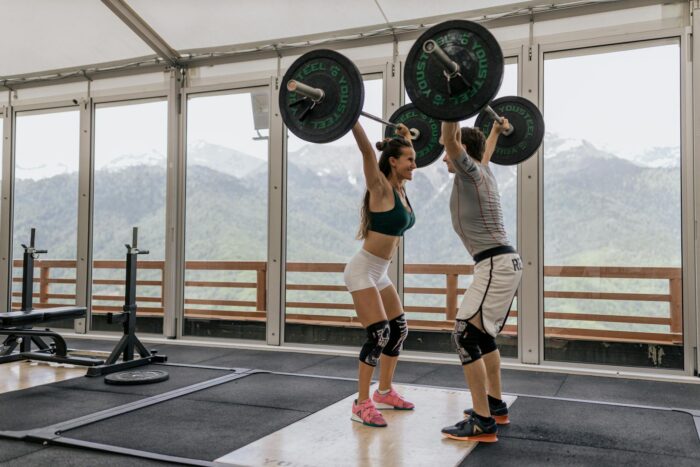
Strength training: 15 simple rules of thumb
Strength training is simpler than it first appears: get the basics done consistently and avoid making your program more complicated every week. Here are 15 practical tips to help beginners train better in the gym, choose weights more wisely and remember to make time for recovery.
Why does strength training need simple rules?
Beginners often hit the gym full of enthusiasm. One day you try a new exercise, the next week a new program, then someone else’s favorite technique. This can make training feel exciting, but it becomes hard to judge your progress. So what actually works?
The simple truth is that muscles grow when your body gets enough training load, enough food and enough rest. Everything else supports that. Compound exercises, a training log, a clear plan and controlled technique are what allow some people to progress year after year while others do plenty in the gym but see no results.
Strength training: what should you do first, and what comes later?
A good workout doesn’t start with a randomly chosen machine. Start with whatever demands the most strength and concentration. When your body is fresh, it’s easier to perform heavy exercises with proper technique. Save isolation exercises for later, once the main work is done.
- Do heavy compound exercises before isolation exercises. Compound exercises work many muscles at once and require more energy. That’s why they belong at the start of your workout.
- If your goal is muscle mass and strength, your program should include foundational exercises: bench presses, squats, deadlifts, pull-ups, rows, standing presses and biceps curls.
- Don’t chase heavy weights at all costs. The weight matters, but only if you lift it using the muscle the exercise is meant to target. Keep the movement controlled and use a full range of motion.
- You must squat. Squats place a substantial training load on your legs, core muscles and entire body. This is one of the best exercises if you want to increase your body weight by gaining muscle.
- Aim to improve a little at something in every workout. That could mean one extra repetition, better technique, a stronger set or a small increase in weight. What matters is the direction you’re heading.
- Don’t overtrain. Less can deliver more in the long run if your body has time to recover. Don’t train the same muscle again while it’s still depleted from the previous workout.
- Your best training partner is a training log. Record your exercises, weights, repetitions and how you feel. Your memory can mislead you; your notebook won’t.
- Plan your workout before you go to the gym. Know what you’re going to do, what your main exercise of the day is and how you want to feel when you finish.
- Put lagging body parts first in your program. Be honest with yourself. If a muscle or movement is lagging behind, it needs more attention, not just the hope that it will improve on its own.
- Choose a training program that matches your goal and stick with it for as long as it makes you bigger and stronger. Don’t jump to every new program just because someone mentioned it.
- Train your weaker side first. When doing exercises with one arm or one leg, start with the weaker side. In a one-arm dumbbell row, for example, let your weaker side set the pace.
- Don’t fully lock out a joint at the end of a repetition unless the exercise requires it. Stop the movement just short of lockout. This keeps tension on the muscle and reduces stress on the joint, especially during squats and presses.
- If you’re training for hypertrophy, or muscle growth, keep your rest periods between sets to 45–90 seconds. If your goal is endurance, rest for less than 45 seconds. If your goal is strength and you’re working in the 1–6 repetition range, rest for more than 90 seconds.
- Be persistent and consistent. There are no shortcuts to building mass and improving strength. Once your goal is clear, train accordingly and don’t skip workouts without a reason.
- Find music that helps you concentrate. If the gym’s music distracts you, bring your own favorites. The right background music helps block out conversations and other distractions.
Practical tips to improve your strength training
Don’t judge a good workout solely by the puddle of sweat you leave behind. Judge it by whether you completed the planned work, maintained good technique and gave yourself something to build on next time. A training log is a surprisingly powerful tool here.
If you don’t feel an exercise in the intended muscle, reduce the weight. Honestly, this is the hardest step for many people. Your ego wants more plates on the barbell, but your muscles grow better when the effort goes where it’s supposed to.
Stick with your program long enough. If you change exercises too often, you won’t know whether your progress came from the program, chance or simply a good day. A sensible training program doesn’t have to be boring, but it does need to let you track your progress.
Strength training and recovery: what should you watch for?
Muscle doesn’t grow only during workouts. Training gives your body a reason to adapt, but that adaptation happens while you rest. If you sleep poorly, eat too little or push every set to failure, your performance will eventually start to decline.
Pay attention to how you feel, too. If your warm-up weights feel unusually heavy for several workouts in a row, your appetite disappears and your motivation drops, the problem may be recovery rather than willpower. In that case, one lighter week can sometimes help more than forcing yourself through one more attempt at a personal best.
FAQ
Should beginners start with machines or free weights?
Both have their place. Free weights teach you better control of your body, while machines make it easier to get a feel for the movement. As a beginner, your priorities should be learning proper technique and keeping your training program easy to follow.
How often should you change your training program?
Don’t change your program just for the sake of variety. If you’re lifting heavier weights, doing more reps or improving your technique, the program is still working. Change it when your progress has stalled for a long time or your goal changes.
Does every set have to go all the way to failure?
No. Some heavy sets can be very demanding, but pushing every set to failure quickly wears you out. Most of your work should be controlled and performed with good technique.
Tips from: http://www.realweighttraining.com/
Translated by: Janar Rückenberg
Source:Turg.Fitness.ee
Come work out! ArtGym