
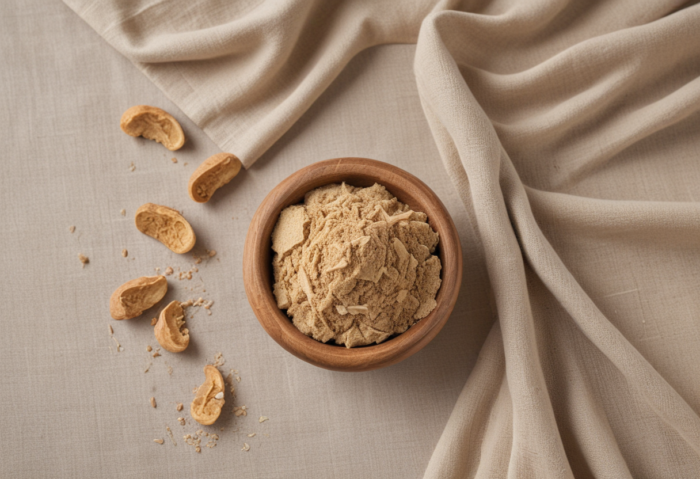
I first heard about maca from an acquaintance who had just come back from Peru with a handful of yellowish powder and said that their great-grandfather drank it every morning. For the mountain people of the Andes it is no miracle cure, just everyday food. Let’s look at why maca root has made it onto Estonian store shelves and what it actually does to the body.
What is maca root and where does it come from
Maca (Lepidium meyenii) is a radish-like root vegetable that grows in the highlands of the Peruvian Andes at 4000–4500 meters above sea level. That makes it one of the highest-growing food plants in the world. Conditions up there are harsh: thin air, strong winds and big temperature swings. To survive at all, maca has had to store a remarkable amount of nutrients in its root.
Peruvian Indians have eaten maca for millennia. Inca soldiers consumed it before battle to gain strength. Later, ordinary villagers were reportedly forbidden from eating too much of it because it was said to be too potent. Rumor or not, the root has now reached European health food stores and, in powder form, Estonian kitchens.
How maca root affects the body
Maca root is associated with several beneficial properties. It’s important to stress that it is a dietary supplement, not a medicine, so keep your expectations realistic. Below are the properties that traditional use and modern consumer experience mention most often:
- Has a general tonic effect and helps maintain an even energy level throughout the day.
- Supports energy recovery after a workout or a mentally stressful day.
- Boosts libido and vitality – in Peru, maca has traditionally been used for exactly this purpose.
- Helps against chronic fatigue, especially when combined with enough sleep and proper food.
- Used to ease memory problems and difficulty concentrating.
- Balances hormones, which is something women going through menopause value especially.
In terms of nutrition, maca powder is remarkably rich. It contains carbohydrates, protein, vitamins, fiber and minerals. B vitamins and vitamin C deserve a special mention, and among the minerals calcium, magnesium, phosphorus, iron and potassium. Maca also contains several key fatty acids. This combination of nutrients makes it more of a superfood than a fix for one specific deficiency.
Using maca root in practice
The most common form in Estonia is maca powder. A typical dose is around 1–3 teaspoons a day; it’s worth starting with a smaller amount and watching how your body responds. The taste is distinctive – slightly earthy, a little sweet, and to some it recalls brown bread crust. That is exactly why the powder works best in smoothies, oat flake porridge or stirred into coffee.
I’ve tried adding a teaspoon of powder to a morning smoothie with banana and peanut butter. The earthiness disappears behind the sweetness of the banana, and the drink gets a fuller character. It’s best not to take maca in the evening – because of its mild stimulating effect, falling asleep may take longer.
Results don’t come overnight. Most users describe the first changes after a couple of weeks: steadier energy, a better mood, less exhaustion in the evening. If you notice no difference after two months, there’s no point in continuing to buy the powder – every body reacts differently.
Maca root powder is available here.
FAQ about maca root
Is maca suitable for daily use?
Yes, in moderate amounts (1–3 tsp of powder a day) it suits most healthy adults. If you take medication regularly or are pregnant, consult a doctor first.
What’s the difference between raw and heat-treated maca powder?
In Peru, maca is traditionally eaten heat-treated – the starch is more digestible. Raw powder retains more enzymes, but for some people it may cause bloating. If you have stomach problems, choose the processed (gelatinized) variety.
Does maca root replace supplements such as a multivitamin?
No. Maca is a nutrient-rich food, but its concentrations don’t reach the level of a multivitamin from the pharmacy. Treat it as a complementary superfood rather than a vitamin product.
Author: Turg.Fitness.ee
Source: WHO – physical activity.
Come work out! ArtGym




