Don’t be a pencil neck – neck exercises
Pencil neck – the name says it all. An untrained neck leaves even a strong athlete’s physique looking unfinished. Here’s why you shouldn’t ignore your neck muscles, plus four exercises that can quickly change that.
Why a pencil neck does no favors for bodybuilders or fitness enthusiasts
Which part of the body gets the least training? Without a doubt, the neck. It acts as the body’s shock absorber, protecting the head from injury. Football players, wrestlers and boxers know very well how important neck strength is. So why do so many bodybuilders neglect this muscle?
Leaf through any bodybuilding magazine and you’ll see some top competitors with exceptionally well-developed necks that fit their physiques perfectly. Skip Lacour, Ron Coleman and Chris Cormier are good examples. Yet others show no sign of neck development at all. Visually, the difference is striking: when it comes to a complete physique, the neck is as important as any other muscle group.
Even a well-developed bodybuilder with arms measuring half a meter around and a 120 cm chest won’t look impressive without a strong neck to match.
Protection from injury is another important reason. Neck sprains and other neck injuries occur surprisingly often, even in very minor accidents. Many of these injuries could have been avoided if the person had a strong, well-developed neck. Athletes, too, often experience strained and stiff neck muscles because of overall weakness in the neck.
Some coaches advise against neck training, arguing that your shoulders look broader without it. That’s as logical as cutting back on leg training to make your upper body look bigger. The simple truth is that it doesn’t work.
Four exercises to help you get rid of a pencil neck
The good news is that your neck responds quickly to hard work. Here are four exercises to get you started.

1. Wrestler’s bridge – the best way to train the back of your neck. This exercise eliminates the light-bulb shape many people are born with. Start by getting your neck used to bearing the load: lie on the floor with your head on a pillow. Move into a bridge position with your feet no farther out than your knees (see image). Keep your hands off the floor. Hold the bridge for about one minute. If you can only manage a couple of seconds, that’s fine – increase the time each week.
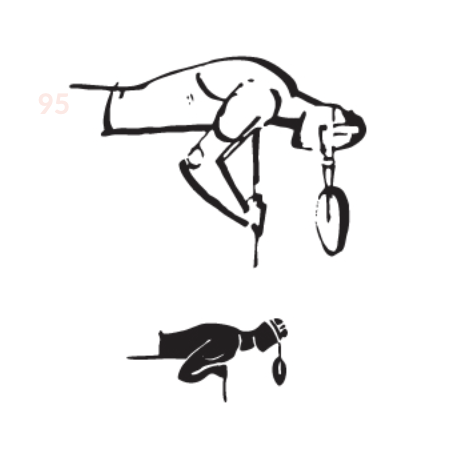
2. Neck extensions with a weight plate – lie face down on a bench with your head extending beyond the end, looking at the floor. Place a 10-kilogram weight plate on the back of your head, hold it in place with your fingers and move your head up and down. Do about 10–15 repetitions. Perform this exercise slowly and without jerking – it’s quite demanding.
3. Partner-resisted neck flexion – this next neck exercise works the sternocleidomastoid muscle (sternocleidomastoid, pictured), which adds width to your neck. You’ll need a partner. Sit on an incline bench, take a long towel and place its midpoint across your forehead. Have your partner stand behind you and hold both ends. Bring your head forward until your chin touches your chest, with your partner providing resistance throughout. Do three sets of 15–20 repetitions and train your neck twice a week.
4. Neck flexion with a weight plate – you can also train the same muscle without a partner. Lie on your back on a bench, place a 20-kilogram weight plate on your forehead with a towel underneath for cushioning, and raise your head until your chin touches your chest. Then slowly lower your head. Keep your neck under tension throughout the exercise. Do two sets of 10 repetitions.
Practical tips and equipment
You can also buy neck harnesses – odd-looking contraptions, but very useful because they let you train with heavier weights. A towel, an incline bench and a few weight plates are enough to train your neck, though.
This neck training program is brief and adds just a couple of minutes to your workout. Do it twice a week and the results will come sooner than you expect. Now for one last repetition – and then one more!
FAQ: pencil necks and neck training
Is neck training dangerous?
When training your neck, keep your movements slow and controlled. Avoid jerking and don’t start with excessively heavy weights. The exercises shown here are safe for most people if you follow these guidelines.
How often should you train your neck?
Twice a week is a good starting point. Your neck recovers quickly, but training too frequently with heavy weights can lead to overexertion.
Why is a thick neck important for a bodybuilder?
Visually, a strong neck signals a fully developed physique. It also protects against injury, particularly neck sprains, which often occur even in everyday accidents.
Bodybuilding.com
Translated by: gmaster
Source: Neck exercises
Come work out! ArtGym