Healthy eating: a simple foundation
Healthy eating starts with a very simple question: do you eat in a way that lets your body function and your weight move in the direction you want? You don’t need a miracle diet here.
Why does healthy eating matter at all?
If there’s one topic that has been talked about a lot in recent years, it’s nutrition. Yet things often get confusing. One person says carbohydrates are evil. Another swears by a fat-free menu. A third counts every grain of rice.
The simple truth: the foundation of healthy eating isn’t any single food. The foundation is balance. The energy you take in and the energy you expend through physical activity need to be in a sensible relationship. If you constantly eat more than you burn, your weight starts to rise. If you eat less than you burn, your weight will generally start to fall.
That doesn’t mean calories are the only thing that matters. Your body also needs protein, fats, carbohydrates, vitamins, minerals, essential amino acids and omega-3 fatty acids. If any of these is lacking for long, your body will eventually let you know. Fatigue, poor recovery and constant hunger aren’t some special test of character.
How does healthy eating work in real life?
Think of body fat as a rainy-day fund. If you keep depositing more money into your account than you withdraw, the balance grows. Your body works the same way. If more energy comes in from food than you use during the day, part of it is set aside as a reserve.
If you expend more than you eat, your body starts drawing on its reserves. That’s also why an active person can afford more flexibility. Someone who moves a lot, does strength training and walks simply burns more. With a sedentary job and evenings on the couch, there’s less room to play with.
Honestly, this is where many people fool themselves. Training is good, but one workout doesn’t cancel out a whole day of unchecked snacking. At the same time, you don’t need to fear every bite. What matters is your average rhythm, not one slice of cake at a birthday party.
Start with the plate, not a list of forbidden foods
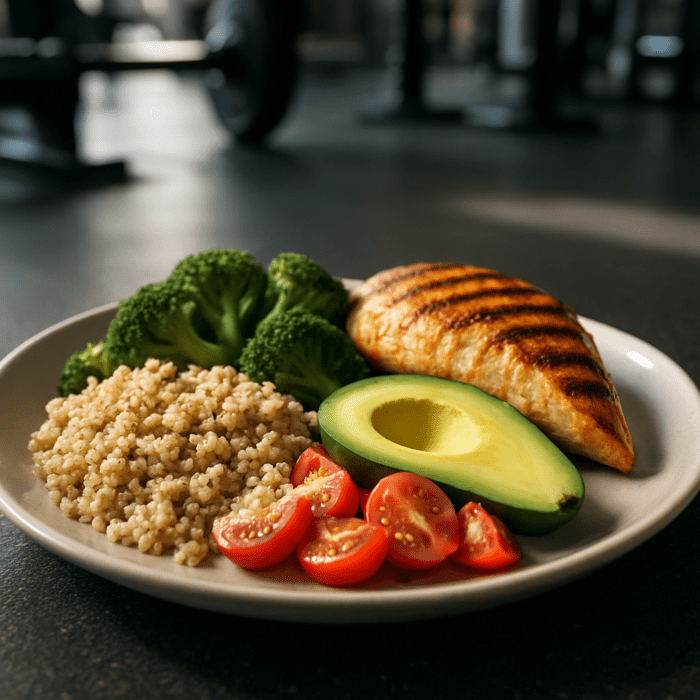
At every main meal, your plate should ideally include a good source of protein, a large portion of vegetables and a sensible amount of carbohydrates or fat. For example, eggs, fish, chicken, quark, beans or meat provide protein. Potatoes, rice, buckwheat or whole-grain bread provide energy. Vegetables help fill you up without too many calories.
So what actually happens? The less processed and the more voluminous a food is, the easier it is to feel full. Salad, cabbage, carrots, cucumbers, tomatoes and soups let you eat more volume, but not necessarily more energy. This is especially useful if your goal is to maintain or lower your body weight.
Healthy eating and everyday choices
One sneaky culprit is liquid energy. Juice, soda, sweet coffee drinks and alcohol go down fast. They may not fill you up much, but they deliver plenty of energy. Three glasses of juice may seem innocent, but to your body it’s a quick serving of carbohydrates.
In ordinary circumstances, it’s better to eat your calories than drink them. Water, mineral water, tea and black coffee are simple choices. If you train in the summer heat or go on a long bike ride, liquid energy can have its place. But on an ordinary office day, you usually don’t need it.
Another important factor is lifestyle. In Estonia, we often move less in winter: it’s dark, slippery and cold. In summer, walks and bike rides come more easily. So the same menu can work differently in different seasons. If your weight creeps up unnoticed in autumn, the cause may not be food alone. Maybe you’re simply taking fewer steps.
Don’t build your menu around punishment. If your eating is too strict, it rarely lasts. Learning to eat healthily is more about finding simple, repeatable solutions that work for you: a breakfast that keeps you full; a lunch that doesn’t make you drowsy; a dinner after which new cravings don’t show up within an hour.
FAQ: healthy eating
Does healthy eating mean counting calories?
Not always. Counting calories can be useful while you’re learning, but many people manage with the plate rule, set mealtimes and regular weight tracking. If your weight is moving in the wrong direction, it’s worth honestly reviewing your portion sizes.
Do you have to avoid sweets completely?
No. It comes down to amount and frequency. If your main meals are in order, a small sweet treat fits in now and then. The problem arises when sweets replace real food or come every day on top of an already full menu.
What’s the easiest first step?
Swap liquid calories for water and add vegetables to every larger meal. It’s simple, cheap and works without a complicated plan. From there, you can get more precise as needed.
Author: Janar Rückenberg
Come and eat! Armudu
Come and train! ArtGym