Muscles, condition and Ott Kiivikas’s World Championships journey
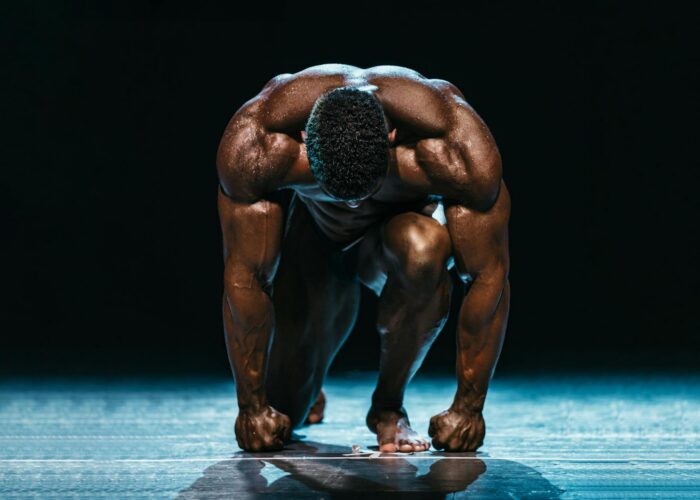
Muscles are the visible side of this story, but before flying out to the World Championships, Ott Kiivikas talks about something else entirely: calm, condition and mental readiness. The IFBB World Championships take place in exotic Yangon from 22 to 24 November, with Estonia represented by 24-year-old Ott Kiivikas, now our three-time bodybuilding champion.
Why don’t muscles alone win on stage?
Before the long journey, Ott Kiivikas put it simply: “I’m going to compete without any extra pressure.” That sentence sounds calm, but in bodybuilding that kind of calm is no accident. Condition has to be in place, the body has to hold up on the diet, and the mind must not lose the contest before the athlete even steps on stage.
A couple of weeks before departure, according to Kiivikas, things were in good shape. Muscles and mind had already left the hard battle at home behind for a while. In other words: the work was done, and now it was time to take in a new experience. That is exactly what separates a mature athlete from a young hopeful. A mature athlete doesn’t go on stage to prove themselves at any cost, but to carry out a plan.
“For the Worlds, going now is actually somewhat easier than going to Tartu at the beginning of November,” said the Estonian champion. Competition at home had been fierce. That fiercely competitive ring of Kalmus, Tkatšenko and Kornõšev was no longer around Kiivikas. An international contest of course brings a different kind of tension, but measuring yourself against rivals at home can sometimes gnaw at you even more.
How do muscles, diet and the mind work together?
In bodybuilding the muscles catch the eye first, but stage condition is built from three things: training, nutrition and the nervous system. If one of them falls apart, the others can’t fully make up for it. In Kiivikas’s case, it was important that the body stayed in the normal range on the diet. That means the body hadn’t simply been squeezed dry, but was still able to compete.
Outside experience came into play here too. Once again, Olev Annus, Kiivikas’s predecessor in the muscle-building game and now based in Finland, proved a help in his own way. On the heat and the time difference, Annus gave Kiivikas valuable advice. “I called just yesterday and asked about a couple more nuances,” said Ott, rating the former world champion’s concern very highly.
Honestly, this is the often underrated side of bodybuilding. Everyone sees the posing and the muscles. Less is said about how a competitor adapts to a different climate, time zone, sleep and meal rhythm. When you go on stage in Myanmar, it isn’t enough that your condition was good in Tartu. Your condition has to travel with you.
The state of the youth worries people in the sport
Both Annus and Arnold Tokko, president of the Estonian bodybuilders, were worried about the future of the sport. Kiivikas said the state of the juniors is poor. At the spring cup competitions interest seemed to be growing, but by autumn the line-up shrank to four again. That is a small number for a sport where the next generation is supposed to form the next strong cohort.
From their own junior days, Kiivikas recalled following hard on the heels of Marek Kalmus, now a five-time Estonian Cup winner, as a newcomer in the junior class. That kind of pressure is necessary. When a young athlete sees a strong name ahead, a target forms. When the line-up is thin, the comparison is weaker too.
A practical view: what to notice in stage condition
A simple truth: size alone doesn’t make condition. On stage, proportions, dryness, posing and whether the athlete can hold it all together to the end of the routine all count. If the muscle is big but the physique isn’t polished, the result stays half-finished. If the condition is sharp but the performance is nervous, the impact is lost too.
The trouble reportedly begins with young men not wanting to put in enough work for their condition, even ahead of title competitions. That sounds harsh, but bodybuilding is exactly the sport where half-hearted effort shows. Meals, sleep, training and posing add up to a single picture on stage. There you can no longer hide what was left undone.
This year’s Estonian bodybuilding champions give a picture of how broad the level was at the time: among the youth, Mikk-Alvar Olle of Tallinn’s Reval-Spordi; among the juniors, Janar Gröön of Viljandi; among the women, Svetlana Filimonova of Sillamäe and Inna Terasmaa of Tartu’s Arcoman; and among the men, starting from the lighter weight class, Boriss Žitinski of Narva, Andres Barabanov of Reval-Spordi, Ott Kiivikas and Marek Kalmus of Arcoman.
The overall standings in Tartu were: 1. Kiivikas, 2. Kalmus, 3. Viktor Tkatšenko of Sillamäe Olympia, 4. Nikolai Kornõšev of Tallinn, 5. Andres Barabanov of Reval-Spordi, 6. best junior Janar Gröön of Viljandi. This list shows the company Kiivikas came from when heading to the Worlds.
Muscles at the Worlds: what is Ott Kiivikas aiming for?
Kiivikas, who once placed sixth at the junior European Championships, had competed at the Worlds twice before. The ceiling so far was reaching the semifinal. And this year? Ott reckoned that, given the current state of things, making it into the world’s top 16 amateurs would already count for something.
That is no small goal. Among the world’s amateurs the level is tight and every detail counts. At the same time, the world bodybuilding organization’s congress is being held in Myanmar, which our athlete will hopefully attend as well. So the trip has two dimensions: the sporting result and Estonian bodybuilding’s presence in the wider picture.
So what really decides it? Not just muscle. What decides it is whether the work already done holds up through a long trip, an unfamiliar climate and stage pressure. Kiivikas went to compete without any added stress. Sometimes that is exactly the best sign that an athlete is ready.
FAQ: muscles and competition condition
Are muscles the most important thing in bodybuilding?
They are very important, but not the only thing. Competition condition also depends on proportions, leanness, posing and how well an athlete holds tension on stage.
Why is getting into shape through dieting so hard?
Because the body has to lose weight, hold on to muscle and tolerate training all at the same time. If the body can’t stay within normal limits, both condition and well-being suffer.
What would it mean to make the top 16?
In Kiivikas’s own assessment, making the top 16 among the world’s amateurs would already be a solid result, especially given the level at the World Championships.
Train here: ArtGym
Author: Aare Kreilis
Source: WHO – physical activity.