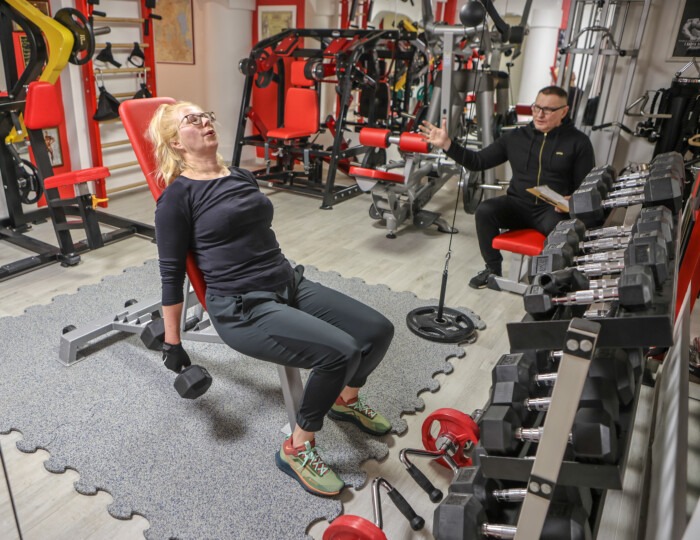
Personal training: who is it for?
Personal training helps when you walk into the gym, the machines stare back at you and you have no plan in your head. A good trainer pulls your goal, exercises and pace together so you don’t spend months on trial and error.
It isn’t just for beginners. Personal training can also make sense if you’ve been training for years but your progress has stalled, or an old injury is making itself known.
Why does personal training matter at all?
Most people don’t struggle with training because they lack willpower. The problem is more often confusion. What should you do first? How much weight should you load? Is your squat deep enough? Why does your lower back tense up when the exercise is supposed to work your glutes?
A personal trainer sees these things from the outside. They notice whether your shoulders are rolling forward, your knees are caving in or your tempo is getting too fast. It’s a small thing only until it turns into pain or stalled progress.
Frankly, winging it can work for a while. But if your goal is a more defined body, better strength or healthier movement, a guided plan has a big advantage.
How does personal training work?
The first meeting shouldn’t start with a hard workout right away. Usually you talk about your goals, past training, health and schedule. If you’ve had knee, back or shoulder problems, the trainer needs to know. It isn’t an excuse to do less, but information that lets you train smarter.
Next, the trainer watches how you move. One person squats very well but can’t hold their breathing. Another has strong legs, but their upper body tires first. A third simply fears free weights. So what actually happens? The trainer builds the program from your starting point, not from someone’s Instagram video.
If you train with a personal trainer, you get feedback right away. That’s a big difference from watching a video later and wondering whether your technique was right or not. The trainer can change the weight, simplify an exercise or add a new variation when your body isn’t doing what the plan promised on paper.
Your goal needs to be measurable
“I want to get in shape” is a good start, but it’s too vague. A better goal is, for example, to work out three times a week, learn deadlift technique, reduce your waist circumference or climb the stairs in spring without getting out of breath.
A simple truth: the clearer the goal, the easier it is to steer your training. Then you don’t have to start from scratch every week.
Personal training and motivation
In winter in Estonia, it’s easy to skip a workout. It’s dark, the weather is wet and the couch often wins. A set time with a trainer makes things concrete. You don’t have to hunt for motivation every time, because the slot is already in your calendar.
That doesn’t mean the trainer should be a harsh drill sergeant. A good trainer also knows when to hit the brakes. Some days you need to add weight. On others, it’s smarter to clean up your technique and not train by ego.
Personal training helps most when you’ve started and quit several times. The trainer provides the rhythm, but the responsibility stays with you. Nobody else sleeps for you, eats for you or takes your steps for you.
What to look for when choosing a trainer?
First, see whether the trainer listens. If you’re handed the same plan as everyone else within the first five minutes, that’s a bad sign. Ask how they would measure your goal, how the plan will change and what to do on days when work or family throws it off.
Price is a real factor too. Personal training costs more than a regular gym pass, so it’s worth thinking about what you get for the money. For some people, one technique session a month is enough. Others need six to eight sessions at first to get the habit and the basic movements in place.
A good working relationship matters. The trainer doesn’t have to be your best friend, but it should be easy to be honest with them. If you’re tired, in pain or afraid of an exercise, you should be able to talk about it without embarrassment.
FAQ: personal training
Is personal training suitable for beginners?
Yes. Beginners often benefit the most, because the right movements are learned from the very start. That leaves fewer bad habits to fix later.
How often should you meet with a trainer?
It depends on your goal and budget. Some people go once a week; others meet their trainer more often at the start and later switch to a self-directed program.
Does a trainer help with nutrition too?
Many trainers give general nutrition advice, but for medical problems it’s worth involving a doctor or a nutrition specialist. Training and food go together, but the boundaries need to be clear.
Edited by: Arnold Tokko
Illustrative photo: Mati Hiis

Come and work out! ArtGym