Broccoli: a simple food for people who train
Broccoli is a simple food that suits anyone who trains, wants to stay in shape or just wants more real food on their plate. It is not a miracle product and it does not replace a proper daily diet, but it has one big plus: a small portion delivers a lot of useful nutrients.
The original note came from Flex and talked about broccoli’s effect on hormonal balance. Let’s unpack that idea more clearly, without overpromising.
Why does broccoli matter in a training diet?
When someone starts going to the gym, attention quickly turns to protein, creatine and the training program. Vegetables often get pushed into the background. Yet it is precisely these small everyday choices that help the body recover better and keep digestion in order.
Cruciferous vegetables contain indole-3-carbinol, or I3C. This compound is linked to the formation of diindolylmethane, which is often mentioned when people talk about estrogen metabolism. Put simply: broccoli contains compounds the body uses to help maintain hormonal balance.
That does not mean one bowl of broccoli will change your body overnight. Honestly, food doesn’t work that way. It does make sense, though, to add foods to your diet that provide dietary fiber, vitamin C, calcium and plant compounds. Broccoli does this quite conveniently.
The original text also linked broccoli to fat gain, water retention and the anabolic effect of testosterone. Claims like these should be treated with caution. Food has an effect, but the body does not respond to a single vegetable the way it does to a pill. The bigger picture matters more: sleep, training, how much energy you eat, your protein intake and how consistent you are.
How does broccoli work in the body?
Broccoli belongs to the cruciferous vegetable family. Cauliflower, cabbage and Brussels sprouts keep it company. They are valued mainly for their plant compounds, not just for their vitamins.
One important name is indole-3-carbinol, or I3C. The other is sulforaphane. The original text stated that one cup or more of cooked or steamed broccoli a day provides more than 100 mg of I3C, 1200-4000 micrograms of sulforaphane, more than 80 mg of vitamin C and over 40 mg of calcium.
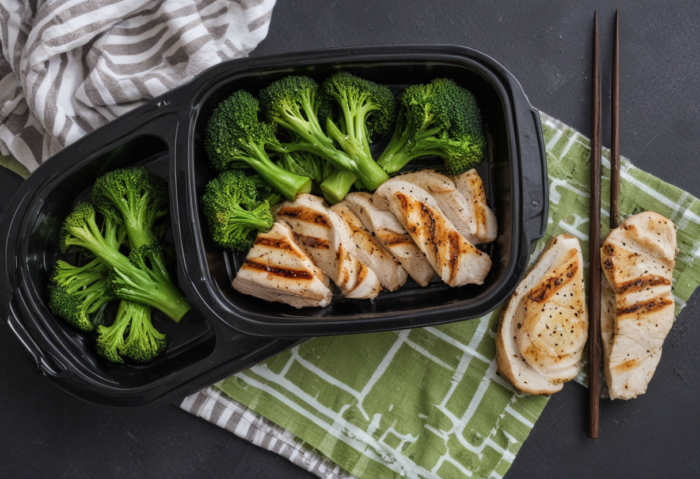
These figures give a good practical yardstick. You don’t need to weigh broccoli to the gram. Think of it more simply: one cup or more a day is a portion you can add alongside lunch or dinner. It goes well with chicken, fish, eggs, rice, potatoes, buckwheat and beans too.
Do you have to eat broccoli every day? No. But if your diet is otherwise quite monotonous, it’s a good place to start. Cruciferous vegetables one day, cabbage or cauliflower the next. The body doesn’t need a perfect diet, just a good pattern repeated.
Cooking broccoli without ruining the flavor
Many people have a bad memory of broccoli because it was boiled for too long. It turns soft and grayish and smells strong. It doesn’t have to be that way.
The simplest method is steaming. Put the florets in a pot or on a steamer rack and heat them so they stay slightly crisp. If you use frozen broccoli, don’t thaw it for long beforehand. Straight into the pan or pot is usually better.
Another good option is the frying pan. Add a little oil, garlic, salt and pepper. If you want a stronger flavor, lemon juice goes well with it. That gives you a side dish that feels like real food, not a punishment.
On a training day, broccoli goes well alongside a larger meal. After the gym, for example, the body wants carbohydrates, protein and minerals. Broccoli doesn’t provide much energy, but it rounds out the plate and helps balance the meal.
If your goal is to lose body fat, broccoli has one more practical advantage. It fills you up without making the meal heavy. A simple truth: when there are more vegetables on the plate, it’s easier to eat a sensible amount even when your appetite is big.
Broccoli FAQ
Does broccoli work like a supplement?
In some ways it can support the body, as any good food choice does, but cruciferous vegetables are not a capsule or a medicine. The effect comes from eating it consistently alongside other solid food.
Is it better to eat broccoli raw or cooked?
Both work. The original recommendation was to eat one cup or more of cooked or steamed broccoli a day. Steaming is a good middle ground, because the flavor stays pleasant and the portion is easy to eat.
Does broccoli help raise testosterone?
You can’t promise that directly. The I3C in broccoli is linked to estrogen metabolism, but hormone levels are affected by much bigger factors: sleep, body weight, training load, stress and your overall diet.
Author: joker
Source: WHO – physical activity.
Come and train! ArtGym