
Pullover: Arnold’s old-school chest builder
The pullover is an old-school exercise that Arnold Schwarzenegger associated with his famous upper body and wide rib cage. If your goal is a better stretch for the chest, a stronger feel for the muscle and a slightly different training load than a regular press, it’s worth bringing this movement back into your program.
Expand your knowledge and your rib cage with this old-school exercise – Arnold Schwarzenegger.
Flex
Why was the pullover so important to Arnold?
At the peak of his bodybuilding career, Arnold said his chest measured 57” (approx. 143cm) around. That’s a number that sticks. According to him, one of the main movements that made it possible was the dumbbell pullover.
Does one exercise alone grow a 57-inch chest? Honestly, no. A big upper body comes from years of work, eating, heavy pressing and good genetics. But Arnold firmly believed that consistent pullover work helped him expand his upper body and widen his rib cage.
That’s exactly the appeal of this exercise. The dumbbell chest exercise doesn’t feel like an ordinary chest exercise. You aren’t pressing a bar up or bringing dumbbells together like in a fly. The movement goes overhead, the stretch is deep, and the chest, back, shoulders and serratus muscle all take on training load at once.
Arnold especially recommended it to younger lifters. His idea was simple: the earlier you start the exercise, the better your body may respond to it. Today it’s worth approaching it sensibly. The pullover doesn’t work miracles, but done properly it gives your chest training an angle that many programs no longer include.
How do you make the pullover work properly?
Start easy. The pullover is an exercise where too much weight quickly ruins your technique. If the dumbbell drags your arms back uncontrollably and your lower back starts to arch excessively, you’re no longer doing good work for your chest. You’re just fighting the weight.
Starting position on the bench
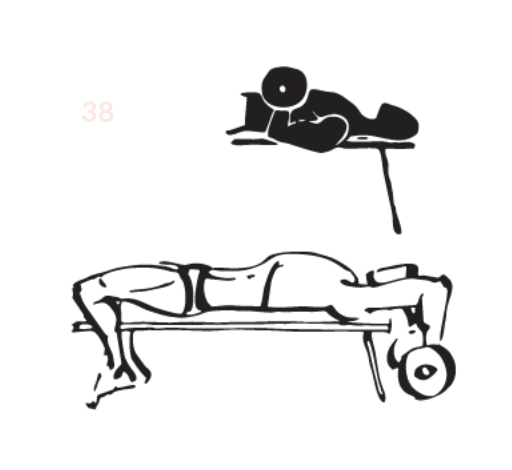
Lie across the bench so that your shoulders rest on it and your feet are planted firmly on the floor. Your hips can sit lower than the bench, but your body must stay under control. Hold the dumbbell with two hands, with one end of the dumbbell resting between your palms.
Raise the dumbbell over your chest. Keep your elbows slightly bent. Don’t lock your arms straight, but don’t turn the movement into a triceps extension either. Think of it this way: your arms are a frame that moves together with the dumbbell.
Lowering and stretching
Slowly lower the dumbbell behind your head toward the floor. At the same time, you can let your hips sink a little toward the floor to get a bigger stretch. There’s no need to rush here. The bottom position is the whole point of the exercise.
When the dumbbell is as low as your mobility allows and you feel a strong but not painful stretch, bring the weight back over your chest. Keep the movement smooth. Don’t bounce, don’t jerk and don’t let your shoulders lose control.
Pullover in chest training: a practical program
The program below is an old-school chest workout with the dumbbell chest exercise added at the end. The idea is clear: heavy presses and flyes first, then deep stretching work with a dumbbell. Do this program 2x a week, train hard and consistently, and the results will come.
- Bench press 5×15*, 10, 8, 6, 4
- Incline bench press 4×10, 8, 6, 4
- Incline fly 3×10, 8, 6
- Parallel bar dips 3×15, 10, 6
- Dumbbell pullover 3×15
If you’re a beginner, don’t copy this program blindly. The volume is substantial. Start with a lighter weight and leave a couple of reps in reserve. If your shoulders are sensitive, test the pullover with a small dumbbell or do the movement with a shorter range of motion.
A more experienced lifter can use the pullover at the end of chest day, when the chest has already been worked. Then the dumbbell doesn’t have to be heavy. The stretch, the breathing and the feeling that your rib cage opens up with every repetition matter far more.
What should you watch for in the pullover?
A simple truth: the pullover works when you control the weight. If the weight controls you, the exercise becomes uncomfortable for the shoulder and less useful for the chest.
Keep your elbows in the same position throughout the set. If they bend more with every repetition, the emphasis shifts elsewhere. Keep your chest up, but don’t force your lower back into a big arch. Breathe in deeply as the dumbbell moves back, and breathe out as you bring the weight back over your chest.
Pain is not the goal. A strong stretch is normal; sharp shoulder pain is not. If the movement doesn’t suit you, leave it out or ask a coach to check your technique. Old school doesn’t mean you have to stubbornly put up with discomfort.
Pullover FAQ
Does the pullover build the chest or the back?
Both can get worked. The dumbbell chest exercise puts training load on the chest, lats, shoulders and serratus muscle. The emphasis depends on your technique, your mobility and how you feel the muscle working.
Is the pullover suitable for beginners?
It is, as long as the weight is light and the technique is calm. A beginner should start with a small dumbbell and first learn the stretch and the movement path instead of chasing a big number.
When should you put the pullover in your workout?
The easiest option is to do it at the end of your chest workout. By then the main work is done and you can focus on a controlled stretch. In Arnold’s program, the dumbbell pullover 3×15 came last.
Author: joker
Source: WHO – physical activity.
Come and train! ArtGym




