
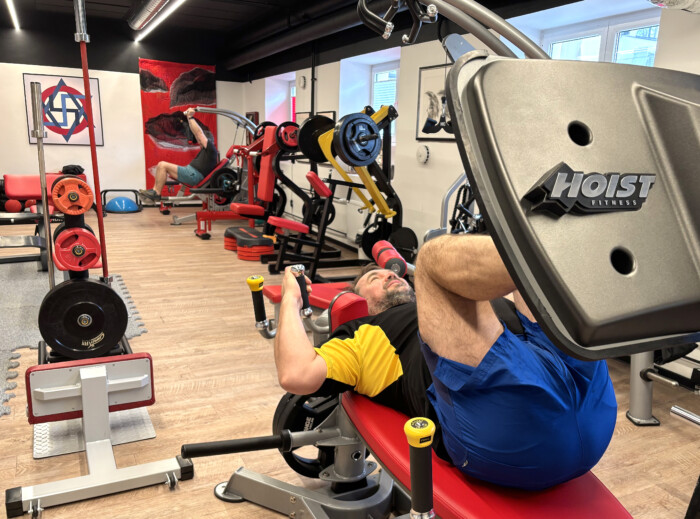
HIT: high intensity at the gym
HIT is a short, very demanding form of strength training in which every set is performed with control and taken to failure. The idea is simple: fewer exercises, less time spent dragging things out at the gym, but more real effort. With proper technique and adequate recovery, 30–45 minutes can be plenty.
What is HIT, and why does it work?
High-intensity training (HIT) is about more than simply sweating more. It centers on maximum effort, slow, controlled movements and the idea that a muscle needs a clear signal to grow. Arthur Jones is credited with developing the concept: in his view, a good workout does not need to be long if you genuinely put in the work.
To be honest, many people find HIT uncomfortable at first. That is not because there are lots of exercises, but because every repetition counts. You do more than simply get through a set. You move slowly, keep your body under control and stop only when you cannot perform another repetition with good form.
That makes HIT a good fit if you do not want to spend two hours wandering around the gym. Still, it is no lazy option. A short workout demands focus, good technique and enough rest. With those three things in place, progress can come surprisingly quickly.
The principles of HIT
HIT is not a random sequence of exercises. It is a system in which training load, tempo and recovery need to work together. Its most important principles are as follows.
- Maximum effort: each exercise is taken to muscular failure (RIR=0).
- Rest periods: there are no rest periods; you only get to rest while switching exercises.
- Short but intense: workouts are brief but demand considerable focus and effort.
- Proper technique: performing exercises correctly at a relatively slow tempo is essential to prevent injuries and maximize results.
- Extended recovery: because HIT places heavy demands on your muscles, your body needs more time to recover – workouts take place 1–3 times a week.
Who is HIT suitable for?
HIT can suit beginners, but only if you do not let your ego dictate the weights you lift when starting out. As a beginner, you should learn the movements rather than try to set a record in your first week. Lighter weights, good form and a trainer’s watchful eye are the smarter choice here.
If you are overweight, HIT can be a convenient way to improve your fitness when time is limited, since the workouts do not drag on. However, effective muscle growth and fat burning only happen when your training load increases gradually and your diet supports your goal. One hard workout will not fix everything, but consistent effort goes a long way.
For experienced athletes, HIT provides a different stimulus. If your usual volume training has become routine, a slower tempo and taking sets to failure can give your body a new challenge. But you need to be honest with yourself here: recovery must be taken just as seriously as training itself.
HIT also suits you if you are short on time. If work, family or school keeps you from spending long at the gym, 30–45 minutes of focused work is better than a long, haphazard workout. It takes discipline, but not endless free time.
How to get started and what to watch for
To get started, choose a small number of exercises and perform them well. With no rest periods between exercises, the sequence needs to make sense. You do not want to waste energy looking for a machine or changing weights. Have your plan ready beforehand.
Consult a trainer, especially if you are a beginner or have health problems. Get enough rest and give your body time to recover. Keep a training log to see whether the weight you lift, your rep count or your control is improving. The simple truth is that if you do not measure your progress, you are guessing rather than knowing.
At the Fitness.ee boutique gym, HIT sessions are led by Arnold Tokko, who has designed his gym and training programs around the experience of Arthur Jones, Mike Mentzer, Dorian Yates and Jay Vincent. Guidance from a professional trainer gives you confidence that you are performing the exercises correctly and safely.
Here is a sample beginner program. The number of workouts per week depends on how well you recover – in other words, whether you are stronger than in your previous workout. More exercises are added as you progress. Note: there are no rest periods between exercises.
- Warm-up: 5–10 minutes of light movement and stretching.
- Leg press: 15 + reps to failure.
- Close-grip underhand lat pulldown: 10 + slow, controlled reps to failure.
- Incline machine chest press: 8 + reps at a slow tempo to failure.
- Abdominal exercise: 20–30 reps.
- Stretching: Finish your workout by stretching your legs, back and chest.
So what actually happens? You learn to push yourself without jerking through the movements. That is the real value of HIT. When your technique breaks down, the set ends. If you are not recovering well, reduce your training frequency. HIT requires commitment, but done correctly, it can deliver fast, visible results.
If you are ready to try it, come to the Fitness.ee boutique gym and take the first step toward getting in better shape.
FAQ: HIT
Is HIT suitable for a complete beginner?
Yes, but the initial focus must be on technique. Training to complete failure should only come once you can perform the movement confidently and a trainer or experienced instructor has checked your form.
How many times a week should you do HIT?
The original HIT approach typically involves 1–3 workouts per week. The exact number depends on recovery, sleep, nutrition and how much strain the previous workout placed on your body.
Does HIT always mean pain and maximum weights?
No. HIT means intense effort, not throwing weights around without control. Joint pain or sharp discomfort is not the goal. The goal is to work the muscle with proper technique.
Full selection: Turg.Fitness.ee
Come and work out! ArtGym




