Women’s gym training: how it differs from men’s
Women’s gym training differs from men’s — but far less than Instagram would have you believe. Hormones, body shape and often goals diverge, yet the basic principles of building muscle are the same. In short: do strength exercises, eat enough protein, recover properly. Below we go over what is actually different and what to do about it.
Why women’s gym training differs from men’s
The most important physiological difference is the hormonal profile. Men have dozens of times more testosterone, which means faster muscle mass growth and strength gains at the same training load. Women have more estrogen, which affects where fat is stored (more on the hips and thighs) as well as connective tissue.
The practical takeaway is simple: if you are a woman and worry that you’ll get “too big” within one month — you won’t. Hormonally, women simply have too few tools for that. Anything you see in the gym that suggests otherwise comes down to years of work, genetics or supplements.
Another often underestimated difference is lower-body strength compared with upper-body strength. In women, relative lower-body strength is much closer to men’s than upper-body strength is. This means that on squats and the leg press most women can quickly move some very nice weights, while getting your first strict overhead press or pull-up takes separate work.
How to structure women’s gym training
A simple truth: the best training plan is the one you actually do consistently. But if you’re starting from scratch, a sensible week looks roughly like this.
Strength training two to three times a week
It’s worth choosing the main exercises by movement pattern: squat, hip hinge (Romanian deadlift), press (from the chest or shoulders), pull (pull-up or lat pulldown) and something for the core. A rep count in the 8–12 range is a comfortable spot for most women — heavy enough that the muscle feels the load, but not so heavy that technique starts to falter.
A light weight and 30 reps don’t get the muscles working as well as a proper weight and 10 reps. This is a myth that was debunked long ago but lives on stubbornly. If the last two or three reps aren’t quite hard, the weight is too light.
Glute training — a separate focus is okay
If the goal is to develop your glutes, it makes sense to do 1–2 targeted exercises a week in addition to the main squat: barbell glute bridge, jump lunges, cable kickback. The main work is still done by proper squats and deadlifts — without them it’s hard for the glutes to develop anywhere.
Cardio — useful, but not the only way
Long treadmill sessions are good for the heart, but body shape is shaped primarily by strength training combined with keeping track of how much you eat. Moderate cardio for 20–30 minutes 2–3 times a week is usually plenty. Walking in your free time — on Stroomi beach, in Pirita, on Toomemägi in Tartu — is an underrated addition that often gets forgotten.
Women’s gym training: practical tips
So what actually happens in the first months? The first 4–6 weeks are mostly your nervous system adapting — technique improves, weights go up, but not much changes in the mirror yet. This is normal. Visible change in muscle tissue typically comes from weeks 8–12 onward, provided nutrition and recovery are in place.
- Protein: about 1.6–2.0 g per kg of body weight per day. A 65 kg woman therefore needs 105–130 g of protein. Quite a lot once you start adding it up.
- Sleep: 7–9 hours. Poor sleep cancels out a significant part of the benefit of training and makes you want to eat more the next day.
- Cycle: in the first half (follicular phase) more intense workouts often feel easier; in the second half recovery can be slower. Not a rule, but a pattern — listen to your body.
- Photos vs. the scale: your weight easily fluctuates 1–2 kg from day to day because of water. How your clothes fit and photos taken one month apart show change more honestly.
Estonia has a good choice of gyms — MyFitness, Sparta, Lemon Gym, ArtGym, plus smaller neighborhood gyms. For the first couple of months it doesn’t matter where you go; what matters is that you actually go.
FAQ
Will lifting weights make a woman look masculine?
No. Hormonally, women simply don’t have the raw material for it. After a couple of years of consistent work, women can have visibly developed musculature, but it is still light-years away from “masculine” muscle mass.
How often should I train if my goal is glutes and a lean look?
Three strength workouts a week give most women a great result, as long as every workout includes something for the lower body and something for the upper body. Add 1–2 short cardio or walking sessions, and once your nutrition is in place, it’s hard to go wrong.
Do I need to do different exercises than men?
No. The squat, deadlift, press and pull are universal. The emphasis can differ (for example more glute bridges or less chest pressing), as can the actual number of kilos lifted, but the exercises themselves are the same.
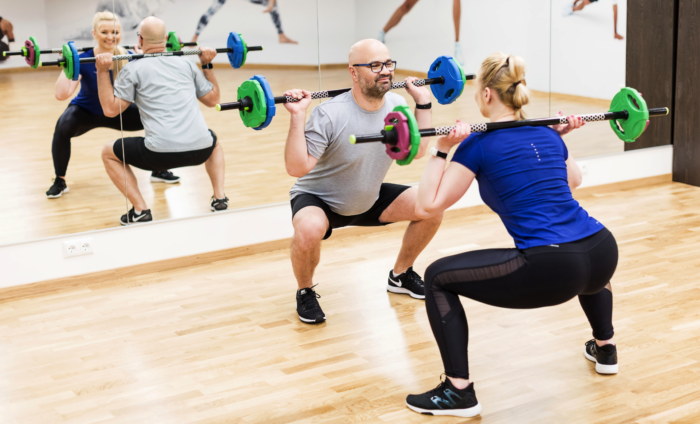
Illustrative photo: Golden Club; Mihkel Raud Fitnessblogi.
Recommended by ArtGym!