
Bodybuilding suggests brute strength; art suggests refined creativity. But look closer — art and the body speak the same language: form, symmetry, proportion. Training is not merely about body weight. It is one way to gradually shape yourself.
Art and the body: why they belong together
Think of a sculptor carving a human figure from marble. Now think of someone spending years shaping their body through training. The material is different — the goal is the same. Both start with a raw block of material and arrive at something finished. One thing unites them: discipline.
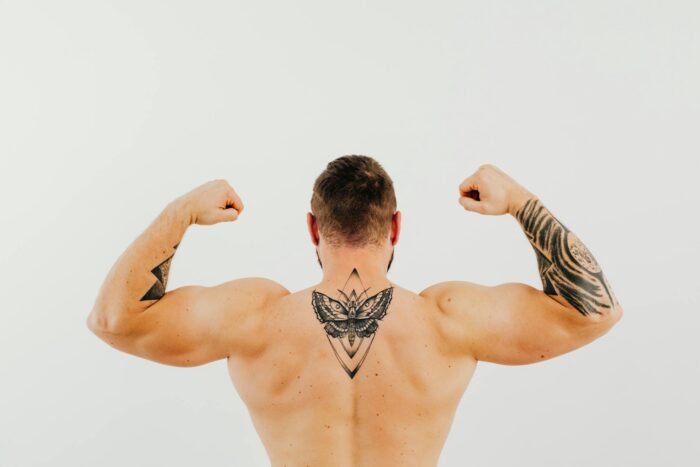
Aesthetics here is more than skin deep. Good posture, balance between your left and right sides, the proportions of your muscle groups — these follow the same principles an artist uses in composition. Your shoulder and the back of your upper arm are not just “muscles.” They are parts of a whole that either works visually or does not.
This is often forgotten in the gym. People chase mass in the chest and shoulders while neglecting the posterior chain. The result looks like a sculpture the artist left unfinished.
How training becomes art
Training becomes an art form the moment you start paying attention to more than the numbers on the scale. Weight, reps, sets — these are technical tools. Art begins when you feel a movement flow through your body and see your shape change in the mirror over time.
Technique before weight
A heavy barbell lifted with poor technique shapes nothing but an injury. An artist does not make the first brushstroke at random — they know where it is going. The same logic applies to squats and presses.
Symmetry and balance
Your left side needs to do the same work as your right. One-arm rows, single-leg squats, individual attention to each side — these are not trends but hygiene. The asymmetry you fail to notice today will show up five years from now, both in the mirror and as back pain.
Time and patience
A sculptor does not finish a piece in one evening. A trained physique develops over months and years, not weeks. If you do not understand this, you will end up burning out or giving up.
Art and the body in practice: what to focus on
If you want your training to feel more like a creative process than a mechanical task, here are some practical steps:
- Take one photo each month from the same angle and in the same lighting. Changes are hard to see in the mirror. Photos reveal your shape over time.
- Learn to pose. Posing at bodybuilding competitions is a way to demonstrate balance and control, not to show off. Even if you never intend to step on stage, posing teaches you to understand your body.
- Pay attention to your posture outside the gym. How you sit, stand and walk — it all contributes to your aesthetics.
- Choose a supportive environment. ArtGym is a boutique gym in Tallinn where the interior itself — paintings on the walls, a quiet and private atmosphere — supports concentration and a creative approach to training.
The simple truth is that where you train shapes how you train. A gym with blaring music and scratched mirrors will not encourage you to focus on technique. A peaceful gym with tasteful lighting will.
FAQ: art and the body in training
Should everyone who trains think of their body as a work of art?
Not necessarily. If your goal is health or strength, those are worthwhile aims in their own right. An aesthetic approach is simply one way to add value to your training — especially when motivation starts to fade.
What is the difference between bodybuilding and “artistic” training?
Bodybuilding is part of aesthetic training, but it is not the whole picture. An artistic approach also encompasses posture, movement quality and how you present your body — not just muscle mass.
Can everyone achieve symmetry?
No one has perfect symmetry — we are biologically asymmetrical. But everyone can work toward visual balance. It simply takes time and deliberate work on your weaker side.
Come and experience for yourself how training becomes art.




