
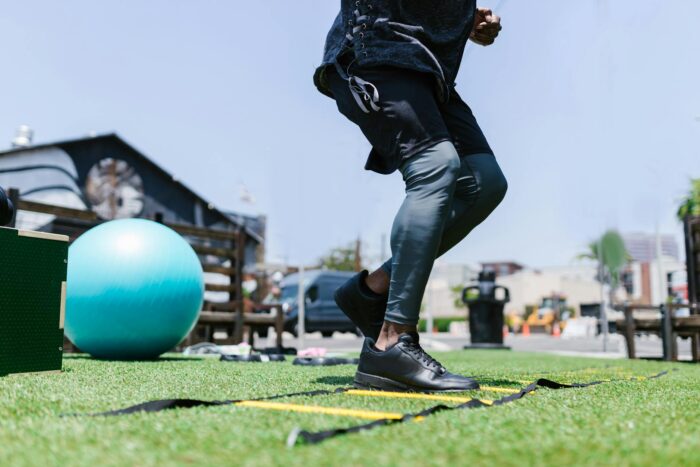
Burn fat: interval training for women
Spending hours on the treadmill is not the only way to lose fat. A much smarter approach is to make your body work harder for short bursts, then let it recover. Here is a simple interval training plan you can use for cycling, running, jumping rope or working out on cardio machines at the gym.
(Cory Everson 6x Ms. Olympia, Muscle & Fitness)
Why interval training burns fat more effectively
Women, here is some good news: you do not have to keep plodding along at the same pace endlessly to burn calories. Long, easy cardio sessions can be useful, but they are not always the most effective approach if your goals are to burn fat, get in better shape and preserve muscle.
Interval training means alternating harder efforts with easier recovery periods. For example, you push harder for a short time, then slow down and repeat for several rounds. The simple truth is that your body cannot stay in its comfort zone all the time if you want to see a change.
The idea behind the original article still holds up. Research and Cory Everson’s own experience suggest that interval training may boost your metabolism, increase the calories you burn both at rest and during training, and help preserve muscle. Think of it this way: 20 minutes of interval training may improve your VO2 max, burn more calories, boost your metabolism and protect muscle tissue at the same time.
This does not mean easy cardio is bad. The problem arises when all your training consists of long, slow sessions. Your body gets used to it. In some cases, too much steady-state cardio combined with poor recovery can actually leave your physique looking flatter, because your body uses muscle tissue as well as fat for fuel.
How to burn fat: work and recovery
The key to successful interval training is getting the pace right. It is not about going all out every day. 2 workouts a week are enough, especially if you also do strength training or regular aerobic activity.
Start each workout with a 5 7-minute warm-up. This could be an easy jog, cycling, rowing on a rowing machine or another activity that raises your heart rate without exhausting you. Then increase the intensity: speed up, increase the training load or choose a steeper incline. When the work interval ends, slow down and recover.
Honestly, the biggest mistake here is starting too hard. If your first interval feels like a sprint to the finish line, the rest of the workout will fall apart. You are better off starting at a controlled pace and saving the hardest repetitions for the end.
| Fat-burning interval training | |||
| Varying the intensity of your exercises helps you burn more calories | |||
| Level | Workout segment | Segment duration | Perceived training load |
| BEGINNER | WORK | 1 minute | Moderate |
| RECOVERY | 2 minutes | Easy | |
| TOTAL | 30 minutes max. | ||
| INTERMEDIATE | WORK | 1 minute | Moderate … hard |
| RECOVERY | 1 minute 30 s | Easy … moderate | |
| TOTAL | 25 30 minutes | ||
| ADVANCED | WORK | 30, 45, 60 seconds | HARD |
| RECOVERY | 30, 45, 60 seconds | MODERATE | |
| TOTAL | 18 minutes* | ||
The total workout duration does not include the 5 7-minute warm-up and cool-down.
* Do 30-second intervals for 5 minutes, 45-second intervals for 6 minutes and 60-second intervals for 7 minutes.
Beginner option
If you are just starting out, keep the work interval moderately hard. 1 minute of effort followed by 2 minutes of easy recovery gives your body a clear stimulus without wearing you out. Keep the total workout to 30 minutes max.
Intermediate option
Once you have a fitness base, you can do 1 minute of work followed by 1 minute 30 s of recovery. The work interval should feel moderate … hard, rather than just slightly uncomfortable. The whole workout lasts 25 30 minutes.
Advanced option
At the advanced level, work and recovery intervals are the same length: 30, 45, 60 seconds. The training load is HARD during work and MODERATE during recovery. This is a short but demanding workout: 18 minutes* is enough if you put in the effort.
Practical tips to turn fat burning into more than a slogan
You do not have to limit interval training to a machine at the gym. Run on a track, ride a bike or grab a jump rope. Some days, cycling is a better fit; on others, a brisk uphill walk works better. The key is to make the work interval clearly harder and the recovery genuinely easier.
Switching exercises helps mentally, too. If you have been following the same route at the same pace for months, boredom soon sets in. Intervals make your workout shorter and more focused. You know when to push and when you can catch your breath.
Monitor your perceived exertion. It’s a simple scale you can use in your head: easy means you can talk; moderate means you’re breathing harder; hard means you want to stop mid-sentence. If every interval feels hard, it’s no longer interval training. It’s just suffering.
Don’t forget to cool down and stretch. Once you’ve completed the work and recovery periods, keep moving at an easy pace and let your heart rate come down. Your body will thank you the next day.
FAQ
Do you burn fat more effectively in the morning or evening?
The best time is whenever you can fit in a proper workout. Mornings may suit one person, evenings another. When it comes to burning fat, consistency, training load and recovery matter more.
Is interval training suitable for a complete beginner?
Yes, if you start gently. The beginner format consists of 1 minute of work and 2 minutes of recovery. The work interval doesn’t have to be a sprint; it can simply be walking faster than usual, cycling or light jogging.
Should I only do interval training?
You don’t have to. A good plan also includes lower-intensity aerobic training and strength training. Intervals are a tool, not your entire training program.
Author: Fitness.ee Ai – trainer
Come work out! ArtGym




