
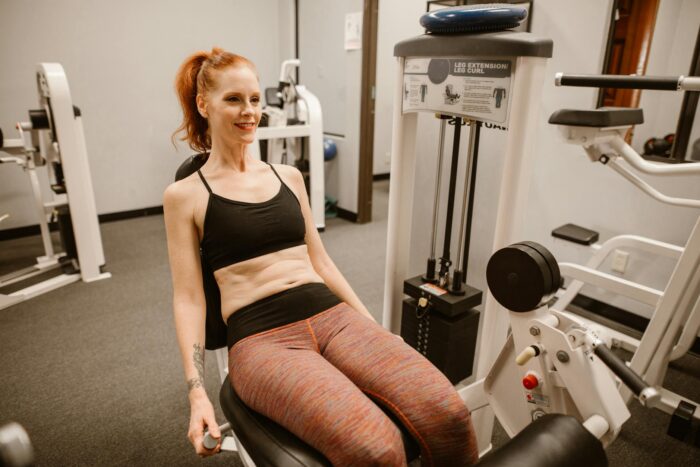
Women over 40: training and nutrition
Your body changes noticeably after your fortieth birthday. Women over 40 face a slower metabolism, declining muscle mass and more fragile bones. But this isn’t fate — the right training and nutrition make a big difference.
What women over 40 need to know about body changes
Aging brings several clearly noticeable changes: skin elasticity decreases, physical performance declines and metabolism slows. The risk of arthritis and osteoporosis also rises. In inactive people, strength and muscle mass decline faster, too.
Skin elasticity decreases in most women during menopause, which usually arrives in their 50s. The main cause is the loss of estrogen. Roughly 30% of collagen is lost in the first 5 years after menopause.
What helps before menopause? Avoid excess sun and keep your skin well moisturized — these two things matter most. Nutrition plays a role as well: collagen is the main component of skin and bones, and adequate protein intake supports its production. You get vitamins A and C and essential fatty acids by eating vegetables and fruit every day, along with small amounts of oil, nuts and seeds.
Women over 40 and metabolism: what actually changes?
In people over 30, metabolism slows by 2–5% each decade. In numbers, that means burning 50–100 calories less per day. From age 40 — and in men from their 60s — we lose 6–8% of muscle mass every ten years.
Honestly, it’s not nearly as bad as you may hear. Muscle mass loss is directly linked to the slowing of metabolism, but both can be held back. Resistance training rebuilds muscle mass and speeds up metabolism. Just 2 months of consistent training — 3 times a week for 40 minutes — helps restore muscle mass. The risk of bone thinning also decreases.
You are not doomed to get fat as you age. Focus on exercise that builds and maintains muscle mass.
Osteoporosis and arthritis: the main risks after age 40
After age 40, bone thins faster than new bone forms. Bone density declines gradually — that’s why osteoporosis needs to be actively prevented. In addition to strength training, this means getting enough calcium and vitamin D every day.
The following factors increase the risk of osteoporosis:
- being a white or Asian woman
- a slim frame or short stature
- a family history of osteoporosis
- premature or surgically induced menopause
- alcohol abuse
- smoking
- a sedentary lifestyle
- inadequate calcium intake
Arthritis — including osteoarthritis and rheumatoid arthritis — most often affects people over 45. In overweight women, weight loss helps reduce the risk of osteoarthritis, especially in the knees. In rheumatoid arthritis, omega-3 fatty acids, found in flaxseed and fish, may support the immune system and ease disease-related pain.
One important warning: don’t overdo your training. Overtraining without enough rest wears down the joints and can lead to osteoarthritis. If you’re in doubt, consult a certified personal trainer before you start training.
Women over 40: how to train smart
If you’ve been active all your life, there’s no need to change much. The main difference is recovery — an older body needs more time. Progression, injury prevention and avoiding overtraining become priorities.
So what actually happens? As people age, they become smarter trainees — expectations are more realistic and goals more rational. You probably train more wisely and are more focused. That is the advantage of age.
For beginners, the recommendations are concrete: start slowly, at least 3 times a week. Start aerobic training with 20 minutes, then increase the time in 5–10-minute steps until you reach 30 minutes. In strength training, use relatively light weights and a high rep count. Add weight slowly and control your movements carefully.
It’s never too late to start. Getting results may take longer and recovery demands more patience — but don’t give up.
FAQ — what women over 40 ask
Does metabolism inevitably slow down after age 40?
Yes, in people over 30 metabolism slows by 2–5% each decade, which means 50–100 calories less per day. But strength training and aerobic activity help slow this down and restore muscle mass.
Which type of training matters more after age 40 — strength training or cardio?
Both are necessary and complement each other. Strength training maintains muscle mass and bone density; aerobic training keeps the heart and metabolism healthy. Ideally, combine both.
What should I eat to support my skin and bones after menopause?
Increase your protein intake — it supports collagen production. Make sure you get enough calcium and vitamin D. Vegetables and fruit provide vitamins A and C; nuts, seeds and fish provide essential fatty acids.
Author: joker, M&F Hers
PS Come work out! ArtGym




