
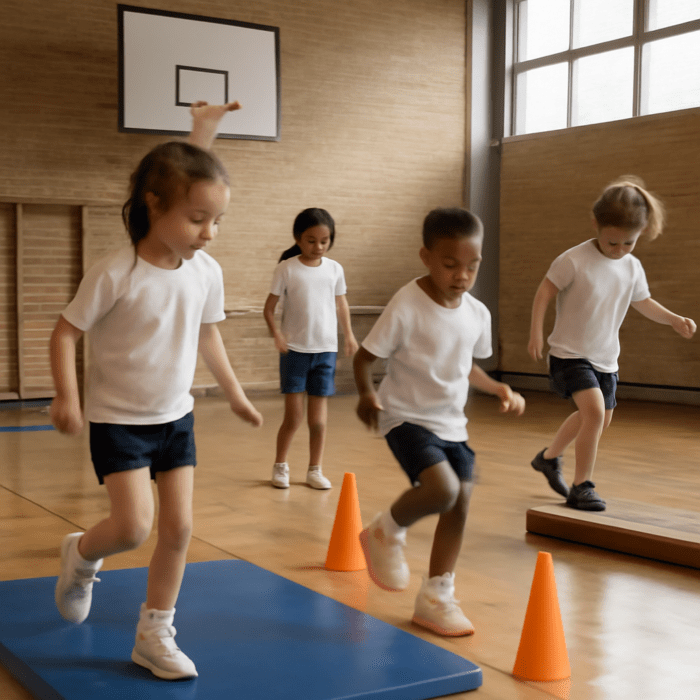
Leave physical education alone: a screen-free lesson
Physical education at school should mean movement, sweat and getting a feel for what your body can do — not counting steps on a screen. Children’s physical fitness in Estonia has declined, and the proportion of schoolchildren who are overweight has doubled: from around 6% in 2004 to nearly 12% today. In these circumstances, bringing smart devices into lessons is a step backwards, not an innovation.
Why physical education must not get a digital makeover
As a teacher, I have always used digital tools myself — as a stopwatch, to show videos and images, and to analyze technique. These are tools for the teacher. But students’ use of smart devices during lessons can, at best, play only the smallest of roles. All too often, talk of the “unprecedented possibilities” of digital tools amounts to little more than step counting or a heart rate app. That is not why children come to PE lessons.
Let’s look at the whole picture. Steps counted or calories burned in one 45-minute lesson are insignificant in the context of a week. Activity levels and calories need attention every day — at school and at home, during lessons and breaks. Children do not need to exercise according to their heart rate at all. A watch on their wrist may display a reading, but that is all.
What physical education really is
Virtually every physical activity requires your whole body, two hands and two feet, and your full attention. A phone in your hand, a tablet in front of you — it simply does not work in practice. You cannot learn technique through a screen. You can only work up a sweat when your body is actually moving. Sporting skill comes from repetitions, not an app.
It is naive to think that a smart gadget can help children develop their physical abilities or learn new techniques during a lesson. Teachers know this. Children know this. Pressure from somewhere higher up to “digitize physical education too” ignores what the lesson actually is: 45 minutes of movement in which the body learns what it can do.
What you can actually do as a teacher
The simple truth is that our job as teachers is to get children moving more — not to keep them rooted to their seats and make them even more passive. Here are some practical principles I follow in my own lessons.
Phones stay in bags. From the start of the lesson, not halfway through. The exception is when the teacher asks students to watch a specific video or check their technique — then phones come out only for that purpose and go straight back into bags afterwards. I take the measurements. The stopwatch, tape measure and whistle are the teacher’s tools. We can work out class averages without every child looking at their wrist. Movement is the goal, not calories. If a child leaves the lesson sweaty and in a good mood, the lesson has been a success — whatever the app says.
For parents: steps and activity matter every day. One PE lesson a week will not turn your child into an athlete or get them away from screens — that takes a lifestyle in which movement is a normal part of the day. The school does its part. The family must do theirs.
Physical education and smart devices: frequently asked questions
Can children wear a heart rate monitor watch in PE?
They can wear one, but there is no need to pay attention to it. A child’s heart rate during a lesson does not need checking every minute — that interrupts practice and draws attention to the wrong thing.
What if parents want to see step counts?
Steps and activity need attention every day — walking to school, spending breaks outdoors and training after school. Statistics from a single lesson do not change the picture for the week.
What role should digital technology play, then?
It should be a tool for the teacher — for video analysis, presenting material and setting homework. It should not be the student’s main activity during a lesson.
Sources and further reading
Research and media coverage featuring pediatricians, sports scientists, nutrition advisers and PE teachers on the link between screen time and children’s inactivity:
- PMC3693866 — study of children’s physical activity (PDF)
- PMC4815203 — the link between screen time and body weight
- Overweight children — educational material (PDF)
- Postimees: children in Estonia are not active enough
- Õhtuleht: researchers assess young people’s activity levels
- Pärnu Postimees, January 2015
- Novaator: children’s health
- Toitumine.ee: overweight
- Postimees: 9 reasons why children should not use smart devices
- Alkeemia: smartphones and children’s body weight
- Telegram: limiting screen time
Author: Janar Rückenberg
Come and work out! ArtGym




