
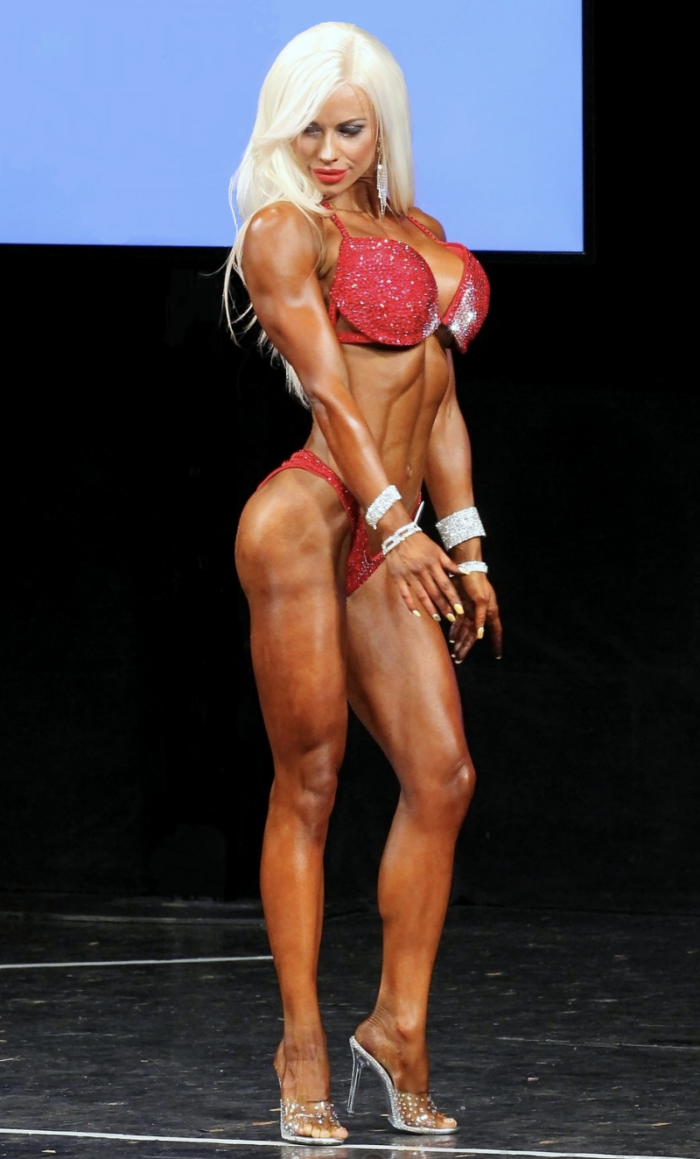
Jekaterina Remets and bikini fitness
Jekaterina Remets came to bikini fitness after ten years of ballroom dancing. This story follows how an athlete from Ida-Viru County moved into the gym, onto the stage and to the top of Estonian bikini fitness.
There are no polished slogans here. It’s fairly blunt talk about hard training, a big appetite, competition shape and why a goal has to truly matter to you.
Why Jekaterina Remets stood out
Before getting into fitness, Jekaterina Remets competed in ballroom dancing for ten years. That’s no small background. Dance gives you posture, stage presence and the ability to endure a routine that can look rather harsh from the outside.
The ballroom journey was cut short when the dance partner moved abroad. In April 2014, Jekaterina walked into the gym and started training following Marek Morozov’s programs. The idea of competing came from Marina Sakutene.
Things moved fast from there. In 2015 came the Estonian champion title in bikini fitness among athletes up to 160 cm tall. In 2016 came the overall win at the Estonian Cup, the overall win at the Baltic Match and 9th place at the European Championships. A record like that shows this was not just a hobbyist who briefly made it onto the stage.
What was the motivation? The answer was short: the biggest motivator was Jekaterina’s own self. Honestly, that’s a quality you very much need in fitness. A coach helps, a plan helps, but in the end you have to show up for your workout in the morning and make your own choices in the evening.
How Jekaterina Remets trained
In that period, Jekaterina trained 4–5 times a week, depending on how things felt. The approach was clear: heavy weights and a muscular bikini fitness look. Jekaterina said outright that muscles don’t grow without heavy weights.
The training split was simple. One day glutes, another shoulders, a third back, and sometimes an extra exercise for arms and one for chest. Then the cycle started over. Jekaterina didn’t train legs separately, because the glute exercises already worked the legs as well.
Abdominal muscles were trained mainly during the prep period. Jekaterina usually did no aerobic training, because the goal was to build as much muscle as possible. That doesn’t mean aerobic work is bad. It means the goal at that time was a different one.
For glutes, Jekaterina preferred basic exercises and heavy loads. The favorite exercise was hip abduction. At Sparta Sports Club, Jekaterina put an extra 20 kg plate on the machine to make the training load sufficient. That says quite a lot about work capacity.
Jekaterina Remets and nutrition
In the off-season, nutrition was surprisingly down-to-earth. Jekaterina ate ordinary food and joked, half in earnest, that grass wasn’t on the menu. A day could start with 7-grain porridge, milk, jam, butter and apple cake.
After training came protein powder, then pasta, meat and salad for lunch. A snack could be curd cream with raisins, fruit and toast. In the evening the menu was mostly meat and salad, sometimes salmon. Dessert? Ice cream. In Jekaterina’s own words, it was also the favorite food.
Marek Morozov and Jekaterina said back then that daily calorie intake stayed at about 3000–3500. You shouldn’t copy that number blindly. A small competitor, a high training load and a muscle-building goal create a situation of their own. A regular recreational trainee has to start from their own body, activity level and goal.
In the prep period the menu got stricter. There were fewer sweets, sometimes almost none. Porridge was made with water, more healthy fats were added, and carbohydrates were adjusted according to condition and body weight. A simple truth: competition shape isn’t built with one trick but with consistent monitoring.
Jekaterina Remets: what you can learn from this
The strongest part of this story isn’t one specific exercise or one supplement. The strong part is the attitude. Jekaterina’s three recommendations were determination, not giving up and respecting yourself. They sound simple, but in the gym you have to prove them anew every week.
If your goal is to change your body, it’s worth starting calmly. Set a training rhythm you can keep even when it’s dark outside, the workday drags on or motivation drops. In Estonia that happens especially in autumn and winter. In those moments a system helps more than mood.
Jekaterina also used supplements: Whey+ (Fast) protein powder after training, Fat Burner during training, plus omega-3, a vitamin complex and the pre-workout stimulant Boom (Fast). Those were Jekaterina’s choices at the time, not a mandatory shopping list.
Jekaterina handled cravings quite practically: in the off-season, favorite foods were on the menu, while prep was stricter. When a craving hit, Jekaterina would remind themself what it was all for. That’s harsh, but competitive sport is simply different from ordinary shape maintenance.
You could also follow Jekaterina’s activities on social media: https://www.instagram.com/jekaterina_remets/ and https://www.facebook.com/jekaterina.remets?fref=ts. The same profiles can also be found here: Instagram and Facebook.
FAQ: Jekaterina Remets
When did Jekaterina Remets start going to the gym?
They first came to the gym in April 2014, after a long background in ballroom dancing. They began doing their workouts following programs written by Marek Morozov.
How often did they train?
According to the original interview, they trained 4–5 times a week. The split focused on glutes, shoulders and back, with arm and chest work added at times.
What were their best achievements?
They highlighted the 2015 Estonian champion title in bikini fitness, the 2016 EKV overall win, the Baltic Match overall win and 9th place at the European Championships.
Author: Peep Reinart
Come and train! ArtGym




