
At a glance:
- Grip strength is an inexpensive, quick measure that reflects overall muscle strength and is associated with mortality risk.
- In large studies, every 5 kg reduction in grip strength was associated with approximately 16% higher all-cause mortality (Leong, 2015).
- You can improve grip strength through strength training, which supports healthy aging and independence.
- Low grip strength is one of the diagnostic criteria for sarcopenia (loss of muscle mass and strength) (Cruz-Jentoft, 2019).
Grip strength, or the force you can generate by squeezing your hand, offers a surprisingly accurate window into your overall health. It reveals more than the condition of your hand muscles: it reflects muscle strength throughout your body, mobility and resilience to aging. This is why grip strength has become one of the most widely studied markers of healthy aging.
What is grip strength, and how is it linked to mortality?
Grip strength is usually measured with a dynamometer, which records how hard you squeeze the device. The measurement takes just a moment, requires no laboratory tests and can be repeated at any age. The large international PURE study found that every 5 kg reduction in grip strength was associated with approximately 16% higher all-cause mortality and a greater risk of cardiovascular disease (Leong, 2015). Data from the UK Biobank linked lower grip strength to higher mortality, heart disease and certain types of cancer, even after accounting for lifestyle factors (Celis-Morales, 2018).
Why can a simple squeeze predict so much? Muscle strength simultaneously reflects nutrition, physical activity, chronic inflammation and the condition of the nervous system. A balanced diet and adequate protein and micronutrient intake support muscle recovery and help maintain strength, making grip strength a combined indicator of many underlying processes.
How does grip strength affect healthy aging?
Muscle mass and strength naturally decline as you age, but accelerated loss leads to a condition called sarcopenia. The European working group’s revised consensus (EWGSOP2) identifies low grip strength as one of the main diagnostic criteria for sarcopenia (Cruz-Jentoft, 2019). Sarcopenia, in turn, increases the risk of falls, fractures and loss of independence.
The World Health Organization emphasizes that healthy aging means maintaining functional ability, not simply being free of disease; muscle strength and mobility underpin this ability (WHO Healthy Ageing). Good grip strength is a practical indicator of your ability to keep carrying out everyday tasks — lifting shopping bags, opening jars and climbing stairs — even in advanced age. Mental and physical well-being go hand in hand; keeping your body and mind healthy supports your motivation to stay active and train regularly.
How can you improve grip strength?
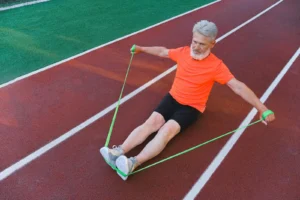
You can develop grip strength and overall muscle strength at any age. A systematic review and meta-analysis found that greater muscle strength is associated with lower all-cause mortality, suggesting potential benefits from training (García-Hermoso, 2018). The American College of Sports Medicine (ACSM) recommends that adults do strength training at least twice a week, involving all major muscle groups.
Practical steps:
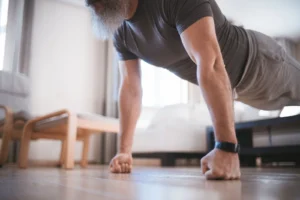
- Strength training using major movement patterns (squats, pushes, rows) that also work your hand muscles.
- Grip-specific exercises, such as loaded carries (farmer’s carry), deadlifts or hanging from a bar.
- Adequate protein and recovery to allow your muscles to adapt.
- Consistency — small, regular training loads deliver more than occasional efforts.
If you are starting from scratch or have health conditions, it is worth involving a specialist. A trainer’s role in promoting health and physical activity is important here: correct technique and an appropriate training load reduce injury risk and help you progress faster. Muscle strength and metabolism are also interconnected — for example, pancreatic hormones and their role in metabolism influence how your body uses nutrients to build muscle.
Grip strength is not a magic number, but a convenient snapshot of how well your body functions as a whole. Tracking and improving it is one of the simplest ways to support healthy aging.
References
- Leong DP, Teo KK, Rangarajan S, et al. (2015). Prognostic value of grip strength: findings from the Prospective Urban Rural Epidemiology (PURE) study. The Lancet. PMID: 25982160
- Celis-Morales CA, Welsh P, Lyall DM, et al. (2018). Associations of grip strength with cardiovascular, respiratory, and cancer outcomes and all cause mortality: prospective cohort study of half a million UK Biobank participants. BMJ. PMID: 29739772
- Cruz-Jentoft AJ, Bahat G, Bauer J, et al. (2019). Sarcopenia: revised European consensus on definition and diagnosis (EWGSOP2). Age and Ageing. PMID: 30312372
- García-Hermoso A, Cavero-Redondo I, Ramírez-Vélez R, et al. (2018). Muscular Strength as a Predictor of All-Cause Mortality in an Apparently Healthy Population: A Systematic Review and Meta-Analysis of Data From Approximately 2 Million Men and Women. Archives of Physical Medicine and Rehabilitation. PMID: 29425700
Frequently asked questions
What is normal grip strength?
Normal values depend on age and sex, and measurements are taken with a dynamometer. When assessing sarcopenia, EWGSOP2 uses approximate thresholds for low grip strength of below 27 kg for men and below 16 kg for women (Cruz-Jentoft, 2019), but your results should be interpreted with a specialist.
Does grip strength really predict mortality?
In large prospective studies, lower grip strength was associated with higher risks of all-cause mortality and heart disease (Leong, 2015; Celis-Morales, 2018). This is an association, not necessarily a direct cause, but grip strength is a reliable marker of overall health.
Can you improve grip strength in later life?
Yes. Strength training improves muscle strength at any age, and greater muscle strength is associated with lower mortality (García-Hermoso, 2018). ACSM recommends strength training at least twice a week.
Which exercises build grip strength?
Loaded carries, deadlifts, hanging from a bar and general strength training involving the major muscle groups all help. Consistency, an appropriate training load and adequate recovery are essential.
Come work out! ArtGym