Winter exercise: how to get outdoors
Winter doesn’t have to mean just watching the snow from behind a window. With the right clothing and a sensible pace, being active outdoors gives your body a good training load, and afterwards you often feel better than you did before you left.
Why is winter good for the body?
In Estonia, winter is sometimes slushy, sometimes crisp and sometimes straight out of a picture book. That variability is exactly what makes exercising outdoors a bit tricky, but also valuable. Fresh air, snow and lower temperatures make your body work differently than it does in a warm indoor workout.
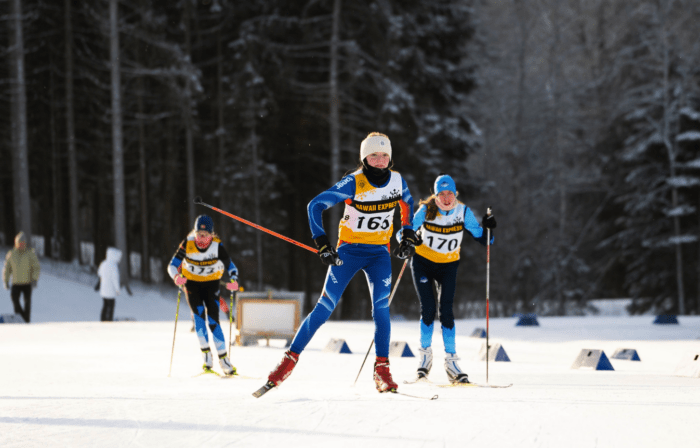
Skiing is a good example. Arms, legs, core and breathing all work together. It isn’t just leg work, as people sometimes think. When the track is slippery and the terrain varies, your body has to keep balancing constantly. That trains muscles you don’t always notice in the gym.
Even a relaxed winter hike, sledding with kids or ice skating provides training load. Not every bit of movement has to look perfect on your training watch. Sometimes it’s enough that your heart rate goes up, your cheeks turn red and you spend an hour away from a screen.
Honestly, the hardest part of going outside in winter is often your own front door. Once you’re out there, it gets easier. Your body warms up, your breathing settles and your mind gets a break from the daily noise.
How do you fit winter activity into your training plan?
Think of these activities more as extra movement. A ski day can take as much energy as a solid lower-body workout, so it isn’t smart to put a heavy squat day and a long ski trip on the same day.
A simple truth: training load counts even when it doesn’t come from under a barbell. If you spend two hours on the ski track on Saturday, give your legs an easier day on Sunday. A walk, light mobility work or a sauna all work well. Your body can’t tell whether the fatigue came from the track, the gym or the sledding hill.
Do a short warm-up before heading out. Hip circles, knee raises, shoulder circles and a couple of minutes of light movement help wake up your joints. In the cold, muscles are stiffer at first. Take the first ten minutes easy instead of charging straight uphill.
Afterwards, swap wet clothes for dry ones quickly. This is especially important if you finish your workout and then drive or wait for friends. A cold wind and a damp shirt are a bad combination. A warm drink, a light meal and some stretching help your body settle down.
Practical options for exercising outdoors
Skiing is a classic, but it isn’t the only option. If you don’t have skis or the track is far away, pick something simpler. Brisk walking on a snowy forest road can be surprisingly hard. Deeper snow works your calves and glutes, especially if you keep a steady pace.
Sledding suits families, but also adults who want to be active without a big training plan. Going down the hill is the fun part. Walking back up is the workout. The same goes for ice skating: a relaxed loop on a lake or rink develops balance and gives your legs a pleasant training load.
A winter hike is a good choice if you don’t want to worry about technique. Wear shoes with good grip, and bring gloves and a thin spare pair of socks. If it’s windy, it’s worth choosing a more wooded trail. An open field edge can feel a degree colder than the thermometer says.
You don’t have to overdo the gear, but you shouldn’t head out completely at random either. Layering works better than one thick jacket. The base layer should wick moisture away, the middle layer should keep you warm and the outer layer should protect you from the wind. A hat and gloves are small things, until you don’t have them.
If you need skis, a helmet, ice skates or other winter sports equipment, the selection mentioned in the original article can be found at Hawaii Express. Before you decide between buying and renting, think about how often you really go outside. For a couple of times a year, renting can make more sense than a new set.
FAQ: winter and outdoor exercise
Can you work out in the cold?
Yes, if you feel well and your clothing suits the weather. Start gently and avoid very hard effort when the air is freezing or your breathing becomes uncomfortable.
Can skiing go alongside gym training?
Yes, but take recovery into account. A long ski day loads the legs, core muscles and shoulder girdle, so don’t put it on the same day as very heavy strength training.
What should you do if you have no motivation?
Keep the plan small. Tell yourself you’re only going outside for 20 minutes. If you want to come home after that, come home. Often the first step is the whole win.
Come and train! ArtGym