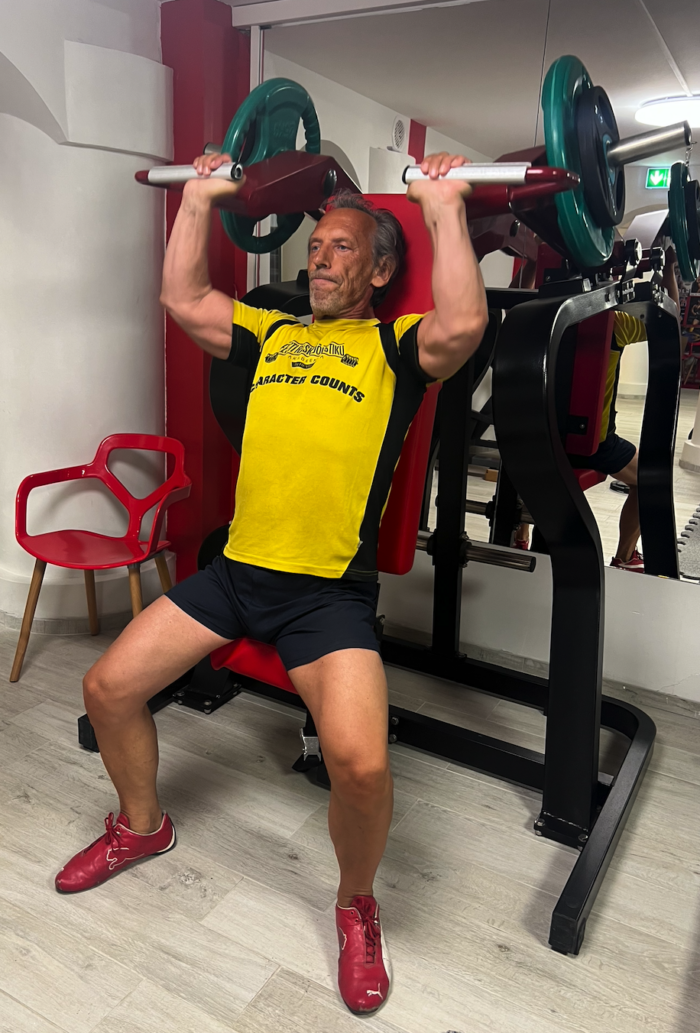
A bulking cycle is simply a period in which all your training, food and sleep are tuned to one goal — muscle building. It’s not magic or a secret plan. It’s consistency over 8–12 weeks, where every workout builds on the last.
A note before you start: if you have a chronic injury or haven’t lifted weights in years, see a coach first. The plan is effective, but only if your technique is solid.
Why a bulking cycle works
Muscle grows when you give it a systematic training load that goes beyond its current capacity and then allow enough time to recover. One heavy workout does nothing. Two months of consistent work does a lot.
A bulking cycle splits this work into three parts: volume, intensity and fine-tuning. In the first weeks you do more reps at a moderate weight — your tendons and connective tissue adapt. Then you raise the weight and cut the reps. At the end you isolate weaker muscle groups on separate days to squeeze out the last bit of progress. This order isn’t made up — it’s classic periodization, used from Soviet weightlifting halls to this day.
The bulking cycle week by week
Weeks 1–4: accumulation phase
- Workouts per week: 4
- Main focus: basic exercises — squat, press, row, overhead press
- Sets × reps: 3–4 × 8–12
- Rest between sets: 60–90 seconds
- Weight: the last 1–2 reps should feel hard, but your technique must not fall apart
The goal of this month isn’t to break records. The goal is to get through all the volume without injury. If you tire too early, you’ve chosen weights that are too heavy.
Weeks 5–8: intensity phase
- Workouts per week: 4–5
- Sets × reps: 4–5 × 6–8
- Rest: 90–120 seconds
- Weight: put more weight on the barbell, and the reps go down
This is where your body starts to show what it can do. Keep a training log — even in your phone’s notes. If the weight on the barbell isn’t moving forward from week to week, that’s a signal: you’re either sleeping too little or eating too little.
Weeks 9–12: fine-tuning
- Workouts per week: 5
- Main focus: muscle groups on separate days — chest, back, legs, shoulders, arms
- Sets × reps: 5 × 6–8
- Rest: 2–2.5 minutes
- Plus isolation exercises — concentration curls, triceps extensions, leg curls
Week 13: deload
Three to four easy workouts, weights at about 60% of your usual, 8–10 reps. This week isn’t a sign of weakness. It’s what lets you start the next cycle fresh rather than tired.
The bulking cycle and nutrition
Training is the stimulus, food is the raw material. Without enough energy and protein, grinding away in the gym only wears your body down. It’s a simple truth: a bulking cycle without a calorie surplus doesn’t work.
- Protein: about 1.6–2.2 g per kilo of body weight per day
- Carbohydrates: more on training days, fewer on rest days — your body uses them for energy and for recovery
- Sleep: 7–9 hours. Muscle doesn’t grow in the workout, it grows overnight
- Water: 2–3 liters, more in summer
If your body weight hasn’t gone up in two weeks, add 200–300 calories to your daily menu. Usually one extra meal or a couple of slices of whole-grain bread with peanut butter is enough.
Frequently asked questions
How long should a bulking cycle last?
The classic length is 12 weeks plus one deload week. Shorter cycles (6–8 weeks) work too, but leave growth potential unused. Beyond 16 weeks the body usually hits a plateau — then it’s better to take a break or change the format.
Should a beginner do a bulking cycle?
If you’ve never trained with a structured plan, start with 2–3 months of refining your technique — a simple full-body plan three times a week. A bulking cycle assumes you can already squat, press and row safely.
Do you have to go for a new record every time at the gym?
No. Progress means, on average, a little more weight or a rep or two more from week to week — not every day. Some workouts are simply hard days where you hold last week’s level. That’s normal.
Edited by: Arnold Tokko
Come and train! ArtGym