Protein bars: how to choose a good snack
A protein bar is a convenient snack that helps you meet your protein needs after a workout or midway through a long working day. But shop shelves offer a huge choice, and ingredients vary considerably. In this guide, we look at how to tell a good bar from a sugary treat and when it can actually be useful.
A protein bar as a snack
A good protein bar doesn’t need to replace a proper meal — its job is to bridge the gap between meals. A typical protein bar provides 15–25 g of protein and 150–250 kcal. That’s a fair bit more than a standard chocolate bar, but less than a light meal. Ask yourself: do you want to take the edge off your hunger or replace a meal? A bar is ideal for the first, but not the second.
When is it most useful? After a workout when you can’t eat straight away, or at the office when lunch gets pushed back to four o’clock. A bar is a lifesaver when you’re traveling — it won’t spoil and doesn’t need refrigeration. Parents who spend their days shuttling between their children’s training sessions know this well: a bar clutched in your hand in the car can keep your energy levels up.
One simple truth: if you get enough protein each day from regular food (around 1.5–2 g per kilogram of body weight for an active person), a bar is simply a convenience, not a necessity. But convenience counts — what you actually eat is better than what you only plan to eat.
A good protein bar: ingredients and quality
When checking the wrapper, pay attention to three things: the protein source, sugar and dietary fiber. These determine whether you’re getting a nutritious snack or a sweet treat with a different label.
Protein source
Whey protein (whey) and milk protein are easily digested and provide a complete amino acid profile. Soy protein is a reasonable alternative, while plant protein blends (pea + rice) are suitable for vegans. If collagen is the main protein source, the bar won’t offer much benefit for muscle mass — collagen supports skin and joints but doesn’t provide all the essential amino acids. Read the label, not just the front of the wrapper.
Sugar and sweeteners
Keep sugar below 10 g per serving. Some manufacturers replace sugar with polyols (maltitol, xylitol, erythritol) or stevia — this reduces calories, but larger amounts of polyols can really upset your stomach. Try half a bar the first time and see how your body responds. Stevia is safer in this respect, but not everyone likes its aftertaste.
Dietary fiber and fullness
5 g or more of dietary fiber makes a bar a more filling snack. Oat fiber, chicory fiber and nuts add texture and help you feel full. Nuts also provide healthy fats that slow digestion — you stay full for longer. A word of caution: large amounts of chicory fiber (inulin) can cause gas if you have a sensitive digestive system.
Taste, texture and practical tips
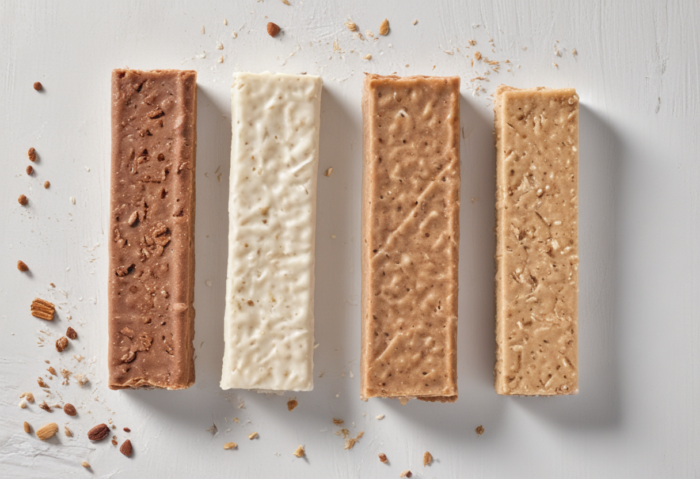
Honestly, if a bar doesn’t taste good, its ingredients won’t matter. Popular flavors such as chocolate and nut, caramel and salted peanut, and raspberry yogurt are reliable winners. More unusual options (maple syrup, mint chocolate, cookies and cream, banana and caramel) can be hit or miss — try one at a time rather than buying a whole box. Taste is ultimately subjective, and your friend’s favorite might disappoint you.
Textures broadly fall into two categories: crunchy with a coating, and soft and chewy. Crunchy bars work well as a treat after a workout, while soft ones are better suited to replacing lunch. Raw bars (date-based and unbaked) are a category of their own — their sugar comes from dates rather than refined sugar, but they often contain just as many calories as a standard protein bar. Natural doesn’t always mean low in calories.
A practical tip: keep two or three bars in your bag or drawer just in case. But don’t make them the mainstay of your daily diet — a balanced meal (chicken + rice + vegetables) gives you more amino acids and micronutrients for the same money than three bars. Prices range from 1.50 € to 4 € per bar; a higher price often reflects better-quality ingredients, not just the brand. But not always — always compare the nutrition information.
One little trick: keep a few bars in the fridge. A crunchy coating becomes even more enjoyable, and a soft bar develops a firmer texture. In summer, this is the only way a chocolate coating will survive in the car.
Protein bar FAQs
Can a protein bar help you lose weight?
Not directly. A calorie deficit drives weight loss. But if a bar replaces chocolate or cookies, then indirectly, yes — you get the same taste satisfaction for fewer calories, along with more protein to keep hunger at bay.
How many bars a day is okay?
One or two is fine. Beyond that, they start to play too big a role in your diet, and you miss out on the variety other foods provide. For children, one is enough, if they need any at all.
Is a gluten-free, lactose-free bar healthier?
Only if you have celiac disease or lactose intolerance. A gluten-free label has no proven health benefit for healthy people — it’s mainly marketing.
Author:Turg.Fitness.ee
Come work out! ArtGym