Athletic-fitness: a clear guide to training
Athletic-fitness is a sport in which strength, endurance and competition conditioning all have to come together. This guide helps you understand what training involves, what to practice and how to make more reliable progress toward competition shape, without overcomplicating things.
Why does athletic-fitness require a complete approach?
Many people come to this sport with one question: is strength or appearance more important? The answer is simple. Athletic-fitness does not allow you to neglect either completely in favor of the other. You need to perform strength exercises properly, move with good technique and maintain a body composition that makes competition shape more than just an aspiration.
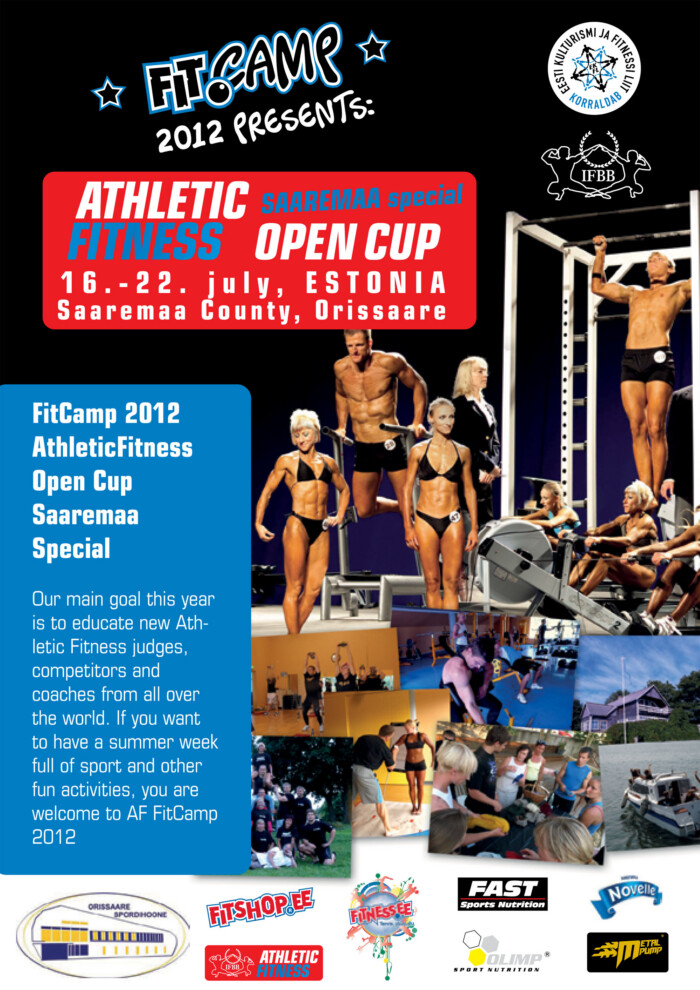
The original training guide was produced in collaboration with the Estonian Bodybuilding and Fitness Federation and compiled by Janar Rückenberg and Silvar Rückenberg. It was completed in 2013. It provides a solid starting point, because athletic-fitness involves more than lifting weights in the gym. It also means knowing how to recover, choose your training load and eat so that your workouts deliver results.
If you have only done conventional strength training before, the sport may feel unfamiliar at first. Pull-ups, dips and rowing work your body differently from individual exercises on machines. Control matters here. So does your ability to maintain good technique as fatigue sets in.
How should you structure your athletic-fitness training?
Training starts with an overall plan. Before filling every day with activity, decide what you are currently working to improve. One phase might focus on strength, another on endurance and a third on competition conditioning. Trying to maximize everything at once is a fast route to fatigue and stalled progress.
The foundations of strength training
Your strength workouts need a structure clear enough for you to track your progress. A good plan is about more than including plenty of exercises. It tells you when to push, when to maintain your training load and when to take a step back. In athletic-fitness, it is especially important not to leave your upper-body pulling and pressing strength to chance.
Pull-ups give you a fairly honest assessment of your back and core muscles and your grip strength. Dips provide similar feedback on your shoulder girdle, chest and triceps. When your technique breaks down, willpower alone is not the answer. Often, you need a more controlled pace, better mobility or less total training volume.
Rowing and endurance
Rowing is more than an extra exercise to fit in at the end of a workout if you have time. It brings your legs, back, arms and breathing together in a coordinated effort. That is precisely why it fits athletic-fitness so well. If your stroke is jerky and your breathing quickly gets out of control, it reveals weaknesses you may not always notice in the gym mirror.
As you work toward competition shape, you also need to consider recovery. Hard training only delivers results if your body can recover from it. Sleep, nutrition and gradual changes to your training load are not side issues. They are part of the same plan.
Practical sections in the training guide
The guide’s value lies in going beyond general advice to cover specific topics that anyone training for athletic-fitness needs to understand. These include:
- Structuring strength workouts
- Pull-ups
- Dips
- Rowing
- Factors involved in getting into competition shape
- Key aspects of nutrition
- Plus: sample training splits
When it comes to nutrition, the most important thing is to avoid extremes. Aiming for competition shape does not mean every meal has to be an ordeal. Equally, you cannot expect haphazard eating to deliver precise results. A sensible protein intake, enough energy and a consistent eating routine do more than a complicated meal plan that no one follows for more than a couple of days.
Sample training splits are especially helpful if you are unsure how to organize your week. Should you do rows and presses on the same day? Where should rowing fit in? When should you practice technique? There is no single answer to these questions that will always apply, but your plan needs to be simple enough to follow in practice.
FAQ: getting started with athletic-fitness
Is athletic-fitness suitable for beginners?
Yes, provided you take a sensible approach. As a beginner, you do not need to aim for competition shape straight away. Start by learning proper exercise technique, building foundational strength and getting used to training that includes both strength and endurance work.
Are pull-ups compulsory?
Pull-ups are very important in athletic-fitness because they demonstrate upper-body pulling strength and body control. If you are not yet strong enough to do them, you can start with easier variations and progress gradually.
What should you focus on first in your diet?
First, check whether you are eating regularly enough and getting enough energy for your workouts. Only then should you start fine-tuning the details. Getting into competition shape comes from steady, consistent work, rather than a single trick.
Author: EKFL
Source:Turg.Fitness.ee
Come and train! ArtGym