Bench press: Top 10 and records
The bench press is one of the best-known strength lifts in the gym. Here we look at the old Top 10 table that was circulating on fitness.ee as far back as 2004, and put it in an understandable context: what those kilos show, what they don’t, and what an ordinary lifter can learn from them.
Why does the bench press get so much attention?
When someone in the gym asks, “How much do you press?”, they usually mean the bench press. It’s a simple, visible measure that everyone understands. The weight on the bar is the weight on the bar. No long explanations needed.
At the same time, the bench press is a deceptive number. Doing a clean repetition in training is one thing; pressing a maximum weight in competition conditions is another. What counts is technique, the pause on the chest, equipment, body weight, the judges’ commands and the rulebook under which the result is recorded.
The record tables of the early 2000s were especially impressive because equipped powerlifting was developing rapidly. Bench press shirts, better training planning and highly specialized athletes took the numbers to a level that seems almost unreal in an ordinary gym.
The bench press in the Top 10 table
The original fitness.ee post was a short list. Here it is laid out more readably, keeping the names, kilos and years as they were.
- Gene Rychlak Jr — 408 kg 2003
- Scott Mendelson — 397.5 kg 2003
- Shawn Lattimer — 367.5 kg 2003
- Ryan Kenelly — 365 kg 2003
- Bill Crawford — 356 kg 2003
- Anthony Clark — 353 kg 1996
- Vinnie Dizenso — 347.5 kg 2003
- Jamie Harris — 345 kg 1996
- Mike Miller — 345 kg 2003
- Garry Frank — 342.5 kg 2003
The list came with a separate note: “..the first European”. In 23rd place stood Mikko Hämaläinen with a result of 330 kg. This is an important addition, because it shows how strongly the absolute top of that era leaned toward American athletes.
What do these bench press results actually show?
The simple truth: these aren’t ordinary gym numbers. They are the results of elite athletes, built on long specialized training, high body weight, competition skill and often special equipment. A table like this shouldn’t be taken as a goal that every recreational lifter must work toward.
It’s better to view it as a historical snapshot. 1996 and 2003 stand out especially clearly in this table. Anthony Clark and Jamie Harris were listed with results from 1996, while most of the list comes from 2003. That says quite a bit about how fast progress in this field was at the time.
Does 408 kg mean someone should train only pressing from tomorrow? No. A result like that is the end point of an entire system, not the outcome of one good chest day. For an ordinary lifter, it’s far more important to build strong shoulders, a stable upper back, solid triceps and the ability to move the bar along the same path.
How do you train the bench press more smartly?
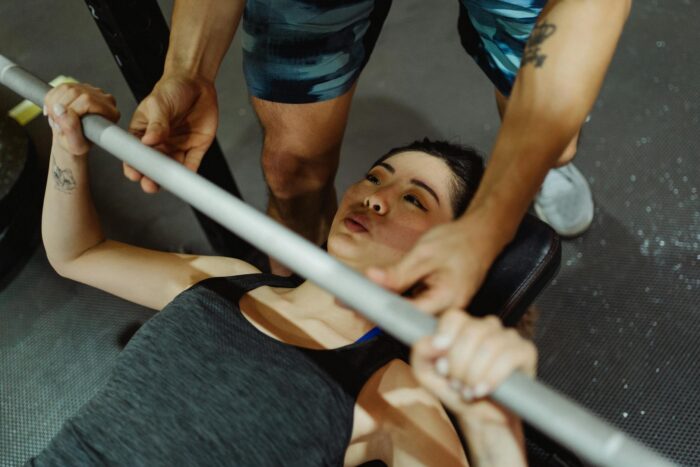
A good press starts with position. Your shoulder blades should be pulled together and down on the bench, your feet planted firmly on the floor and your wrists stacked under the bar. If your body is slack, the strength disappears before the bar even starts to move off your chest.
The second important thing is control of the repetition. Lower the bar evenly, keep tension and press up without tearing your hips off the bench. If the weight forces your technique to fall apart, it’s too heavy for training. Your ego gets a pat on the back for a moment, but your shoulders pay the bill later.
Third: don’t build your whole upper-body training around a single exercise. The bench press needs support from other movements too. Rows, rear-delt work, triceps exercises and moderate dumbbell pressing help keep your body balanced.
Practical tips before you add weight
If your goal is a better result, don’t test your max every week. Strength grows when your body gets enough work and enough recovery. Sometimes the best workout is one where the last repetition still leaves a little in reserve.
- Keep your warm-up calm and gradual.
- Write down the weights of your working sets; don’t rely on memory.
- Train your upper back as seriously as your chest.
- Don’t let your elbows drift out to the sides uncontrollably.
- If your shoulder hurts, reduce the weight and review your technique.
Honestly, most lifters have more to gain from clean technique than from a new max attempt. When the bar travels along the same path every time, you can add weight more calmly, too.
FAQ: bench press
Is the bench press the best chest exercise?
It’s a very good basic exercise, but not the only one. For some people, the dumbbell press or work on an incline bench is a better fit. The best choice is the one you can do with solid technique and without pain.
Why has my progress stalled?
Most often the cause is training that’s too repetitive, a weak upper back, poor recovery, or doing every workout too heavy. A small step back can make room for new progress.
Should you make the records table your goal?
You don’t have to. The table is fascinating history and a good source of inspiration, but your personal progress depends on your body, your training and your consistency. Compare yourself with your own last month instead.
Source: WHO – physical activity.
PS Come and train! ArtGym