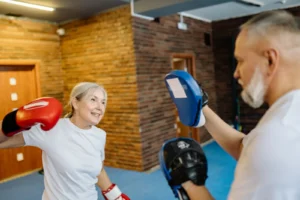
Women in the gym: strength training, part IV
Women often respond to strength training slightly differently from men, particularly when it comes to recovery, technique and feedback on their training. Building on the earlier observations, here are some practical things coaches and trainees can look out for in the gym to make training more effective and safer.
Why women recover differently from strength training
47. Programs that train the whole body in a single workout generally work well for women. Often, they work even better than they do for men. The reason is simple: on average, women recover faster, and the supercompensation effect following training may also fade sooner.
48. Women are more flexible than men on average. That does not mean mobility is unimportant, but stretching should not be the sole focus in the gym. Many women already have hypermobile joints. In that case, it is worth focusing more on developing strength, control and balance. Pay particular attention to the lower back: it can arch excessively during squats, deadlifts and some abdominal exercises.
Women and technique: what coaches should ask
49. You often need to ask women directly for feedback on how an exercise feels. Some only mention afterward that their lower back was tired or an exercise felt strange. When you ask why they did not say so earlier, the answer is: “But you didn’t ask.” Before each workout, it is therefore worth checking whether they still feel fatigued from the previous session. If the lower back is exhausted, deadlifts are not the best idea that day.
When working on a new exercise together, ask simple questions. What do you feel? Which muscle is working? Does this program suit you? Which exercises do you like, and why? This is more than polite conversation. It helps improve technique and prevents problems from going unnoticed until pain has already set in.
51. Women are more likely than men to let their knees cave inward during squats. A larger Q-angle may be one reason. The same issue comes up in point 55: women often find single-leg squats more difficult. What helps here is patient technique instruction, monitoring knee alignment and choosing an appropriate weight, rather than loading the bar to suit your ego.
52. Women often find it harder than men to master proper push-up technique. That does not mean the exercise is unsuitable. You can start with your hands on a raised surface, such as a bench, and gradually work your way lower.
53. Women often have good reactive strength and make good use of elastic energy, but their initial acceleration may be weaker. In a deadlift, this shows up when getting the bar off the floor. Many find it easier when the deadlift starts from the top position, with the eccentric phase preceding the concentric phase.
Women, glutes and practical gym training
50. The original puts it bluntly: the shape of a woman’s buttocks is often what makes her a woman. The wording may sound old-fashioned, but there is a practical point here for gym training. Walking or standing alone will not develop your glutes. You need to train them with a substantial training load or move submaximal weights at maximum speed.
Many women come to training with little awareness of how to engage their glutes. If you have been inactive for years, your body struggles to activate these muscles effectively. A good coach includes a suitable glute exercise in your program and teaches you step by step how to feel the muscles working. A clear difference is usually visible within a couple of months. 56. Most women never reach a point in their training where their glutes are “too good.”
57. To progress with the weights you lift, your gym needs smaller weight plates too: at least half-kilogram and 1.25 kg plates. Lighter bars should also be available. This is especially important for upper-body exercises, where too large an increase in weight can quickly compromise technique.
58. Some women experience urinary incontinence during training, and it becomes more likely after childbirth. It is worth discussing this calmly and without embarrassment. Where necessary, adjust the training load and pay attention to pelvic floor control.
54. During certain exercises, such as hanging leg raises, some women may experience so-called coregasms. These are usually neither comfortable nor welcome. The coach’s role here is simple: avoid making jokes and modify the exercise if necessary.
Women and motivation: what to notice
59. Many women judge their training results by how their clothes fit. This is a perfectly practical measure. The number on the scale does not always tell you whether your shoulders are stronger, your waist looks better or your glutes are more toned.
60. Women often pay more attention than men to what they wear for training. The original mentioned pink clothing and shoes that need to match the rest of the outfit. Clothing is not the substance of training, but this helps explain how comfort and the way you feel affect the effort you put in.
61. Women often find it more difficult to adjust gym machines and other exercise equipment. The answer is clear guidance, rather than rushing: the seat, backrest, handles and movement path need to be set correctly before the working sets begin.
62. Compliments work. Honest feedback rather than empty flattery: “That squat was more stable,” “You kept your knee better aligned today,” “You moved the weight with control.” Comments like these provide direction and boost motivation.
63. When they look in the mirror, many women notice problem areas rather than their strengths. Yet they often work on lagging areas more consistently than men, who sometimes tend to overtrain muscles that are already strong.
64. Getting enough fruit and vegetables is generally not a major dietary issue for women. Meat and eggs, however, could feature more often in their diets. 65. Many women do not enjoy the taste of protein shakes, whereas men generally like them more. 66. Many women think yogurt and nuts already provide enough protein, although this may not be enough to support progress.
FAQ
Should women train differently from men?
Not completely differently, but there are a few things to consider. Recovery, joint mobility, knee alignment, feeling your glutes working and asking for feedback may need more attention.
Is full-body training a good fit for women?
Yes, it works well for many women. If you recover quickly and your program is sensibly structured, full-body training can provide a very good training rhythm.
Why is glute training emphasized?
Because your glutes affect your appearance, hip control and technique in many strength exercises. If they do not engage, your quads or lower back often take over the load.
To be continued…
Author: Janar Rückenberg (compilation and translation)
Source:Turg.Fitness.ee
Come train with us! ArtGym