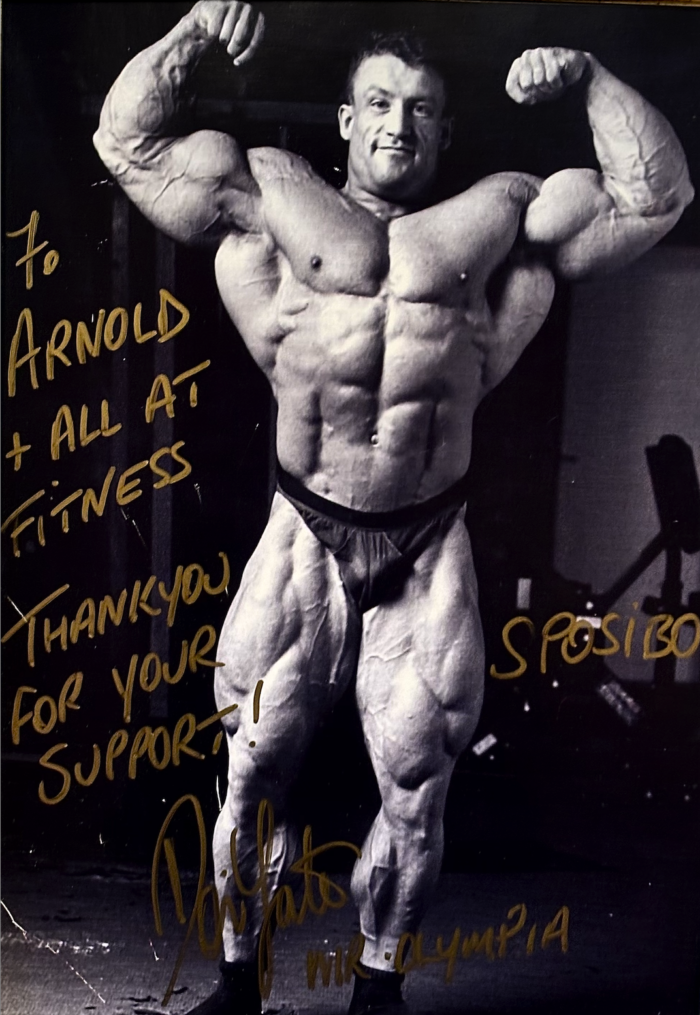
Underhand grip for back training: Yates’ approach
Switching to an underhand grip is a simple adjustment that can change where the work goes during back training. If you want to engage your lower lats more effectively, pay attention to how your elbows move, how wide your grip is and how you finish the pulling movement.
Why does an underhand grip work for your back?
The question is simple: why do some bodybuilders use an underhand grip for so many back exercises? The answer lies in how your arms move relative to your body. With your palms facing up and your elbows moving closer to your torso, your lower lats usually get more of the work.
Many lifters have particularly prominent upper lats. You can see this in a front lat spread and when they stand relaxed. The lower lats, however, often lag behind. The good news is that you sometimes do not need to overhaul your entire routine. Changing your grip and learning to feel the pulling movement more effectively can be enough.
When your elbows flare out to the sides, as they do during overhand-grip pull-ups, lat pulldowns or rows, the emphasis shifts toward your upper lats. Using an underhand grip and keeping your arms close to your body shifts more of the training load to your lower lats. This does not mean that one grip is always better than another. It means that each grip has its own role.
The underhand grip and your lower lats
Yates used several hand positions in his back training: an underhand grip, an overhand grip, a neutral grip with palms facing each other and a mixed grip for deadlifts. This makes sense, because your back is not one small muscle that you can train fully from a single angle. Your lats, trapezius, rhomboids and lower back need different pulling movements.
Honestly, the appeal of an underhand grip is how easy it is to try. It immediately changes the feel of bent-over barbell rows or cable lat pulldowns. Many lifters find that it gives them a greater range of motion and lets them squeeze their back muscles more effectively at the end of the movement.
When using a close underhand grip, let your lats stretch fully during the eccentric phase. Do not simply let the weight pull you along. During the concentric phase, drive your elbows down and back rather than just bringing your hands to your chest. Pause briefly at the end so that peak contraction is more than just a phrase in your training log.
How to use an underhand grip in your training
Machine lat pulldowns work well as your first underhand-grip exercise. Yates described pyramiding up with sets of ten, increasing the weight with each set. He did three warm-up sets, then treated the fourth as his working set, using a heavy weight and training to failure. The repetition range was 6–8 reps.
The goal was to complete 8 reps unassisted. When the weight was new and challenging, he would manage 6 reps followed by 2 forced reps. Next time, the aim was to complete 8 reps with the same weight unassisted. This is a demanding way to train, not just casually chasing a pump.
Underhand-grip bent-over barbell rows were the third exercise in his back routine. With his back already warm and pumped by that point, one 15-rep feeler set was enough. An important detail here: after injuring his biceps in 1994, Yates switched back to an overhand grip for this exercise.
So what actually happens? A close underhand grip can help you target your back more effectively, but your biceps also take on a substantial training load. If you pull with your ego rather than your back, the risk can increase. Choose a weight that lets you keep the pulling movement under control.
Yates’ back workout with an underhand-grip focus
Yates’ back workout targeting the lower lats was short but very intense. Every exercise had to count. Below is the original structure, with two exercises using an underhand grip.
- Machine lat pulldowns (grip) — 1 x 6 – 8
- Pull-ups (overhand grip) — 1 x 8
- Bent-over barbell row (underhand grip) — 1 x 6 – 8
- T-bar row (palms facing each other) — 1 x 6 – 8
- Back extensions (for the erector spinae) — 1 x 12 – 15
- Deadlift (mixed grip) — 1 x 8
Note: it took Yates 10 years to arrive at and fully master the “one working set per exercise” approach. Beginners and intermediate lifters are usually better served by 2–3 working sets per exercise. This gives you more practice with technique and puts less pressure on you to get everything perfect in a single set.
It should also be said that Yates preceded each working set with three pyramided sets of ten. For the third exercise, he performed one set of 15. These warm-ups are more than just extra work: they help you get a feel for the movement and prepare for the heavy set.
FAQ
Is an underhand grip suitable for every back exercise?
Not necessarily. An underhand grip works well for some pulldowns and rows, but overhand and neutral grips should also remain part of your program. Your back develops better when you vary your pulling angles.
Does an underhand grip put your biceps at risk?
It can if the weight is too heavy or your pulling motion becomes jerky. Keep your wrists stable, start with a weight you can control, and avoid forced reps until your technique is solid.
When should I change my grip?
If you feel that you are pulling only with your arms or that the lower part of your back is not working, try a narrower underhand grip for a few weeks. Pay attention to how it feels, not just the weight on the barbell.
Translator’s note: Having experimented with different grips myself to see how they feel, I really do have to agree with Yates. The keys to developing the lower portions of the lats are a narrow underhand grip and a narrow grip (keeping your arms as close to your body as possible). A good stretch and feeling a solid peak contraction certainly complement this.
Translated by: Janar Rückenberg
Come and train! ArtGym