Recovery: massage and a training break
Recovery isn’t just a day off from working out. It’s part of your progress. When your muscles are stiff, your sleep is poor or your body is signaling pain, it’s worth managing your training load wisely instead of gritting your teeth and pushing on.
Why recovery needs massage
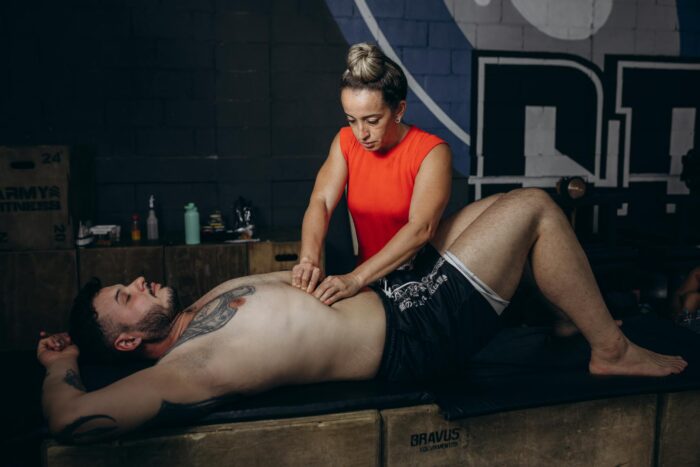
Massage is one of the oldest medical treatments, already known in ancient Rome. For an athlete it isn’t just pleasant relaxation but a muscle care tool. Sports massage helps reduce muscle stiffness, prepares the body for training load and keeps muscles more mobile.
Heavy strength training puts a lot of stress on tendons and muscle attachment points. These are exactly the spots that massage can target quite precisely. Stretching doesn’t always manage that. The erector spinae muscles, for example, work in many exercises, yet they are hard to stretch properly.
Calves, hamstrings, chest and trapezius muscles also often stay tight. You can stretch them yourself, but if you have the opportunity, it’s worth having them professionally worked on at least a couple of times a year. You don’t always need a full-body massage. Sometimes it’s enough to focus on the tightest areas.
How recovery works with massage
Recovery massage shouldn’t be too hard. A tired muscle is sensitive and easy to irritate. If a muscle is sore, torn, strained or bruised, deep kneading is not a good idea. A healthy, well-recovered muscle tolerates firmer work better.
To be honest, massage can sometimes fool you. You feel like your body is relaxed and everything is fine, but your energy hasn’t actually come back yet. You could call this false recovery.
- general fatigue, such as a sleepy feeling in the morning even though you’ve slept enough;
- feeling good and relaxed after a massage, but without strength;
- a sense that you’ve more or less recovered from training, but you still have no energy.
Massage is itself a training load that you need to recover from. Recovering from a full-body massage can take several days. Even then, your first workout should be lighter than usual. If only one area was massaged, such as the lower back, recovery may go faster. In principle, you can do an arm workout as early as the next day, as long as your back isn’t under heavy training load.
Practical tips before and after massage
If you want to get more out of your massage, warm your muscles up lightly before the session. That way the first few minutes aren’t spent just getting your body going, and even a half-hour session can be far more effective.
Tell your massage therapist when your last workout was and which muscle group you trained. A good therapist will usually find the tense spots on their own, but your information helps them choose the right pressure. Ask directly, too, how tight your muscles feel and when you could do your next workout. It isn’t an annoying question, but part of good muscle care.
If you suffer a tear or strain, or come down with an illness such as the flu, recovery becomes especially important. The winner here isn’t the one who rushes back under the bar fastest. The winner is the one who lets their body heal and restarts sensibly.
1. First aid for a muscle injury: the rule of three
The rule of three means: cold, elevation and compression. Take the load off the injured muscle, don’t put your body weight on it and cool the area. Raise the injured muscle above heart level to reduce blood flow. Use an ice pack, cold water or snow. This can reduce swelling and speed up healing by several days. The first seconds are the most important.
2. First aid for the flu
If you feel a sore throat or a runny nose coming on, take 2000 mg of vitamin C and drink a cup of green tea. You can also mix eucalyptus into the tea. Vitamin C is water-soluble and stays in the body for about 3 hours, so take 1000 mg of vitamin C and a cup of tea every three hours. On a day like this, skip your workout, of course.
3. Return to training step by step
When your body is healing from a strain or fighting an infection, it needs enough food. Eat protein, vegetables and root vegetables, even if you have no appetite. When you feel ready to move, start with walking, or in the gym with long sets and light weights. A higher heart rate may support healing, but increase the weights only step by step.
FAQ: recovery after massage
Can I go to a workout right after a massage?
After a deep full-body massage, give your body some time. Make your first workout lighter than usual, especially if your muscles feel soft, weak or tired.
When should you not get a massage?
If a muscle is sore, torn, strained or bruised, don’t let anyone massage it hard. In case of injury, start with first aid and, if necessary, ask a specialist for advice.
Why do I feel tired after a massage?
Massage affects the body like a training load. Relaxation can come quickly, but your strength and energy may not be back the same day. That is exactly why recovery takes time.
Translated from Body magazine
Author: Greta
Come and train! ArtGym