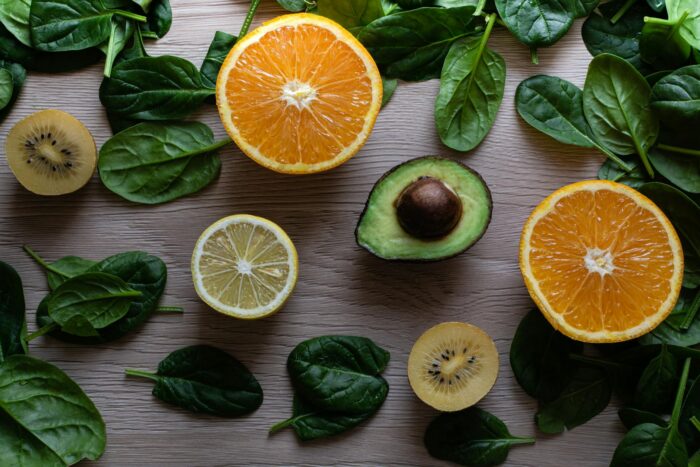
Low-carb fruits for getting in shape
Low-carb fruits are worth knowing about if you want to get in shape without letting every sweet bite derail your diet. This article explains how to time your carbohydrate intake, when to choose foods with a low glycemic index and why not all fruits are equal when it comes to burning fat.
Translated by Janar Rückenberg
Why do low-carb fruits matter?
Getting in shape involves more than just eating less. Much of it comes down to carbohydrates: which sources you choose, when you eat them and how much you put on your plate at a time. Sharp rises and falls in insulin make it easier to trigger fat storage. When carbohydrates are absorbed more slowly and come with dietary fiber, your energy levels stay steadier.
This is where foods with a low glycemic index come in. Rolled oats, brown rice, buckwheat, potatoes and root vegetables fuel your body, but they do not behave like ordinary white sugar or white bread. They are complex carbohydrates by nature, and your body has to do a little work to break them down.
Vegetables are also excellent choices: cucumber, tomato, bell pepper, cabbage, swede, radish, lettuce, broccoli, beans and peas fit into almost any phase. Note: vegetables are likewise low in carbohydrates yet rich in dietary fiber. With fruit, the picture is a little more varied. Some fruits are a better fit, while others need to be limited.
The simple truth is that honey, white sugar, white bread, white rice and many very sweet fruits are absorbed quickly. That does not automatically make them off-limits, but during a fat-loss phase you cannot eat them the way you would when bulking. A small amount of fruit after a workout can be perfectly reasonable, especially if your aim is to prevent catabolism and replenish depleted glycogen stores. An apple is a classic example of a lower-glycemic-index choice.
How do low-carb fruits fit into your plan?
1. Eat complex carbohydrates
If your goal is a leaner physique, complex carbohydrates should be your main focus. Foods with a low or moderate glycemic index help keep insulin levels steadier. Under these conditions, fat-storing enzymes are less active and conditions are more favorable for preserving muscle.
This does not mean fruit is bad. It is a matter of quantity and timing. When dieting, lower-carb fruits are a better fit than very sweet options. If you eat fruit, choose a smaller portion and have it either in the morning or around your workout.
2. Choose low-glycemic-index carbohydrates for fat loss
When working on fat loss or preparing for a competition, it makes sense to emphasize carbohydrates that are absorbed more slowly. This allows you to keep your total calorie intake slightly higher than usual while keeping insulin under better control. It helps preserve muscle mass, which is one of the biggest concerns during a diet.
3. Dietary fiber keeps your stomach and your plan in order
Dietary fiber is very practical when you are getting in shape. It slows the passage of food through your digestive system, helps you feel full and moderates the effects of carbohydrates. Rolled oats and legumes, especially beans, are good sources of dietary fiber.
4. Avoid eating large portions at once
Spread your food intake across 5-7 small or moderate portions throughout the day. This helps maintain your energy and reduces the likelihood of a large carbohydrate intake activating fat-storage mechanisms all at once. If you want a leaner, harder-looking physique, large, haphazard portions are not your friend.
5. Use carbohydrate cycling
Bodybuilders have used carbohydrate cycling for a long time. Instead of eating exactly 600 g of carbohydrates every day, a 90 kg bodybuilder can structure the week differently. For example, eat 50% less, or 300 g, for two days, then 600 g of carbohydrates for the next two days, followed by 50% more than your usual intake, or 900 g, for the final two days.
The total intake stays similar, but your body receives different signals. Fat burning is more effective on lower-carb days. On higher-carb days, insulin rises, which helps preserve muscle mass. Carbohydrate cycling promotes fat burning and helps maintain muscle mass.
Carbohydrate timing and post-workout nutrition
The two most important meals for carbohydrate intake are your post-workout meal and breakfast. In that order. A ninety-kilogram bodybuilder should aim for around 90-100 g of carbohydrates at breakfast to replenish liver and muscle glycogen stores and reduce the catabolic state that develops overnight.
Faster-acting carbohydrates have their place immediately after training. Aim to eat your post-workout meal within about 30 minutes of finishing your workout, and no later than 60 minutes afterward. This is when your muscles readily take up nutrients.
To be honest, this does not mean you have to gulp down a huge amount of dextrose after a workout. The translator’s original note here is very practical: simple carbohydrates can be combined with easily digested complex carbohydrates that are low in dietary fiber. For example, 2 large or 3 medium bananas with white rice cakes topped with honey or jam could be a suitable option.
If you use a post-workout shake, you can mix dextrose, maltodextrin and protein. Still, a protein shake is not sacred. Three-time Fitness World Champion Marek Kalmus has likewise favored eating after training. The idea is simple: if you know where your protein and carbohydrates come from, you can put together your own post-workout meal.
Be careful with dextrose. Many recommendations suggest a 50/50 ratio, but not every workout calls for the same amount. If your leg workout was so hard that your leg is still tingling several hours later and you no longer feel like talking, 50% dextrose may be appropriate. For a regular workout, maltodextrin alone may cover much of your needs. If you are having 100 g of carbohydrates, a more practical range might be 75 80 g of maltodextrin and a maximum of 20 25 g of dextrose.
Your 2nd post-workout meal could come 40 60 min. later. At that point, potatoes, brown rice, white rice, buckwheat, pasta or rolled oats are suitable options. Immediately after a workout, keep fat low and dietary fiber to a minimum. As more time passes after training, you can gradually move toward carbohydrates and proteins that take longer to break down.
It is worth planning most of your daily carbohydrate intake around training. If you follow strength training with cardio, you can be almost 100% certain that your post-workout carbohydrates will go toward replenishing depleted stores. Life offers no 100% guarantees, but the reasoning is sound. Around 25% of your daily carbohydrate intake could come after training. For a 90 kg man, that would be about 150 g of carbohydrates.
Practical choices: low-carb fruits
If you want fruit but are keeping your carbohydrate intake in check, choose a smaller portion with more dietary fiber. An apple works well for many people. Berries are also a more sensible choice than very sweet dried fruit. A banana can work well after a workout, but during the strictest phase of your diet, you should avoid eating one simply because you feel like it.
Start your day with carbohydrates. In the morning, your blood sugar and muscle glycogen stores are lower after the night. Be more cautious with large amounts of carbohydrates in the second half of the day, especially if you have no evening workout planned.
On supplements, the original text mentioned chromium, omega-3 fatty acids, vitamin E and alpha-lipoic acid. The example given was 200 micrograms of chromium, 4 grams of omega-3 fatty acids from flaxseed oil and 100 milligrams of alpha-lipoic acid with breakfast. These amounts are a specific example from the original article, not instructions for everyone to follow.
Keep things simple in the evening. Even if your metabolism feels turbocharged, late-night pasta is not the best idea when you are trying to get in shape. In the evening, focus on high-quality protein and a moderate portion. A large, carbohydrate-rich meal before bed can interfere with growth hormone release and encourage fat storage.
It is often worth combining protein and carbohydrates in the same meal. Carbohydrates help transport amino acids into cells, while protein slows the absorption of the meal as a whole. This makes the meal’s effects more gradual and helps you feel fuller.
Bulking, fat loss and the rules
For the bulking phase, the original text used the 2-3 rule. The explanation was as follows: the article originally specified 2 3 g per 1 pound, so this needs to be multiplied by 2.2 to give the amount per 1 kg of body weight. In practice, this means about 4.5 6.5 g of carbohydrates per 1 kg of body weight during the off-season.
If you are a 90 kg bodybuilder, that works out to around 400 600 g of carbohydrates a day. If your intake is 600 g of carbohydrates spread across 6 meals, that is about 100 g per meal. That is a lot, but the goal during a bulking phase is different from refining your physique for the stage.
During the fat-loss phase, the 3-2-1 rule was used, converted for us to the 6.5 4.5 2.2 principle. The idea is to cycle your carbohydrate intake rather than keep it consistently low. A consistently low carbohydrate intake can slow your metabolism and increase muscle mass loss.
Under the 3 2 1 principle, the first day could include 6 6.5 g of carbohydrates per day, the next day 4 4.5 g of carbohydrates, and the third day 2 2.5 g of carbohydrates per day. The cycle then starts again. The translator added that many pros use similar cycling year-round: plenty of carbohydrates on training days, and only 1 2 g of carbohydrates per day on rest days.
FAQ: low-carb fruits
Can you eat fruit while dieting?
Yes, but quantity and timing matter. A small portion of fruit with a lower glycemic index is better suited to the morning or after a workout than late in the evening.
Do you have to eat only simple carbohydrates after a workout?
No. Simple carbohydrates can get recovery started quickly, but you can also add more easily digested complex carbohydrates to support steadier recovery.
Are carbohydrates always off-limits in the evening?
Not always, but when you are trying to get in shape, it makes sense to keep your evening carbohydrate intake lower. If you did not train that evening, choose a moderate meal with more protein.
Author: Janar Rückenberg
Come work out! ArtGym