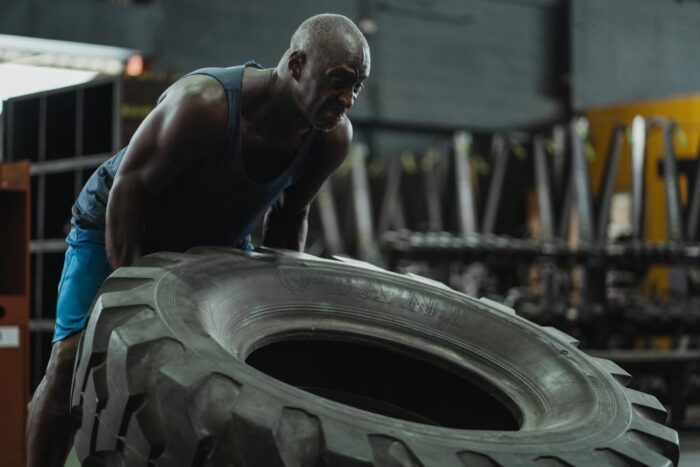
The gym and fat loss: an honest answer
The gym is no magical place where a couple of easy sets will make your beer belly disappear. If your goal is to burn fat, you need to take an honest look at three things: how long you stay active, your nutrition and your consistency.
This article pulls no punches, because the same request comes up all the time: “Put together a little training program for me. I’d like to lose my belly.” Coaches, bodybuilders and more dedicated gym-goers hear it constantly. The answer isn’t comfortable, but it’s more useful than an appealing promise.
Why won’t the gym alone get rid of your belly?
Many people have the wrong idea about strength training. They look at Kiivikas, Kalmus or Rückenberg and assume that physique comes from practically living in the gym for 3 4 hours a day. Do one set, chat for 10 minutes, sometimes 12 minutes, then do another half-hearted set, and somehow your body is supposed to transform.
The simple truth is that this approach to the gym doesn’t burn much energy. If your workout consists of standing around, doing a few sets for your abs and a little chest and biceps work, your calorie expenditure will be low. Your belly won’t disappear just because you visit a room full of barbells and dumbbells.
Strength training can be very demanding. Done properly, it can be brutal. But most beginners don’t train that way. They hope the gym will be an easier option than running, cycling, brisk walking or sorting out their diet. Frankly, this is exactly where many people do themselves a disservice.
When I say that a typical workout lasts 1 1.15 minutes, some people think I’m joking. The real difference lies in how you use that time. A short, focused, tough workout isn’t the same as spending hours in the gym.
The gym works when you put in real effort
Can training at the gym help you burn fat? Absolutely. But it takes a different approach from simply coasting through your usual routine. Circuit training, for example, can significantly increase calorie expenditure because the breaks are short and your body keeps working.
Circuit training means choosing 10 12 exercises and doing them back to back or with very short breaks. The sets are long, averaging 15 25 repetitions. You might complete 4 5 rounds. After a full round, you can allow yourself two or three minutes of rest, but not a long chat after every exercise.
Now ask yourself honestly: are you ready for that? You can’t expect to work this hard without sweating or breathing harder. If your goal is a visible change, you could train this way 3 5 times a week. You can expect noticeable results after about 1 2 months, provided your diet supports the same goal.
This isn’t meant to scare people away from the gym. Quite the opposite. Strength training is valuable: it maintains muscle tone and helps your body look better. But if fat is your main concern, easy gym sessions alone aren’t the first remedy to turn to.
What should you actually do to burn fat?
Start with sustained physical activity. Run, cycle, play ball sports, walk briskly or go to aerobics classes. If you’re starting from scratch, you don’t have to be a hero straight away. For some people, even a brisk walk is a good challenge.
- You need to keep moving for long enough. When you start running, aim for at least 20 25 minutes per run. If you’ve been inactive for a long time, start with walking. Walk a couple of hundred meters faster than your usual pace and check your heart rate: it can easily reach 150 160 at first. As your fitness improves, it will gradually fall, and after a while, you’ll find it harder to reach 150 160 even when jogging.
- Consistency makes the difference. If you run today and have no idea when you’ll run again, don’t expect much to change. Make a plan: for example, 4 times a week for 30 minutes each time. Those 4 sessions need to be actual appointments in your calendar, not a vague intention.
- Your diet needs to change. The word diet scares many people, but the idea is simple. If you want to change your body, you also need to change what you eat and how much. Start by replacing all the “junk” and “rubbish” in your diet. If that isn’t enough, look at your portions.
So what actually happens? If you carry on with your old lifestyle and add two lazy workouts a week, the results will be modest. If you stay active regularly, eat better and keep up that routine, your body will start to change without any miracle tricks.
The key word here is lasting. Good nutrition doesn’t mean eating “a little better” for a week. Likewise, cutting your daily beer intake from 4 beers to 1 2 beers and assuming the job is done isn’t enough. Results come when your new routine lasts.
Combining the gym, aerobic exercise and nutrition
The best approach isn’t to choose between the gym and aerobic training. It’s to make room for both. If you can manage three aerobic workouts a week and go to the gym 2 3 times a week as well, that’s very good. But you don’t need to force everything into your routine at once when you’re starting out.
If the training load becomes too much, things fall apart. As a beginner, you get tired, lose motivation and eventually stop walking, running and strength training altogether. That’s why it makes sense to introduce gym sessions gradually. First, build the habit of being active, then add strength training, then a more detailed program.
Muscle tone matters when you’re burning fat. It helps your body stay in shape and makes you feel better. But if your belly sags, your arms “jiggle” and your thighs are large, your first priority is to reduce body fat. Sustained, regular training that works in tandem with your diet is the most effective way to do that.
The gym is always welcome when it plays the right role. Don’t go there hoping that a couple of sets of abdominal exercises will undo years of inactivity. Go when you’re ready to put in real work and understand that food and daily activity are part of the same picture.
FAQ
Does the gym actually help you burn fat?
Yes, if your training is intense enough and your rest periods don’t drag the workout out. Taking it easy between sets won’t have the same effect as a solid circuit training session or a well-designed strength training program.
Should a beginner start with running or walking?
If you’re out of shape, start with walking. Brisk walking may provide all the training load you need at first. Later, you can add jogging, cycling or other aerobic activity.
How many times a week should you work out?
A consistent routine is a good start, for example 4 times a week for 30 minutes at a time. Once your body adapts, you can add strength training 2 3 times a week.
Author:Janar Rückenberg
Source: Fat burner
Come work out! ArtGym