
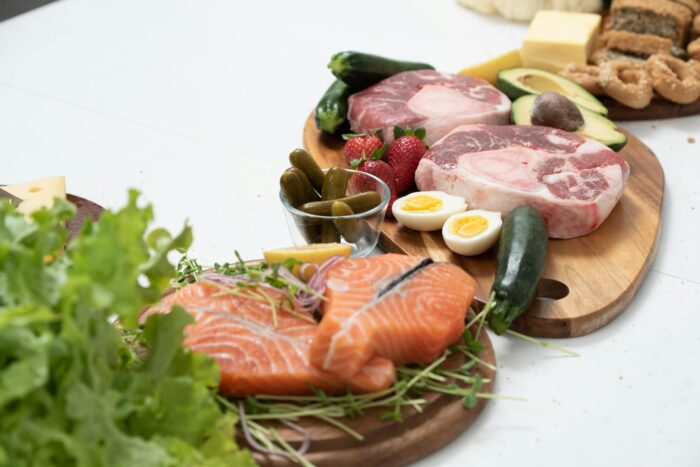
Atkins or Pritikin? The debate over carbohydrates has divided nutrition enthusiasts into two camps for decades. One side cuts carbohydrates to a minimum and eats fat and protein; the other throws fat out the window and eats whole grains, vegetables and fruit. We look at which approach actually works, for whom and when — and why the answer is less clear-cut than the back cover of a diet guru’s book suggests.
Let’s be honest from the outset: no diet works the same way for everyone. Someone looking to lose 30 kilos of excess weight does not need to eat the same way as a bodybuilder putting the finishing touches on their physique for a competition. Your metabolism, training volume and goals determine how much carbohydrate belongs on your plate. Unfortunately, that nuance usually gets lost — and that is where disappointment begins.
Atkins: the low-carbohydrate approach
Atkins and related diets — the Zone, ketogenic and cyclical ketogenic diets — rest on one principle: when carbohydrates are removed from your diet, your body switches to burning fat. This shift is useful if your goal is to reduce your body fat percentage. Appetite is also much easier to control, because fat combined with a substantial amount of protein keeps you feeling full for longer. Total calorie intake often falls naturally, without hunger.
Some versions take things to extremes. A ketogenic diet cuts carbohydrates to virtually zero to put your body into ketosis — a state in which fats are converted into ketone bodies and burned for energy. If you are a bodybuilder whose body fat percentage is already low but you want to get even leaner, this approach may suit you in the short term. There is no need to stay on it for long.
But if you still have several kilos to lose before reaching a normal body fat percentage, choose a more moderate option — a Zone-style macronutrient split, for example. Ketosis is not a natural state for your body. Blood pH falls, the body’s internal environment becomes more acidic, and internal organ function may suffer in the long term. A low-carbohydrate diet works, but for specific goals and within a limited time frame — not all year round.
The role of carbohydrates in strength training
A clear advantage of a high-carbohydrate diet — and a drawback of a low-carb diet — is that you cannot get big and strong without adequate carbohydrates and calories. This does not mean eating absurdly large amounts, but a moderate intake is necessary. Carbohydrates should account for 50–60% of your total calorie intake if your goal is to build strength and muscle mass.
The reason is physiological. Muscles can draw energy from carbohydrates even under anaerobic conditions — when oxygen is in short supply. Activities that push you to your limits and last less than 120 seconds rely predominantly on glycolytic pathways. In the gym, that means essentially every set: most sets end before 1 minute has passed. Carbohydrates therefore provide the main source of energy.
If everything you do in the gym depends on your muscles’ glycogen stores, why would you want your body to favor fat for fuel? Several studies have shown that performance efficiency depends on carbohydrates. Following a strength and muscle-building program while restricting carbohydrates is as bad an idea as cutting creatine or protein from your diet. Building and maintaining muscle without protein and carbohydrates simply does not work.
Intense training lowers blood sugar and depletes glycogen stores in your muscles and liver. Both need to be replenished. On a very low-carbohydrate diet, that task is essentially impossible. Eating substantially fewer carbohydrates than you need means slow, inadequate recovery. Performance drops. Those extra kilos on your squat record and extra centimeters on your biceps simply never materialize.
Low glycogen stores are not an abstract problem. Carbohydrate intake and muscle glycogen levels directly determine how quickly protein synthesis recovers after training and exceeds the rate of muscle protein breakdown caused by a hard workout. If you train hard and completely deplete your muscles of glycogen, it takes 24 hours before protein synthesis once again exceeds breakdown.
Protein balance is either positive or negative — there is no middle ground. Taking 24 hours to reach a positive balance would mean that a bodybuilder training on two or more consecutive days slips deeper into a catabolic state with each workout. If you train every other day but recover with a carbohydrate deficit, your muscles spend only 24 hours in an anabolic environment before your next workout.
At the center of the picture is insulin. It is a transport hormone. Protein consumed after training is not transported into cells if blood insulin levels are low or nonexistent. Amino acids remain in circulation, where they are gradually converted into carbohydrates through gluconeogenesis — because the carbohydrates your body wants are not arriving. Your body’s first priority is to replenish its glycogen stores; as a result, every other aspect of recovery suffers, including protein synthesis.
The result is a cycle that slows recovery: your body has to make the glucose it lacks from the protein you eat. The message is clear — adequate carbohydrate intake spares protein. You can manage this situation. During the first few hours after training, ideally immediately after your workout, consume an amount of carbohydrate that matches your exertion. Muscle glycogen stores can be fully replenished within the first 4 hours after training.
The numbers make the picture very clear. Over a 48-hour period, someone recovering from training with depleted carbohydrate stores and eating mainly protein spends the first 24 hours in a catabolic state and 24 hours in an anabolic state — assuming they do not train on consecutive days. A bodybuilder who consumes carbohydrates after training at the same frequency (every other day) spends only 4 hours in a catabolic state and 44 hours in an anabolic state. Without enough carbohydrates, the rate of recovery is effectively cut in half.
When carbohydrates are severely restricted, up to 40% of dietary protein is converted into glucose through gluconeogenesis. That is no small proportion. Take a 90 kg bodybuilder who consumes 300 g of protein a day. Of that, 120 g is lost to gluconeogenesis, leaving 180 g for the muscles — or 2 g of protein per 1 kg of body weight. To maintain the same amount of protein available to the muscles under carbohydrate restriction, they would need to consume 500 g of protein a day. That is practically unfeasible — both financially and because of the amount of protein that can be absorbed in a single meal. And just try getting that much down week after week.
Pritikin: the opposite of Atkins
The Pritikin diet dates back to the fifties, when it was developed for heart patients to lower cholesterol and treat diabetes. It is low in fat, with fruit, vegetables and whole grains making up most of the diet. It reached a wider audience when it became clear that patients also lost weight effectively on the program. When Atkins, riding a wave of popularity, came under heavy criticism for both its unwanted side effects and high fat content, Pritikin grew even more popular.
Pritikin is not an entirely plant-based diet — meat is allowed. The central idea is to eat food as close to its natural state as possible. Fats are not excluded either, but they should be healthy fats and ideally make up only a small proportion of the diet. This is a challenge if you are not used to eating vegetables and grain products and spend much of your day eating out. But which of these diets does not pose a challenge?
Unlike many other eating plans, Pritikin does not limit the number of meals — in fact, it recommends eating up to 6–7 meals a day. All processed starchy foods are excluded: white bread, rye bread, pasta, regular cereals and processed food in general. There are virtually no empty calories. Foods rich in dietary fiber dominate the diet, supporting heart health and helping you feel full. If you are not used to a diet high in dietary fiber, you will initially experience uncomfortable bloating — this passes.
Pritikin also removes dairy products and animal fats from the diet. This is a problem if you get most of your calcium from cheese and milk. The diet also recommends at least 45 minutes of walking a day. Giving up alcohol is recommended, although a small amount now and then is no sin. This is not a fad but a health-promoting approach that combines natural food with physical activity. Studies have also confirmed Pritikin’s effectiveness, showing weight loss, improved heart function and a reduced risk of heart disease. For a more detailed introduction in English, see wisegeek.com on the Pritikin diet.
Atkins vs Pritikin: which should you choose?
The answer depends on your goal, not on allegiance to either guru. If your aim is short-term fat loss and you are not an elite competitor, a moderate reduction in carbohydrates works well — mainly thanks to better appetite control and a lower overall calorie intake. But if you live in the gym and are working to increase muscle mass, strength or performance, stick with a diet that is 50–60% carbohydrates. Otherwise, you are working against yourself.
The Pritikin approach is particularly well suited to you if your goal is heart health, cholesterol control or gradual weight loss through lifestyle changes. An Atkins-style approach is a tool for a specific situation — not a way of life for years to come. Clinging to a single diet is often why progress fizzles out after the initial success. The smart move is to adapt your diet to your current phase and goal. If you hit a wall after eight weeks, it does not mean the diet no longer works — it means your body has adapted and something needs to change.
Frequently asked questions about the Atkins and Pritikin diets
Is Atkins suitable for a bodybuilder during a bulking phase?
Generally, no. Building muscle mass requires a substantial calorie surplus and full glycogen stores so that your muscles can get through training and recover. The low carbohydrate intake typical of Atkins is better suited to a short cutting cycle than a bulking phase.
Does the Pritikin diet mean giving up meat?
No. Meat is allowed, but natural, low-fat options are preferred. The emphasis is on unprocessed food — whole grains, vegetables, fruit and healthy fats. Avoiding dairy products and animal fats is recommended.
How much carbohydrate should you consume after training?
An amount that matches your exertion, as soon as possible after your workout. During the first 4 hours after training, it is possible to fully replenish muscle glycogen stores — and that is the main purpose of post-workout nutrition.
Translated by: Janar Rückenberg
Come train with us! ArtGym




