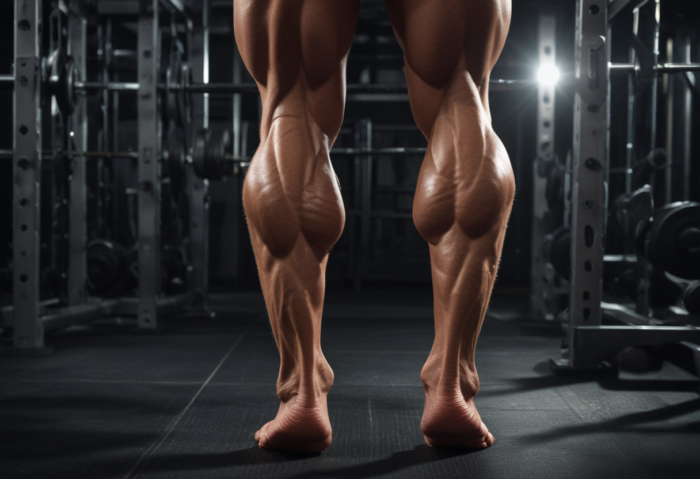
Genetics and calf training in bodybuilding
Genetics often only comes up in discussions about training when a muscle simply refuses to catch up. This article uses the calf muscles to explore why some people seem to be born with well-shaped muscles, while others have to work hard for every millimeter.
Why are the effects of genetics so obvious in calves?
A while ago, a user named Lexus and his calves caught my eye in the fitness.ee photo gallery. My first thought was simple: this guy must have put in some serious work. His calves were full, well-defined and the kind that many men who train would envy.
Then came the comments. Lexus wrote that his calves were probably down to his genes, since he had barely trained them. If he had to point to anything, it would be carrying buckets of water up to the second floor in the past, and cycling. Honestly, that confirmed exactly what I had suspected from the photo.
This is not a put-down. Quite the opposite. The point is that a good physique does not develop in the same way for everyone. One person finds it easier to build their chest, another their back, a third their arms and a fourth their calves. Some body parts respond to training straight away. Others remain stubborn even after 13 years of consistent training.
Genetics do not make hard work any less important
The simple truth is that hard training always matters. But we do not all start training from the same point. If your calves already have a naturally good shape, a small increase in training load may be enough to make them look very good. Someone else may need far more work to see any visible change at all.
This is particularly clear in bodybuilding. Calves are a weak point for many competitors. And when an elite athlete’s calves lag behind the rest of their physique, it is unfair to immediately call them lazy. They may have put an enormous amount of work into that very muscle. Their muscle shape, attachment point and growth potential simply may not be as favorable.
This is where we need to make a distinction. Is a muscle large mainly because of an extraordinary amount of work, or was 90% of the foundation already there? In either case, the person may work very hard. The difference lies in how much their body gives back in return for that effort.
What role do calf shape and tendon attachment play?
Older bodybuilding literature has devoted plenty of attention to the height of the calf tendon’s attachment point. The idea is simple: if the calf tendon attaches lower down, closer to the ankle, the muscle belly looks longer and fuller. A calf like this also has more visible muscle mass to build through training.
If the attachment point is higher, closer to the knee, the muscle belly is shorter. You can still train, but the overall shape of your calves will not become the same as that of someone with a naturally low attachment point. So what actually happens? You improve, but you do not necessarily achieve the same size and shape as someone else.
This knowledge is not an excuse. It provides context. When you look at a lineup of bodybuilders onstage and someone has a visibly underdeveloped body part, a lack of work is not necessarily the reason. Sometimes, their body structure sets limits.
Genetics and a practical approach to training
Poor genetics do not mean you should stop training a lagging muscle. Quite the opposite. That is exactly where you need to train intelligently and patiently. If your calves will not grow, sighing about it will not help. You need a consistent training load, good technique and an honest assessment of what is actually changing.
At the same time, there is no point endlessly comparing yourself with someone who has a natural advantage. Kalmus may never build calves like Ott’s, even if Marek did everything possible short of getting implants. Likewise, there is no point blaming Ott for not having arms, particularly biceps, like those of Kalmus and Koovit.
The purpose of training is not to copy someone else’s body. It is to improve your own. Almost everyone can make considerable progress from their starting point. But some sizes and proportions are beyond the reach of some people. That may sound harsh, but it helps you keep a clear head.
FAQ
Do genetics determine all muscle growth?
They do not tell the whole story, but they have a major influence. Training, nutrition and recovery still matter. Genetics largely determine how quickly your body can change and how much change it is capable of.
Is it worth training underdeveloped calves at all?
Yes, absolutely. A weak point needs work, not surrender. Your results may not match those of someone with greater natural potential, but you can improve your calves compared with where you started.
Why should you avoid judging other people’s body parts too quickly?
Because appearance alone cannot tell you how much work someone has put in. Some muscles develop easily; others do not. Before passing judgment, remember that both hard work and heredity may be behind the result.
Author: Janar Rückenberg
Source:Turg.Fitness.ee
Come and train! ArtGym