Creatine misconceptions: 9 common myths
Creatine misconceptions often start in the gym locker room, not in scientific papers. Here is a clear overview of what is a myth, what is true and how creatine actually helps people who train.
Why do creatine misconceptions persist?
Creatine has been a talking point in gyms for years.
Honestly, the confusion is understandable. The supplement world is noisy. Tubs promise a lot, forums pile on more, and in the end a beginner no longer knows what to believe.
The simple truth: creatine won’t do your workout for you. It can, however, help you squeeze out a few more reps, maintain strength toward the end of your sets and support recovery. It suits strength training, sprints, jumps and other short, intense efforts especially well.
Creatine misconceptions vs. reality
Myth 1: creatine is a steroid
It isn’t. Creatine is a compound found in animal-based foods, such as meat and fish. The body also produces it on its own in the liver, kidneys and pancreas. Steroids affect the hormonal system. Creatine does not, and it is not on the list of banned substances.
Myth 2: creatine damages the kidneys
In healthy people, studies do not support the claim that creatine at recommended doses harms the kidneys. The original article also cited an EFSA Journal review, according to which normal use is not linked to a decline in kidney function. If you already have kidney disease or your doctor has set restrictions, talk to your doctor before using it.
Myth 3: you can always get enough from food
You do get a little, yes. But in practice it is difficult. To get about 5 g of creatine you would have to eat a very large amount of meat; the original text gave the example of more than 1.5 kg of beef a day. On top of that, some of the creatine is lost during cooking. That is why a supplement is the easier solution for many people.
Myth 4: creatine makes you fat
Your weight may go up at first, but that does not mean you are gaining fat. Creatine helps muscle cells hold more water. This can show up on the scale, especially in the first weeks. So what actually happens? The muscle is slightly more “full” and work capacity may improve.
Myth 5: a loading phase is mandatory
A loading phase is not a requirement. Yes, taking about 20 g a day for 5–7 days can saturate the muscles faster. You can reach the same result at a calmer pace by taking 3–5 g a day. The difference is more in timing than in the end result.
How does creatine work in training?
Creatine’s main role is linked to ATP. This is the body’s fast energy source. When you do a heavy squat, a short sprint or a final set of presses, the body needs energy quickly. Creatine helps support that system.
That does not mean every runner or cyclist necessarily needs to take it. In endurance sports the benefit may be smaller. For some people, water retention can even be a nuisance, especially if the goal is staying light and holding a long, steady pace.
In strength training the picture is clearer. If your goal is muscle mass, stronger sets or better recovery, creatine is one of the more sensible supplements to consider.
Creatine misconceptions when buying
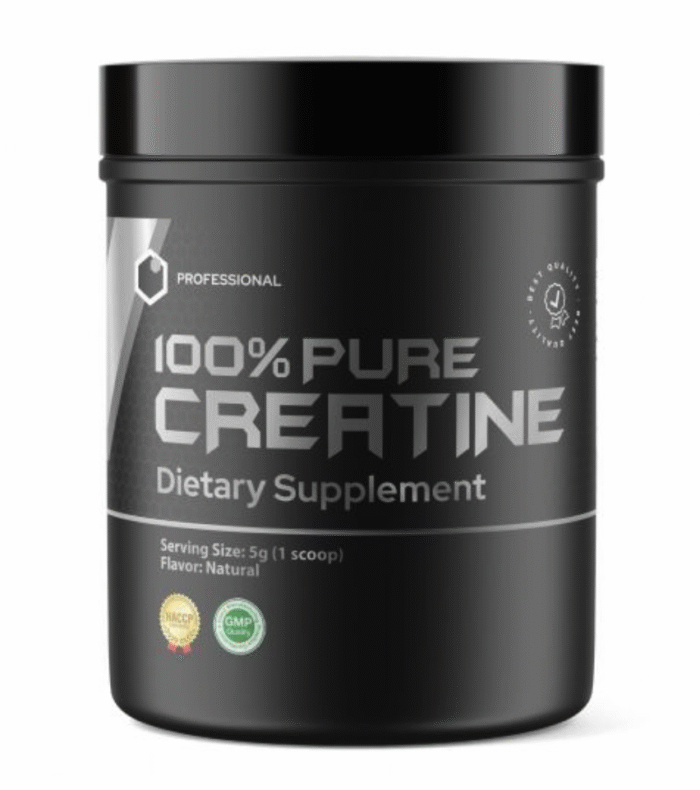
One common claim is that all creatine products are the same. In fact there are several forms, but the most researched and usually also the most sensible choice is creatine monohydrate. It doesn’t sound fancy, but that is often a good sign.
Another trap is the idea that more is better. For most people who train, about 3–5 g a day is enough. A larger amount does not automatically give you bigger muscles or faster progress. The body can’t store it endlessly, and the excess simply goes to waste.
Look instead for a simple ingredient list, clear labeling and a product that fits your daily routine. If you forget everything in the morning, put a serving in your drink after your workout. Consistency is what matters.
FAQ: creatine misconceptions
Do you have to take creatine every day?
Yes, regular use is the simplest way to keep your muscle creatine stores topped up. The amount can be the same on training days and rest days.
Is creatine suitable for beginners?
Yes, as long as your training, sleep and food are more or less in order. If those three are shaky, no supplement will save your results.
Does creatine raise testosterone?
Don’t expect a significant hormone increase. Creatine’s benefit comes mainly from better availability of fast energy, not from a rise in testosterone or growth hormone.
Come and work out! ArtGym