
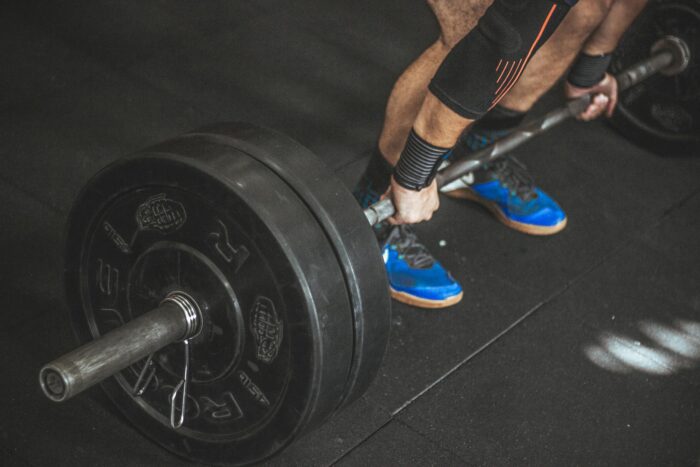
Deadlift and definition in training
The deadlift is an exercise that quickly sparks debate in the gym: should you do it once a week, or can your lower back handle it twice a week? Here we calmly go through two old but still practical topics: how often to deadlift, and what definition actually means.
Why does the deadlift need more recovery?
Your lower back doesn’t only work on back day. It helps in the squat, in various rows, in heavy standing exercises, and even when you simply have to put the weights back at the end of a workout. That’s why the deadlift isn’t the same type of exercise as an easy biceps curl.
The practical advice is simple: most lifters shouldn’t deadlift, in any variation, more than once a week. Many powerlifters also do it once a week, or even once every two weeks. In other words, sometimes it’s enough to program a heavy deadlift twice a month.
Yes, there are people who can tolerate deadlifting twice a week. But for most, that would be the start of overtraining rather than fast progress. If deadlift day is truly heavy, give it everything, leave your ego at the door and let your body recover for the next session.
How do the deadlift and definition fit together?
Definition means that your muscles stand out clearly. The muscles are separated, the muscle fibers and blood vessels are more visible, and your physique isn’t buried under a layer of fat. A lean, defined bodybuilder’s 40-centimeter biceps can look far more striking than the 52-centimeter biceps of a bodybuilder with a higher body fat percentage.
There are two main factors here.
- Muscle size.
- Body fat percentage, that is, how much fat your body carries.
If you want your muscles to show more clearly, you have to work on both sides. You need to lower your body fat percentage and either maintain or build muscle mass. That doesn’t happen in a week. Fat loss works best when you give yourself more time and don’t try to take everything off at once.
Definition doesn’t come from light weights
This is a good place to tackle an old myth head-on. There is no separate “definition training” rep range that somehow makes muscle more chiseled. Three things can happen to a muscle: it grows, it shrinks, or it stays the same.
When a muscle is bigger and your body fat percentage is lower, it’s more visible. It really is that simple. That’s why it makes no sense to suddenly drop the weights and do only long, light sets when you’re getting lean. If the goal is to keep your muscle, your gym training still has to stay heavy.
The example is fairly clear: during a cutting phase, it’s often smarter to do 6 repetitions with 135 kg than 20 repetitions with 70–80 kg. A high rep count often means the weight drops and the muscle no longer gets a sufficient signal. In the worst case, you start to lose muscle mass.
To burn fat, you’re better off using nutrition, aerobic work or HIIT-style training. Spending a whole afternoon training chest or back with light weights doesn’t burn even half as much fat as well-planned energy expenditure and whole-body work do.
Deadlifts while getting lean
If you’re on a diet and want to improve your definition, don’t let your gym training turn into nothing but sweating. You have to keep your muscle. Muscle tissue burns energy 24 hours a day, 7 days a week, even when you aren’t training.
A good practical idea: if you used to press 3 x 6 with 150 kg, don’t rush to lower the weight. If your strength starts to fall on the diet, it may be smarter to do 6 x 3 with 150 kg, while still trying to keep the working set weight. If you immediately move to 3 x 6 with 145 kg or 140 kg, you send your body a signal that your previous strength level is no longer needed.
If that no longer works at all, the problem may be that your calorie intake is too low. In that case the solution isn’t always even more training; sometimes you need to bring your food intake back up. Honestly, for many people that’s a harder decision than one extra set.
FAQ: deadlift and definition
Is deadlifting twice a week bad?
Not for everyone, but for most lifters, heavy deadlifts twice a week put too much load on the lower back. One proper deadlift day a week is usually the better choice.
Does definition come from a high rep count?
No. Definition comes mainly from the combination of muscle mass and a lower body fat percentage. Light, long sets don’t make a muscle more defined on their own.
Do you have to lower the weights while dieting?
If possible, no. While dieting it’s especially important to keep the weight of your working sets, because that helps you keep your muscle. If necessary, change how you divide sets and repetitions rather than giving up the weight right away.
Translated by: Janar Rückenberg
Come and train! ArtGym




