Breakfast: simple ideas for people who train
Breakfast is the meal that tends to either save the day or get skipped altogether. Here are three simple ideas you can prepare ahead, enjoy at home or take with you when your training day gets off to a busy start.
Why does breakfast matter on training days?
Many people don’t feel particularly hungry in the morning. That’s completely normal. But if you’re heading to the gym, facing a long workday or simply going to be moving a lot, a proper breakfast gives your body a better start. It’s no magic formula, just practical fuel.
A good breakfast doesn’t have to be large or elaborate. What matters is that it includes something to keep you full: protein, dietary fiber and some slow-release energy. A bowl of porridge might be more appealing in winter, while cold muesli or a coffee dessert could be just right in summer. The simple truth is that breakfast works when you actually feel like eating it.
Recipes previously published on Fitness.ee offer several good starting points. You don’t need culinary school skills to make them. The idea is that preparing breakfast at home lets you control what goes into your bowl, how sweet it is and how nourishing the result will be.
Breakfast you can prepare ahead
If your mornings are busy, start with something you can make ahead. Crunchy gluten-free protein muesli is a good choice if you want something crunchy in your bowl but don’t want the usual sugary muesli. The original idea is simple: a nutrient-rich, gluten-free breakfast sweetened only with honey and dates.
A big advantage of muesli is its versatility. You can eat it with yogurt, quark or milk. If you’re not training until the evening, this kind of breakfast gives you a relaxed start to the day. If you train in the morning, you can have a smaller portion and keep the meal lighter.
Another option is Peanut butter muesli. The case for homemade muesli is straightforward: store-bought versions are often packed with sugar and additives, while making your own means you know exactly what goes into it. Peanut butter adds a richer flavor and makes the result more nourishing.
It’s also a good option if you get tired of the same porridge every day. Have it with yogurt one day, berries the next, or simply as a small snack on the third. The base stays the same, but it feels different.
How should you choose your breakfast before a workout?
You don’t need to eat until you’re overly full before a workout. It’s more about timing and how you feel. If you’re eating just before getting active, choose something lighter. If you have more time before your workout, breakfast can be more substantial.
If you love coffee, try the High-protein coffee dessert. It’s a quick, fluffy dessert made with three ingredients. Because it contains a substantial amount of caffeine, it’s a great choice for a quick, light snack before a workout.
So what actually happens if you don’t eat anything in the morning? For some people, not much. Others feel dizzy, lose concentration or simply lack energy at the gym. That’s why there is no single rule that works for everyone. Take your time to find out what suits your body.
If your goal is to build muscle mass or get stronger, it’s worth including a source of protein in your breakfast. That could be quark, yogurt, an egg, cottage cheese or a recipe made with a protein supplement. If your goal is weight loss, that doesn’t mean breakfast is off the menu. A simple, planned meal can help you avoid snacking later.
Practical tips to make breakfast work for you
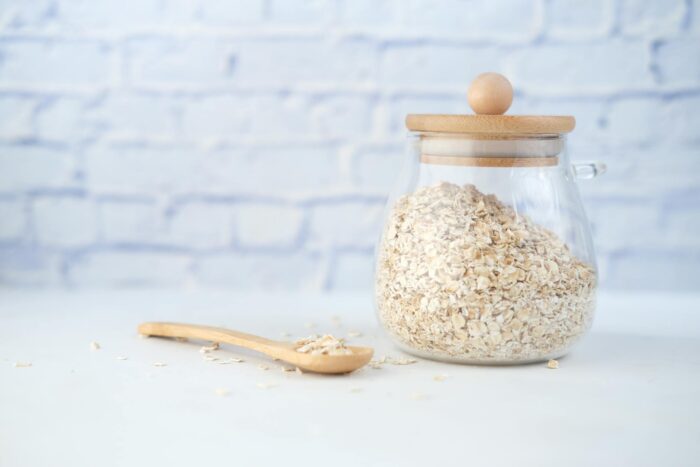
Keep one reliable set of staples in your kitchen. For example, rolled oats, nuts, seeds, plain yogurt and berries. That way, you don’t have to start from scratch every morning. When the cupboard is empty, the nearest pastry or a coffee without any food usually wins.
Don’t make breakfast too complicated. A recipe may be healthy, but if it takes too much time every morning, you’ll soon stop making it. A simple bowl you eat regularly is better than an elaborate plan that exists only in your head.
Keep an eye on sweetness. Honey, dates and peanut butter can be good ingredients, but they also provide energy. That’s not a bad thing. Your portion just needs to suit your day and your training. If you have a sedentary job and it’s a rest day with no workout, your portion can be smaller.
A useful tip is to make a larger batch of muesli and store it in an airtight jar. That way, breakfast really is ready when you need it. This is especially helpful in autumn and winter, when mornings are dark and your motivation to stand at the stove is hardly at its peak.
FAQ: breakfast and training
Does breakfast always have to be high in protein?
No, but protein helps you stay full for longer and fits well into your daily routine if you train. If you only eat sweet foods in the morning, you may feel hungry again sooner.
Is muesli suitable if you’re trying to lose weight?
Yes, as long as the portion is sensible and you know what’s in it. The advantage of homemade muesli is that you decide how much sweetener, how many nuts and how much of any higher-fat ingredients to add.
What should you eat if you have no appetite in the morning?
Start small. A couple of spoonfuls of yogurt with muesli, some quark with berries or a light coffee dessert may be enough. As your body gets used to it, you can increase the amount if needed.
Author:Turg.Fitness.ee
Source: WHO – physical activity.
Come and train! ArtGym