Chicken egg: a simple source of protein
A chicken egg is a small thing, but it does a lot of work on your plate. It provides protein, fat, vitamins and minerals, and it suits breakfast just as well as a simple side to a meal after a workout.
The simple truth: eggs are neither a miracle cure nor an enemy. What matters is the amount, the rest of your diet, and whether you eat only the egg white or the yolk too.
Why do chicken eggs matter in nutrition?
It is a known fact that there are more chickens than people on Earth. An old story joked that if we don’t stop the chickens somehow, they will take over the human race. One simple way is to eat eggs as well as chicken meat.
In fact, a large number of chickens are raised precisely for their eggs. Chicken eggs are eaten in enormous quantities all over the world, and the reason is not only taste. A chicken egg is cheap, widely available and a nutrient-dense food. If you have an egg in the fridge, you can quickly turn it into a boiled egg, an omelet, scrambled eggs or a topping for a salad.
In terms of nutrition, an egg is a strong source of protein. Egg protein, which makes up almost 50% of the whole egg, contains essential amino acids that the body absorbs easily. That is exactly why other proteins are often compared with egg protein when it comes to digestibility.
How does a chicken egg work in the body?
When talking about eggs, it is worth looking at two parts separately: the egg white and the egg yolk. Egg white is light, rich in protein and almost fat-free. The yolk is richer in nutrients, but it also contains fat and cholesterol. Most of the other 50% of the egg is fat, mainly in the yolk, and two thirds of it is unsaturated.
Cholesterol has brought the egg the most attention. Two large eggs contain about 10 grams of waste products, and the yolks contain over 500 mg of cholesterol. This slightly exceeds the recommended daily amount of cholesterol, which is why over the years people have said both good and bad things about eggs.
So what actually happens? More recent studies have shown that regularly eating egg yolks does not necessarily raise serum cholesterol, as long as the rest of your diet is not high in fat. The fat content of your whole diet often affects blood cholesterol more than a single egg at breakfast does.
This does not mean everyone should eat unlimited eggs. If a person has cholesterol-related health problems or cardiovascular disease, egg yolks and other high-fat foods should be kept to a minimum. In that case, it is worth discussing the amounts with a doctor.
Chicken egg, egg white and egg yolk
Chicken eggs are relatively low in calories. One egg has about 75 calories. That makes the egg a convenient choice for anyone who wants to fill up without making every bite a complicated calculation.
Egg white is almost half protein. It contains no fat and no vitamin A. Egg white holds about 20% of the whole egg’s calories and even less of the other nutrients, apart from sodium and potassium. If the goal is to get more protein with less fat, egg white is a practical choice.
The yolk, on the other hand, is much richer in nutrients. It has a relatively large amount of vitamin A, some B vitamins, vitamins D and E, all the fat and cholesterol found in the egg, and most of the calcium, iron, phosphorus and zinc found in the egg. Both egg white and egg yolk contain selenium.
So it makes little sense to say that one part is good and the other is bad. Egg white provides protein. The yolk provides more micronutrients. If your health allows it and your diet is balanced, a whole egg is usually the more sensible choice than worshipping just one part.
Practical tips for eating eggs
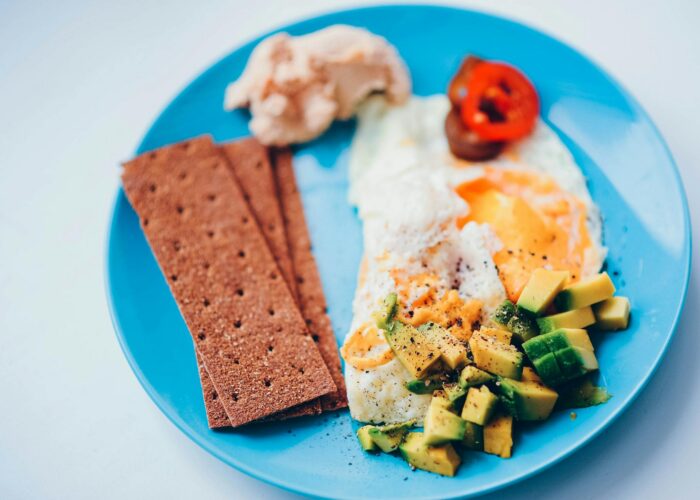
From a training perspective, an egg is most useful when it fits in with the rest of your day. If you are in a hurry in the morning, a boiled egg with bread and vegetables can be a better choice than a sweet pastry. If you have a hard strength workout behind you in the evening, an omelet with potatoes, rice or a salad can be a simple recovery meal.
Don’t make eggs your only source of protein. Alternate them with fish, meat, quark, legumes or other everyday foods. That way you get a variety of amino acids, fats, dietary fiber and minerals. The body loves routine only as long as the routine doesn’t become too narrow.
You should avoid eating very large amounts of eggs. The reason is not only cholesterol. Avidin, one of the egg proteins, binds the B vitamin biotin in the digestive tract and may cause biotin deficiency. This risk is linked especially to very large amounts and a one-sided diet.
If you are unsure, start with a simple question: does the egg complement my plate or replace everything else? In the first case, everything is calmer. In the second, it is worth broadening your diet.
Chicken egg FAQ
Is a chicken egg a good source of protein?
Yes. Egg protein contains essential amino acids that are easily absorbed and fits well into an everyday diet, especially when your diet is not built only around eggs.
Should you avoid the egg yolk?
Not necessarily. The yolk contains fat and cholesterol, but also plenty of vitamins and minerals. If you have health problems, the amount should be limited and a doctor’s advice followed.
How many quail eggs equal one chicken egg?
It depends on the size of the egg. In terms of nutrition, it is worth comparing weight, not only the number of eggs. If a recipe calls for precision, weigh the eggs.
Author: M.M.
Source: WHO – healthy eating.
Come and train! ArtGym