
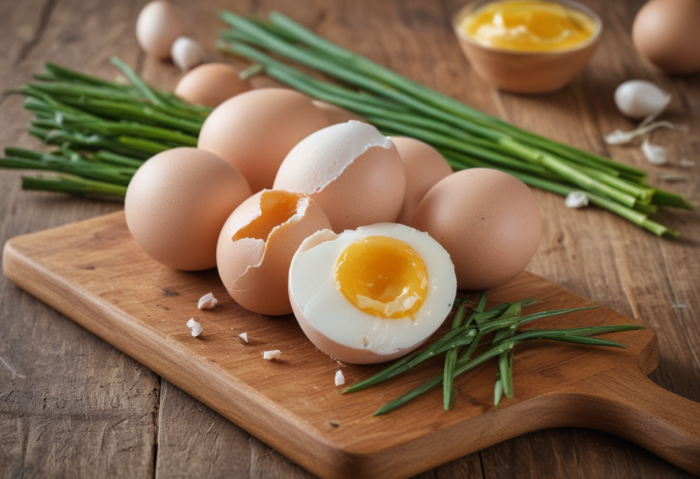
The nutritional value of eggs: protein, fat and vitamins
An egg is one of the most complete foods for a living organism, as it provides the foundation for a chick’s development.
Egg white
Egg white contains 10.1% protein, which accounts for 89% of its energy. Its amino acid content and balance make egg white an important source of protein for healthy eating. Carbohydrates contribute a smaller share of the energy in egg white (11%). Most of the carbohydrates are always removed from egg white before drying, using bacteria, enzymes or yeast. This is done because of the risk of what is known as the Maillard reaction. If the carbohydrates are not removed before drying, the product may turn brown to varying degrees and become insoluble during drying and storage.
Egg white normally contains no fat. However, when an egg is stored for a long time, fat may migrate from the yolk into the white. During egg breaking and separation, a little yolk may also enter the white, bringing some fat with it. In practice, the fat content of egg white has no significance for healthy eating.
Egg white contains 0.05% avidin protein, which, according to “The Avian Egg”, can have a devastating effect on the nervous system if eggs or egg whites are eaten unboiled or in larger portions. This harmful effect has been demonstrated in animal experiments and can be prevented by boiling eggs. You should also bear this in mind when using liquid or dried egg white in cooking or for dietary purposes.
Egg white contains only B vitamins; the other vitamins are found in the yolk because they are fat-soluble. Egg white does, however, contain a good balance of trace elements.
Egg yolk
Egg yolk is rich in fats, amino acids and vitamins, making it an excellent source of nutrients. The fat in egg yolk consists of various fatty acids, cholesterol, lecithin and cephalin.
The fatty acids in egg yolk include linoleic acid; egg yolk is an important source of this beneficial polyunsaturated fatty acid. Linoleic acid is also important because the human body cannot produce it.
The fats in egg yolk also include the much-debated cholesterol. Cholesterol is a sterol found in all animal fats but absent from plants. In theory, egg yolk contains approximately 1500 mg of cholesterol per 100 g of yolk, accounting for 4.5% of its fat.
Cholesterol is found throughout the human body, with the greatest amount in the liver.
When the diet is very high in cholesterol, the body usually reduces its own cholesterol production. The view that cholesterol is harmful stems from the fact that some people are, for some reason, predisposed to calcification of the blood vessels, leaving their bodies unable to regulate their own cholesterol production.
Because egg yolk contains relatively high levels of cholesterol, nutrition specialists warn against eating too many eggs. In response, some American and Swedish egg producers have tried to reduce the cholesterol content of egg yolks by changing the hens’ feed, but these efforts have not produced the hoped-for results.
It has also become clear that researchers disagree on the role of egg cholesterol in causing cardiovascular disease. You should therefore treat nutrition specialists’ warnings with some reservations and, at the very least, regard them as applying only to some people.
Lecithin, another component of egg yolk fat, is generally considered a beneficial fat for healthy eating because it contains more unsaturated, or beneficial, fatty acids and fewer saturated, or harmful, fatty acids.
The fat in egg yolk contains vitamin A, vitamin E, vitamin K and vitamin D, as all of these are fat-soluble. Egg yolk is rich in vitamins, particularly vitamin A. It is also an especially good source of iron and minerals.
Egg yolk gets its yellow color from the fat-soluble carotenoids it contains. Its carotenoid content depends on the pigments in the feed, most of which come from xanthophylls in various plants. A darker yolk is no richer in vitamins than a paler one; its color depends solely on pigment.
The fatty acid, cholesterol, vitamin, mineral and pigment content of egg yolk can be influenced to some extent through feed and production conditions. A hen’s age and breed also affect the nutritional value of the yolk and the relative proportions of yolk and white in the egg.
Overall, egg yolk is a valuable source of nutrients, accounting for 77% of the egg’s total energy, with the remainder coming from the white.
Whole egg
Since a whole egg is a combination of yolk and white (30.4% and 69.6%), the nutrient percentages for the yolk and white also describe the nutrient content of the whole egg.
The chemical composition of an egg
The table below presents some theoretical values for the relative proportions of shell, white and yolk given in Egg Science and Technology, alongside the corresponding measured percentages from the Sanovo Foods laboratory.
Average composition of a hen’s egg
Egg weight 60 g
Shell 9.5 %
Egg white 63.0 %
Egg yolk 27.5 %
Source: Egg Science and Technology (1990)
Sanovo Foods laboratory
These proportions can be affected by various factors, including the egg’s age, storage conditions, and the hens’ diet and breed.
The proportions of the components can also change during storage as water evaporates and moves from the white into the yolk. The figures in the following tables are therefore theoretical values.
According to the Danish National Food Agency, the contents of an egg have the following composition:
Chemical composition of an egg (100 g)
Water Protein Fat Carbohydrates Ash
Whole egg 74.6 g 12.1 g 11.2 g 1.2 g 0.9 g
Egg white 88.1 g 10.1 g 0.0 g 1.2 g 0.6 g
Egg yolk 48.8 g 16.4 g 32.9 g 0.2 g 0.7 g
Source: Poul Erner Andersen Introduktion til levnedsmiddelsteknologien”
Eggshell
Inside the eggshell are two membranes attached to each other, except at the blunt end of the egg, where they form an air cell. The outer membrane is 48 micrometers thick and the inner membrane is 22 micrometers thick. These membranes consist of a protein called keratin.
The eggshell is hard and porous, consisting of calcium (98.2%), magnesium (0.9%) and phosphorus (0.9%) (in the form of phosphate).
Shell thickness depends on the breed of hen and the composition of the feed. The shell’s outer surface has a water-repellent film (1030 micrometers) that protects the egg’s contents from bacteria.
Chemical composition of egg white
Egg white consists of thin and thick layers. The percentage of each layer depends on the size of the egg and the production conditions.
Chemical composition of egg white:
Protein 10.1 %
Fat 0.0 %
Carbohydrates 1.2 %
Ash 0.6 %
Water 88.1 %
Egg white proteins and their properties
TYPE % OF EGG WHITE PROPERTIES
Ovalbumin 54 Forms a gel
Ovotransferrin 12 Heat-sensitive (binds iron)
Ovomucoid 11 Heat-resistant
Ovomucin 3.5 Stabilizes foam
Lysozyme (globulin 1) 3.4 Forms foam (kills bacteria)
G2-globulin 4.0? Forms foam
G3-globulin 4.0? Forms foam
Ovoinhibitor 1.5 Resistant to enzymes/bacteria
Ficin inhibitor 0.05 Resistant to enzymes/bacteria
Ovoglycoprotein 0.8 Protects riboflavin
Ovomacroglobulin 0.5
Avidin 0.05 Binds to biotin (vitamin H)
Source: Egg Science and Technology (1990)
Egg yolk
The egg yolk is surrounded by a film called the vitelline membrane. It consists of specific fibrous proteins arranged in two layers. The inner layer forms in the ovary and the outer layer in the oviduct.
The vitelline membrane prevents the yolk and white from mixing while allowing water to move continuously from the white into the yolk and fat from the yolk into the white.
The chemical composition of egg yolk is shown in the following table:
Protein 16.4%
Fat 32.93%
Carbohydrates 0.2%
Ash (minerals) 1.7%
Water 48.8%
Saturated fats are harmful because they raise blood cholesterol levels. Unsaturated fatty acids do not affect blood cholesterol levels. Polyunsaturated fatty acids (especially linoleic acid, which is relatively abundant in egg yolk) lower blood cholesterol levels and are therefore considered beneficial fatty acids.
Egg yolk contains 1700 mg/100 g of cholesterol, which corresponds to a fat content of 3.3%.
Egg yolk contains 7.2/100 g of lecithin, which is bound to protein. Lecithin acts as an emulsifier: in other words, it forms emulsions of fat and water. This is why egg yolk is used to make foods such as mayonnaise, salad dressings and other products.
Composition of whole egg
The contents of an egg—the white and yolk combined—are referred to as “whole egg”.
The key figures for the theoretical chemical composition of whole egg are:
Protein 12.4%
Fat 11.15%
Carbohydrates 1.20%
Ash (minerals) 0.90%
Water 74.60%
Because whole egg combines the white and yolk, it has the properties of both: it acts as a leavening agent in baked goods, thickens sauces and serves as an emulsifier.
Compiled by: Marek Morozov
Come work out! ArtGym




