
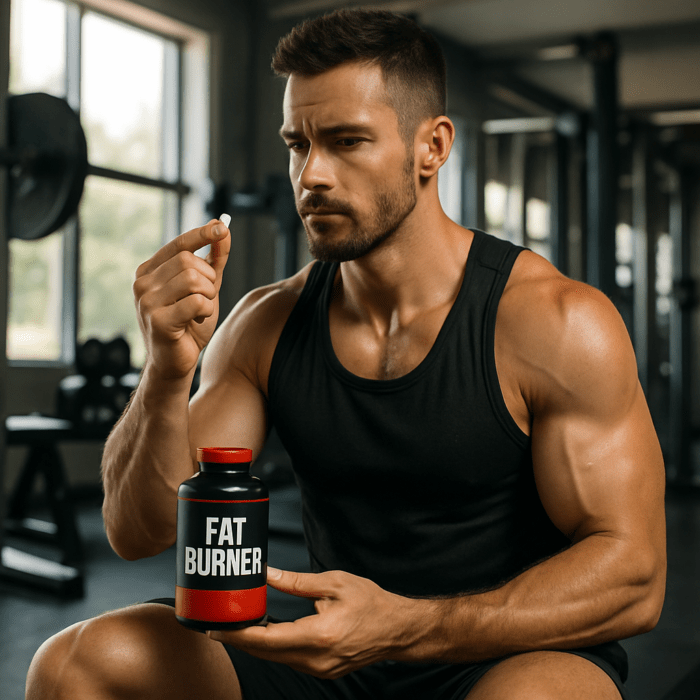
A fat burner works rather like a dull knife — it cuts under the right conditions, not under the wrong ones. It is not a miracle cure or a fat-cell destroyer. I’ve used such products myself during various competition periods, and my experience is clear: it delivers results only when nutrition and training are in place. The rest is an extra push.
What a fat burner is and what it actually does
A fat burner is a dietary supplement. It is not a pill that melts belly fat away like ice cream in the sun. Product descriptions on store shelves often sound too good to be true — don’t fall for it.
I think of this product as the scope on a hunting rifle. The tool is the hunting rifle, the gunpowder is training, and the scope helps you hit the target more accurately. A scope alone doesn’t fire. But when all three come together, you hit the bullseye faster.
The active ingredients don’t destroy fat cells directly. They create the conditions for the body to use the energy it already has more efficiently — they give you alertness, reduce appetite and raise body temperature slightly. More on that below.
When a fat burner is worth taking
The first rule: without an energy deficit, nothing happens. You have to burn more energy than you consume. That’s physics, not opinion. Once that part is in place, add consistent training — and you’ve done nine-tenths of the work.
Only then does a fat burner come into the picture. Not before.
There’s no point in taking it year-round. In winter, when you’re eating a balanced diet or even gaining a little, the product loses its purpose. I use it to give myself a final push — in the last months before summer, or when competition shape is a couple of kilos away and hunger has started to wear on my nerves.
Reduced appetite is often exactly the reason I reach for a fat burner. When you’ve already been in a calorie deficit for several months, fighting cravings is exhausting. If one morning you notice you haven’t thought about food for two hours, the product is doing something. Fewer slip-ups at the kitchen table mean better control — and that shows in the mirror.
Common ingredients in fat burners
It’s not the case that every product is completely different from the next. The core formula is usually similar — the differences come from doses and proportions. Let’s go through them.
Caffeine. Simple and logical. The more alert you are, the more you can move during the day and the more you can put into your training. Side effects include a rising heart rate and a change in insulin sensitivity — both are more helpful than harmful from a fat-burning standpoint.
Green tea extract. Contains catechins and adds antioxidants. It also helps curb appetite a little.
L-carnitine. Helps the body convert fat into energy more effectively. The effect is modest, but it works alongside the other components.
CLA (conjugated linoleic acid). Reduces fat absorption and may, during training, shift the body toward drawing more energy from fat stores.
Cayenne pepper and other thermogenic fat burners. They raise body temperature slightly. Keeping the body warm takes energy — a small but real extra contribution.
Chromium. Helps keep blood sugar balanced and, along with it, appetite.
Add L-tyrosine (focus, relaxation), BioPerine (a black pepper extract that promotes the absorption of other ingredients) and guarana — and you have a typical formula. What matters is that the product is high quality and the label is clear. If specific doses aren’t shown and the formula is dominated by a vague “proprietary blend”, leave it on the shelf.
Frequently asked questions
Does a fat burner work without exercise?
No. Without an energy deficit and training, the effect is practically nonexistent. You have to pull the trigger — the product is only the scope.
How long can you take a fat burner continuously?
I keep the cycle short — six to eight weeks, then a break. Year-round use adds nothing and puts too much strain on the nervous system.
Who is this product not suitable for?
People with high blood pressure, people with heart problems, and pregnant and breastfeeding women. If you already consume a lot of coffee or other sources of caffeine, be especially careful. If in doubt, talk to a doctor first.
In closing: the most important things are nutrition and training. Taking a fat burner alone won’t make you lean. But if the foundation is in place, it can be that final push that makes a real difference.
Author: Peep Reinart
Come and train! ArtGym




