Fitness and compound exercises: a solid foundation
Fitness often starts with a simple question: which exercises actually deliver results? If your training consists entirely of small isolation movements, you might get a temporary muscle pump, but compound exercises usually build a stronger foundation.
Why does fitness need a solid foundation of exercises?
An old weekly news update on Fitness.ee brought together three different topics: the 2006 Estonian Fitness Freestyle Championships on April 1, the TERVEX 2006 Sports and Health Fair at Saku Suurhall in Tallinn, and a training tip of the week. Times have moved on, but that training advice has lost none of its value.
The simple truth is that if your goals are strength, muscle mass and better body control, your training needs exercises that work several muscle groups at once. That is why squats, deadlifts, presses and rows feature so often in training programs, even for people who are not training to compete.
Isolation exercises are not bad. Lateral raises, biceps curls and triceps pushdowns, for example, can be very useful. What matters is exercise order and volume. If your entire program consists of small movements, your body receives a weaker stimulus. You get tired, but you may make less progress than you would expect from the amount of work you put in.
How can you make compound exercises work for your fitness training?
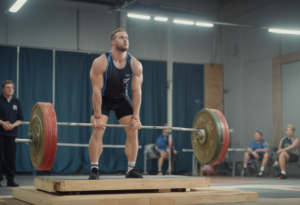
A compound exercise is a movement that involves several joints and muscle groups. Squats do not just work your thighs: your core, glutes and back all have to contribute. Deadlifts are not just a back exercise. They teach you to extend your hips, control the weight and maintain tension throughout your body.
The original recommendation was that compound exercises should account for at least three quarters of the total number of exercises. That is still a good rule of thumb today. Not because every workout has to be heavy and grueling, but because it makes sense to put most of your energy into the movements that give you the greatest return.
Start with a major movement
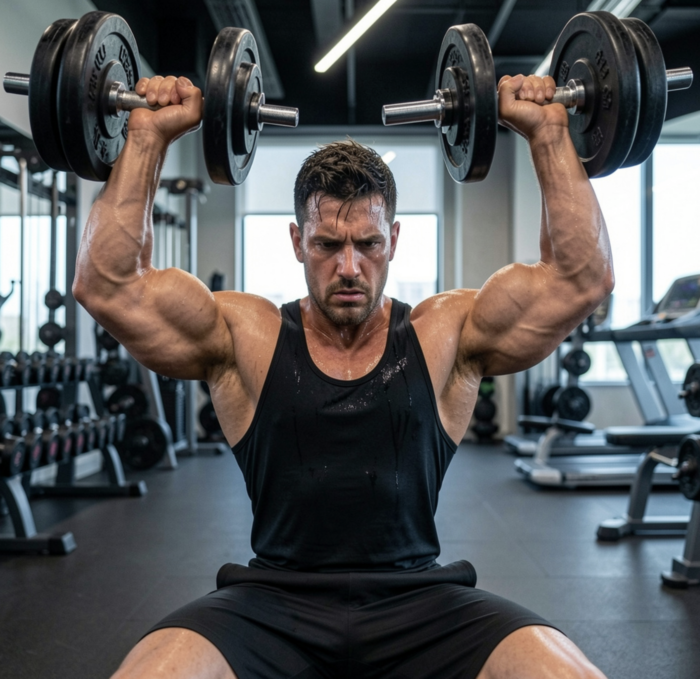
Start your workout with one main exercise: a squat, deadlift, bench press, shoulder press, pull-up or row. Do it while your mind is clear and your technique is still holding up. After that, you can add smaller exercises to target weaker areas.
Do not put weight before technique
Performing a compound exercise well does not automatically mean lifting the maximum weight. If your squat collapses or you lose your back position during a deadlift, your body is no longer working as it should. Results come from repeated, controlled movements performed without cheating. Frankly, that is often more boring than trying a new machine, but it works better.
Practical tips for choosing compound exercises
A good program does not have to be complicated. Choose one main lower-body movement, one upper-body pulling movement and one upper-body pressing movement for each workout. If you train your whole body in each session, that may already be enough. If you train different body parts on different days, keep the same principle: do the big movements first, then the more targeted work.
Isolation exercises fit well at the end of a workout. That is their logical place. Once squats have worked your thighs, you can add separate work for your calves or hamstrings. Once rows have worked your back, you can add rear delt or arm exercises. This keeps smaller muscles in your program without letting them use up the strength you need for the main work.
If you are a beginner, do not choose too many variations at once. One squat variation, one hip hinge, one press and one row are better than a long list you cannot stick to consistently. Your body learns through repetition. Your program does not need to change completely every week.
The old weekly offer mentioned Evolution products and the protein supplement Whey1, with five bags for the price of four. Promotions like these change over time. The training principle, however, stays the same: a supplement cannot replace a proper program, sleep or food. Protein powder can be convenient, but compound exercises and consistency do most of the work.
Fitness FAQ
Does fitness training always have to include squats and deadlifts?
It does not always have to include those two specific exercises, but your program should include some form of squat and hip hinge. If your health, mobility or technique limits what you can do, you can choose an easier variation.
Does that mean isolation exercises are useless?
No. They help strengthen weak areas and target individual muscles more precisely. They simply should not form the backbone of your entire program if your goal is overall progress.
How often should you change your program?
Change your program when progress stalls, your technique is solid or your goal changes. Switching too often makes it difficult to assess results because your body never gets the chance to learn the movements properly.
Author: Fitness.ee
Come and train! ArtGym