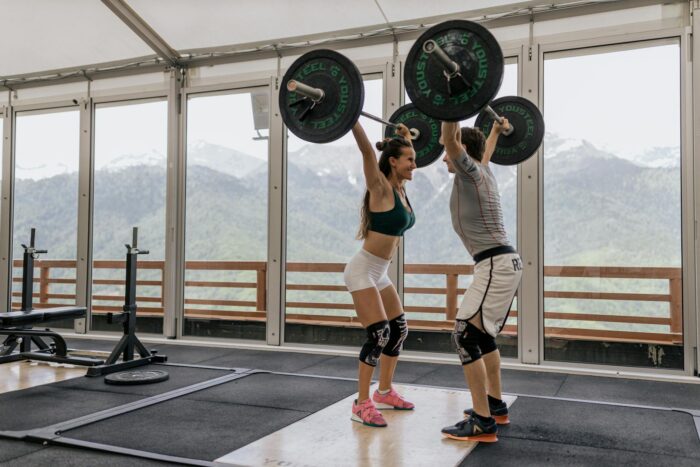
German volume training: the 10-set method
German volume training is a simple, tough and fairly unforgiving approach to muscle building: 10 sets, 10 reps and the same weight throughout. Do it sloppily and all you get is fatigue. Follow it precisely and the results can be surprisingly good.
This is not a comfortable program. It is better suited to someone who can maintain good technique, keeps a training log and is not put off by the prospect of sore legs for 4-5 days after a solid workout.
Why does German volume training work?
Among strength and bodybuilding coaches, it is often known as the 10-set method. The idea is straightforward: choose one major compound exercise, perform a very high volume of it and force your body to repeat the same movement over and over with good technique.
The method’s roots are traced to Germany in the mid-seventies. It is associated with national weightlifting team coach Rolf Feser. Vince Gironda also popularized a similar approach in the United States. Canadian weightlifter Jacques Demers, a silver medalist at the Los Angeles Olympics, used it as the foundation of his training, and his powerful thigh muscles are legendary in weightlifting circles. Bev Francis has also used the same method for muscle building.
The simple truth is that volume makes this program work. A single group of motor units is subjected to so much repeated work that the body has to adapt. At first, the opening sets may even feel too easy. Then fatigue accumulates. During the eighth or ninth set, you may briefly feel your strength returning. That is not magic, but a short-term adaptation of the nervous system.
The original account boldly claimed that gaining 4-5 kg of mass in 6-7 weeks was not unusual even for experienced trainees. You should not take that as a guarantee. What is clear, though, is that the 10×10 system gives your body far more work than the usual “a couple of heavy sets and home” workout.
German volume training: the ground rules
The aim of German volume training is to perform 10 sets of one main exercise, with 10 reps in each set. The weight stays the same. Your starting weight should be one you could lift for about 20 reps when fresh. For many people, that is around 60% of their 1RM. If you can bench press 135 kg for one rep, your starting weight could be around 80-81 kg.
The recommended 5-day cycle looks like this:
- DAY 1 – CHEST, BACK
- DAY 2 – LEGS, ABS
- DAY 3 – REST
- DAY 4 – ARMS, SHOULDERS
- DAY 5 – REST
A training log is essential here, not a nice extra. Record your sets, reps, weights and rest intervals. Only count reps performed with good technique. Once you start cutting a rep short and using your body to throw the weight around, you are no longer doing the same work.
Rest intervals
If you perform all the sets of one exercise on its own, rest for 60-90 seconds between sets. Ideally, choose a fixed interval, such as 60 seconds, and stick to it. If you train two muscle groups in a superset, the rest interval can be 90-120 seconds. You will need a timer here. Honestly, rest intervals can easily creep up toward the end if you do not time them.
Tempo
For exercises with a long range of motion, a tempo of 4 0 2 works well: lower the weight for 4 seconds, pause for 0 seconds at the bottom and lift for 2 seconds. For triceps extensions and biceps curls, you can use a tempo of 3 0 2. You will also see notations such as 4020, 3020, 2020, 5010, 3010 and 3030 in the program. They follow the same principle: the movement is controlled, not jerky.
Number of exercises and training frequency
Choose only one main exercise per body part. It must recruit a lot of muscle mass. The squat and bench press are good choices. Triceps kickbacks or seated leg extensions are not the best choices for the main exercises in this system. For smaller muscles, such as the triceps or biceps, you can add another 3-4 sets in the 10-20 rep range.
Because the training load is high, your body needs recovery. Training each muscle every 4-5 days is already frequent enough. As soon as you can complete 10 sets of 10 reps with consistent rest intervals, increase the weight by 4-5%. Leave out forced reps, negatives and burns. High volume does the work here.
Phase I for beginners and intermediate trainees
Phase I is based on a 5-day cycle. Once you have completed the cycle 6 times and trained each body part 6 x, take a 3-week transition period. Only then move on to PHASE II.
Day 1 – chest and back
- A-1 Decline barbell bench press: 10 sets, 10 reps, tempo 4020, rest 60-90 seconds between sets.
- A-2 Close-grip pull-ups with an underhand grip: 10×10, tempo 4020, rest 60-90 seconds.
- B-1 Incline dumbbell flyes: 3×10-12, tempo 3020, rest 60 seconds.
- B-2 One-arm bent-over dumbbell row: 3×10-12, tempo 3020, rest 60 seconds.
You can complete all 10 sets of A1 first, followed by all 10 sets of A2. Another option is to perform A1 and A2 back to back as a superset, doing 10 repetitions of each, then rest for 1.5-2 minutes and repeat ten times. The translator made a valid point here: this can become too intense and turn into a frantic rush.
Day 2 – legs and abs
- A-1 Barbell back squat: 10×10, tempo 4020, rest 60-90 seconds.
- A-2 Lying leg curl: 10×10, tempo 4020, rest 60-90 seconds.
- B-1 Sit-up: 3×15-20, tempo 2020, rest 60 seconds.
- B-2 Seated calf raise: 3×15-20, tempo 2020, rest 60 seconds.
A lifting belt was recommended for squats. If your recovery allows, you can add a few sets of standing calf raises for your calves. The same applies to your abs, but only add as much as you can without compromising the main training volume.
Day 4 – arms and shoulders
- A-1 Parallel bar dips: 10×10, tempo 4020, rest 60-90 seconds.
- A-2 Incline hammer curls: 10×10, tempo 4020, rest 90-60 seconds.
- B-1 Bent-over dumbbell lateral raise: 3×10-20, tempo 2020, rest 60 seconds.
- B-2 Seated dumbbell lateral raise: 3×10-20, tempo 2020, rest 60 seconds.
An X in the tempo notation means lifting at maximum speed, while keeping your technique controlled. You can make sensible exercise substitutions: a seated press for your shoulders, or a close-grip bench press or French press for your triceps. A standard biceps curl with a straight barbell may also work in place of hammer curls.
German volume training phase II and 10 x 6
After 6 cycles, a 3-week transition phase was recommended as a break. During this phase, keep your rep range at 6-8 repetitions, perform only 5-6 sets per body part and choose whichever training split you prefer. A good option is 4-5 training days and 2 rest days per week.
Next comes phase II of German volume training: 10 sets of 6 repetitions, or 10 x 6. Start with a weight you could normally lift for 12 repetitions. Once you complete 10 x 6, increase the weight at your next workout.
- Day 1 – chest, back: A-1 Incline dumbbell press 10×6, tempo 5010, rest 60-90 seconds; A-2 Wide-grip overhand pull-ups to the front 10×6, tempo 5010, rest 60-90 seconds; B-1 Flat-bench dumbbell fly 3×6, tempo 3010, rest 60 seconds; B-2 Bent-over EZ-bar row 3×6, tempo 3010, rest 60 seconds.
- Day 2 – legs, abs: A-1 Front squat or leg press 10×6, tempo 5010, rest 60-90 seconds; A-2 Leg extension 10×6, tempo 5010, rest 60-90 seconds; B-1 Crunches 3×12-15, tempo 3030, rest 60 seconds; B-2 Standing calf raise 3×12-15, tempo 3030, rest 60 seconds.
- Day 3 – rest.
- Day 4 – arms, shoulders: A-1 Parallel bar dips 10×6, tempo 5010, rest 60-90 seconds; A-2 Incline neutral-grip biceps curl 10×6, tempo 5010, rest 60-90 seconds; B-1 Bent-over dumbbell lateral raise 3×10-12, tempo 2020, rest 60 seconds; B-2 Seated dumbbell lateral raise 3×10-20, tempo 2020, rest 60 seconds.
- Day 5 – rest.
The 4% system for advanced lifters
Advanced lifters adapt quickly. The four percent method was used to prevent this. Start with a weight you can lift for 12 repetitions. Your first workout is 10 x 6. In each of the next two workouts, increase the weight by about 4-5% while reducing the rep count. In your fourth workout, reduce the weight from the previous workout by about 4-5% and bring the rep count back up to 6.
Here is a biceps curl example if you can lift 50 kg for 12 repetitions:
- First workout: 10 sets of 6 repetitions – 50 kg.
- Second workout: 10 sets of 5 repetitions – 52.5 kg.
- Third workout: 10 sets of 4 repetitions – 55 kg.
- Fourth workout: 10 sets of 6 repetitions – 52.5 kg.
- Fifth workout: 10 sets of 5 repetitions – 55 kg.
- Sixth workout: 10 sets of 4 repetitions – 57.7 kg.
- Seventh workout: test again. By your seventh workout, you should be able to lift 55 kg for 12 repetitions.
The original described this as a 9% gain in 6 workouts. That sounds impressive, but progress may not be so straightforward for every lifter. It works for some, but not for others.
The bench press example was even more ambitious. If you can bench press 135 kg for 10 repetitions with good technique, the following progression was suggested:
- FIRST WORKOUT: 10 sets of 5 reps – 135 kg.
- SECOND WORKOUT: 10 sets of 4 reps – 141.75 kg.
- THIRD WORKOUT: 10 sets of reps – 148.5 kg.
- FOURTH WORKOUT: 10 sets of 5 reps – 141.75 kg.
- FIFTH WORKOUT: 10 sets of 4 reps – 148.5 kg.
- SIXTH WORKOUT: 10 sets of 3 reps – 155.25 kg.
- SEVENTH WORKOUT: time to test again. By your seventh workout, you should be able to do 10 reps with 148.5 kg.
The original also included the same schedule in English: Workout 1: 10 sets of 5 @ 300 lbs; Workout 2: 10 sets of 4 @ 315 lbs; Workout 3: 10 sets of 3 @ 330 lbs; Workout 4: 10 sets of 5 @ 315 lbs; Workout 5: 10 sets of 4 @ 330 lbs; Workout 6: 10 sets of 3 @ 345 lbs; Workout 7: Test day. At this point, you would bench press 330 lbs for 10 reps.
The translator was frankly skeptical about this rate of progress. In his view, a more moderate progression made more sense:
- FIRST WORKOUT: 10 sets of 5 reps – 135 kg.
- SECOND WORKOUT: 10 sets of 4 reps – 137.5 kg.
- THIRD WORKOUT: 10 sets of 3 reps – 140 kg.
- FOURTH WORKOUT: 10 sets of 5 reps – 137.5 kg.
- FIFTH WORKOUT: 10 sets of 4 reps – 140 kg.
- SIXTH WORKOUT: 10 sets of 3 reps – 142.5 kg.
- SEVENTH WORKOUT: time to test again. By your seventh workout, you should be able to do 10 reps with 140 kg.
Even with this approach, there is no guarantee that after 6 cycles or 6 weeks you will go straight from 10 reps with 135 kg to 10 reps with 140 kg. But it is at least a more sensible and realistic target.
Practical points before you start
The program is simple and elegant, but it is not easy. If your form breaks down, reduce the weight. If your sleep and nutrition are poor, you will not recover from this volume. And if your ego wants you to add weight every workout, remind yourself that 10 x 10 is not a program built around one record-breaking set.
The translator also suggested a different split: DAY 1 – shoulders, traps; DAY 2 – triceps, biceps; DAY 3 – rest; DAY 4 – quads and hamstrings; DAY 5 – rest; DAY 6 – chest, lighter triceps work; DAY 7 – lats and biceps; DAY 8 – rest; DAY 9 – start the cycle again.
There are plenty of options. The key is to complete your 10 x 10, choose a compound exercise and allow time for recovery. For larger muscles, you can even add 2 exercises for 2-3 sets each, but only if this does not compromise the main work. On days 6 and 7, you can train triceps and biceps outside the system with 1-2 exercises for 5-6 sets, but again, recovery is the deciding factor.
You could use the system in its 10 x 10 format for 5-6 weeks. Then take a 2-3-week intermediate phase, using something like conventional pyramid training in the 6-12 rep range. You can then move on to phase II, following the same split for 5-6 weeks in the 10 x 6 format.
One practical adjustment to the original structure: on chest and back day, you do not have to follow a CHEST – BACK – CHEST – BACK sequence. Many people find it works better to start with the press for 10 x 10, follow it with 3 sets of flyes, and only then move on to back work. This gives one muscle at a time a more complete workout.
FAQ
Is German volume training suitable for a complete beginner?
Probably not if you are starting your very first program. You should first know how to perform the main exercises with proper technique and recognize when a rep is still clean and when your body is simply starting to compensate for the weight.
How hard should the first workout be?
The first sets may feel too easy. That is normal. Choose a weight you could lift for roughly 20 reps when fresh, or about 60% of your 1-rep max. It gets harder as the volume adds up.
When should you increase the weight?
When you can complete 10 sets of 10 reps with the same weight, keeping your rest periods consistent and maintaining your form, increase the weight by 4-5%. The same principle applies in the 10 x 6 phase.
Source
Charles Poliquin, German Volume Training: http://www.bodybuilding.com/fun/luis13.htm
Translated by Janar Rückenberg
Come and train! ArtGym