
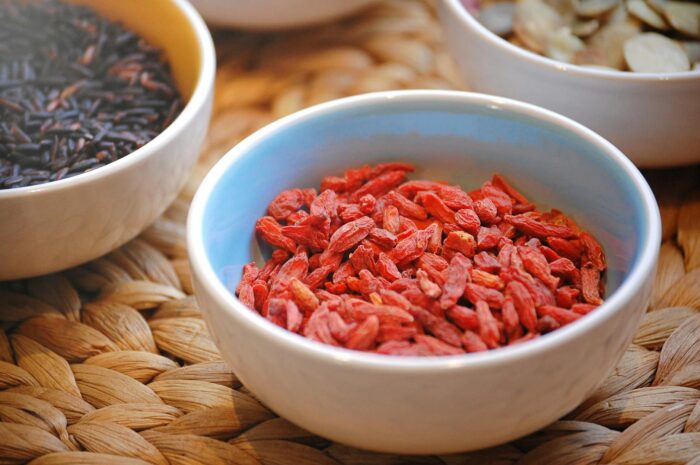
Goji berry benefits: a natural vitamin powerhouse
The benefits of goji berries are neither a myth nor a passing fad. These small red berries contain 21 minerals and trace elements, 18 amino acids and a generous dose of antioxidants – a combination that has earned them the name “longevity berries” in Chinese medicine for centuries. Below, we look at what these nutrients actually do and how you can use the berries in your kitchen here in Estonia.
What do goji berries contain?
Goji berries, also known as common wolfberries (Lycium barbarum), come from China, Tibet and Mongolia. Their nutrient profile is impressive: zinc, calcium, iron, magnesium, manganese, chromium, copper, selenium, sodium and phosphorus. They also provide vitamins A, B1, B2, B6 and E, along with a significant amount of vitamin C.
Polysaccharides deserve particular attention. These long chains of sugar molecules stimulate the pineal and pituitary glands to produce growth hormones. Growth hormone affects cells’ ability to repair themselves, which is why the berries are specifically associated with youth and longevity. Their amino acids include plenty of L-glutamine and L-arginine, which work towards the same ends.
Goji berry benefits for your eyes
If there is one particular benefit to highlight, vision is where the evidence is strongest. Goji berries are rich in carotenoids, particularly beta-carotene and zeaxanthin. Zeaxanthin accumulates in the retina, where it absorbs blue light and acts as an antioxidant. Regularly eating foods that contain zeaxanthin may reduce age-related deterioration in vision.
Consider how they compare with bilberries, which are widely known for protecting the eyes: goji berries contain 100 times more vitamin A, 200 times more beta-carotene and 25 times more zeaxanthin. Those figures make you wonder why bilberries are still the only ones to carry the “eye berry” title.
Blood sugar, heart health and stress
Goji berries help maintain healthy blood pressure and blood sugar levels. Eaten regularly, they may significantly lower blood sugar levels and improve carbohydrate tolerance – useful to know if you like adding something sweet to your morning porridge.
The omega-6 fatty acids in the berries support muscle and tissue growth while protecting the heart and brain. If you are under stress, there is one more thing to know: the stress hormone cortisol increases appetite, prompts your body to store fat and stops growth hormone production. The polysaccharides and antioxidants in goji berries help dampen this chain of events.
Goji berry benefits for your skin
Skin aging is largely driven by free radicals – unstable molecules that damage cells from within. Goji berries have an ORAC value (a measure of their ability to neutralize free radicals) that ranks among the highest of any natural food. More antioxidants mean less cell damage; less cell damage means your skin retains moisture and fat for longer, the loss of which leaves it dry and slack.
To be honest, eating any kind of berry is no substitute for proper sleep and sun protection. But a regular serving of goji berries is an easy addition to your breakfast, and every small step counts.
How to use goji berries every day
The recommended daily amount is around 1–2 tablespoons. That is enough to benefit from their nutrients without making the berries a major source of calories.
- Sprinkle them over muesli or oatmeal – the berries soften nicely in warm food.
- Stir them into yogurt or cottage cheese.
- Add them to a salad in place of dried cranberries or raisins.
- Bake them into muffins, cookies or banana bread.
- Make tea: pour hot water over 1 tablespoon of berries and let them steep for 5 minutes. You can eat the berries afterward, too.
- Eat them on their own as a snack – especially good for students midway through the school day.
Once opened, store your goji berries in a sealed jar in a cool, dry place to preserve their flavor and nutrients for several months. Have a look if you would like to order quality goji berries to your door.
Frequently asked questions about goji berry benefits
Can you eat goji berries every day?
Yes, 1–2 tablespoons a day is a completely safe amount for a healthy adult. If you eat larger amounts, pay attention to how your body responds, just as you would with any new food.
Are fresh or dried berries better?
In Estonia, dried berries are practically the only option available. Fresh berries are hard to find because they spoil quickly. Most nutrients, including zeaxanthin and polysaccharides, are retained during drying.
Who should be cautious about goji berries?
If you take blood thinners (such as warfarin) or blood pressure medication, you should be cautious: goji berries may enhance their effects. In this case, consult your doctor before adding them to your diet.
Author:Turg.Fitness.ee
Source: Health Board – food supplements.
Come and train with us! ArtGym




