Train at home: a clear plan and simple strategies
Train at home when getting to the gym would take more time than the workout itself. Here is a simple plan for making home training regular, convenient and effective enough that it doesn’t stay just a good idea.
Why does training at home work?
The big advantage of training at home is, honestly, very everyday: the door is already open. You don’t have to pack a bag, look for a parking spot or fit yourself around a sports club’s schedule. When your life includes kids, work, phone calls and dinner, that difference can be decisive.
A gym makes training convenient because everything you need is in one place. At home, you have to create that same feeling yourself. That doesn’t mean an expensive mini gym. It means having what you need in plain sight, a set time for your training and food that doesn’t work against your goal.
A simple truth: home training doesn’t have to be perfect. It has to be doable. If you can move calmly for 20 minutes, that’s better than waiting a week for an ideal moment that never comes.
How do you turn training at home into a habit?
Start with your environment. If the treadmill, dumbbells or resistance bands are in the basement behind a box, you won’t use them. Put your equipment where it reminds you of itself. The treadmill can stand near the TV or a favorite picture. Dumbbells can sit in a basket next to the sofa. Resistance bands can hang in view instead of disappearing into a drawer.
The second step is time. Write your workout in your calendar just like a work meeting or a doctor’s appointment. Avoid peak hours, such as the morning school rush or the time before dinner. If you have no other option, tell your family or roommates directly: this half hour is my training time.
Put your phone on silent. Close the door. If needed, hang a sign on the door: DO NOT DISTURB. It may seem a bit theatrical, but at home, setting boundaries is part of training.
1. Invest only in what you need
A high-tech home gym would be nice, but you don’t need one to get results. Variety gives you the most. Choose something for aerobic activity and something for strength training. A treadmill works for walking and running, and you can also play with speed and incline.
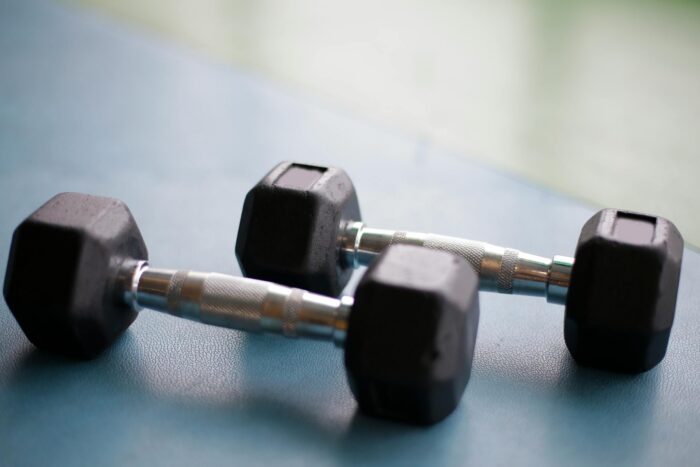
With dumbbells, it makes sense to start with 3 pairs. You should be able to lift the lightest ones with proper technique, not by straining through them. Later you can add a fit ball, resistance bands or tubes, a jump rope and a few good workout videos. The point isn’t collecting things but making choices that help you break the routine.
2. Make your workout visible
When your training equipment is right in front of you, the first decision is already easier. You don’t have to convince yourself that you’re going somewhere. You simply start. Sometimes it’s enough that the dumbbells are ready and the mat is unrolled on the floor.
3. Protect your time
Home workouts fall through when they come last, after everyone else’s needs. Plan yours in advance. If someone interrupts, calmly say when you’ll be available again. Training doesn’t have to be long, but it needs an uninterrupted start.
4. Keep food within reach
At the gym, healthy snacking is easy because bars and drinks are right in view. At home, use the same principle. Put fruit on the table, keep bottled water in the fridge and have something simple ready to eat before or after your workout. Chips and candy don’t necessarily have to disappear from the house, but don’t keep them in the most visible spot.
Practical strategies to keep your training on track
Don’t build a big system in the first week. Pick 2–3 set training days and decide what you’ll do. For example, one day a walk or treadmill intervals, another day full-body dumbbell exercises, a third day resistance bands and mobility. If you have time left over, add more. If not, the main work is done.
Write down what you got done. Not to blame yourself, but to see the pattern. You’ll train better at home when you know what works. Does morning suit you? Does evening? Is 20 minutes more realistic than an hour? These answers only come from trying.
So what actually happens? When training becomes accessible, the barrier to starting drops. You don’t need a lot of motivation every time. You have a place, a time and equipment. That’s enough to start.
FAQ
Can you get in shape at home as well as in the gym?
Yes, if your training is consistent and the training load increases gradually. A gym offers more machines, but at home you can build a very good base with dumbbells, resistance bands, bodyweight and aerobic activity.
What should I buy for home first?
Start with what you will actually use. A good choice is a mat, 3 pairs of dumbbells, resistance bands and, if needed, a jump rope. A big machine only makes sense if you know it won’t end up sitting idle.
How do I avoid putting off training at home?
Put your workout in your calendar, keep your equipment in view and make the first step small. If the plan is too big, it’s easier to put off.
Don’t train at home! ArtGym
Author: Translated by Liis Kutsar from Fitness magazine
Source: WHO – physical activity.