
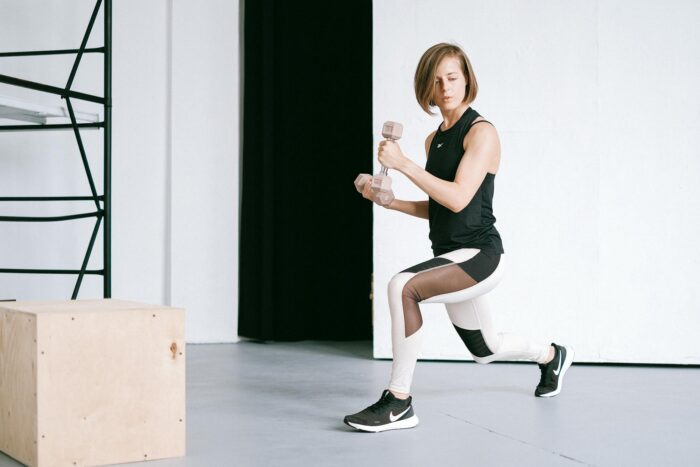
Exerciser’s knee: how to protect your knees
Exerciser’s knee doesn’t appear overnight — it’s a slow process of wear and tear that you can put a stop to yourself. Proper muscle work, a sensible training load and a few simple exercises will keep your knees healthy for years to come.
Why does exerciser’s knee develop in the first place?
The knee itself isn’t muscle tissue — it’s a complex combination of bone, ligaments and tendons. It responds to training very differently from muscle. In fact, you can’t directly strengthen the knee itself. What you can strengthen is the muscles that surround and support it.
These muscles are the front of the thigh (the quadriceps), the back of the thigh (the hamstrings), and the calf and glute muscles. Together they form a kinetic chain that works as one when you run and jump. If one link is weak — say, you’ve sat out the winter and then run onto the tennis court in May — the muscles may no longer be able to hold the knee in place, especially when you’re fatigued.
In fact, most knee injuries happen toward the end of a workout, when the muscles are exhausted and the strength is gone.
Exerciser’s knee and muscle balance
The biggest mistake recreational athletes make is training the front of the thigh a lot and neglecting the back. This throws the strength balance off and makes the knee unstable. The hamstrings are often undertrained — yet they are what keep the knee stable when you land from a jump or sprint.
What to keep in mind:
- Focus on repetitions, not weight. Longer sets with a lighter weight strengthen the muscles just as well as heavy weights — without overloading the joints.
- Choose exercises to suit your sport. A runner needs a different program from a basketball player. The movement pattern should resemble that of your main sport.
- Don’t ignore your back and abs. They belong to the same kinetic chain. In ball games, a player has to hold the base stance throughout the entire game — knees bent, back straight. Without a strong back, it won’t work.
- Increase the training load gradually. This is especially important if you’ve been away from training for a while. Your body gives you signals — listen to it.
Practical exercises to prevent exerciser’s knee
No time for the gym? The following exercises work in the office, in a hotel room or in front of the TV.
Straight leg raise. Sit and extend one leg out in front of you, tightening the quadriceps. Hold the position, then lower slowly. Variations: the leg out to the side or across toward the other leg; lying face down, the leg back — a good exercise for the back and glutes.
Squats. Stand with your feet shoulder-width apart, toes pointing slightly outward, back straight. Slowly lower yourself into a squat until there is a right angle between your shin and thigh. Hold for a moment, then rise slowly.
Step-ups. On a staircase, let the front leg do the work — don’t push off with the back leg. At home, a higher bench or a chair step will do.
Stretch — don’t skip it. Almost all beginners underestimate the importance of stretching. The worse shape you’re in, the more important stretching exercises become. Three ten-second stretches per leg is a good benchmark.
- Sit and extend one leg out in front of you, and pull the other in close to your body — heel near your buttock, knee against your chest. Keeping your back straight, reach toward the toes of the extended leg. Three ten-second repetitions per leg.
- Grab your foot and slowly pull the heel toward your buttock — the exercise can be done lying down or standing, leaning against a wall for balance. Three to four ten-second repetitions per leg.
- Stand about half a meter from the wall, heels on the ground, and slowly lean your body toward the wall until you feel a stretch in the calf muscle. Three ten-second repetitions.
Begin and end each stretch smoothly — a jerky movement does more harm than good.
FAQ
Can exerciser’s knee be prevented completely?
Not quite — even elite athletes get knee injuries. But with proper muscle care and a gradual increase in training load, you can reduce the risk significantly.
How often should you train the muscles around the knee?
Two to three times a week is a good starting point. Consistency matters more than intensity — a regular, light training load does more good than one big effort once a month.
What should you do if your knee already hurts?
Reduce the training load and avoid movements that cause pain. If the pain doesn’t ease within a couple of weeks, seek advice from a sports doctor — the knee is not a joint worth training through pain.
Let’s train safely! ArtGym
Author: pumpiniron
Source: WHO – physical activity.




