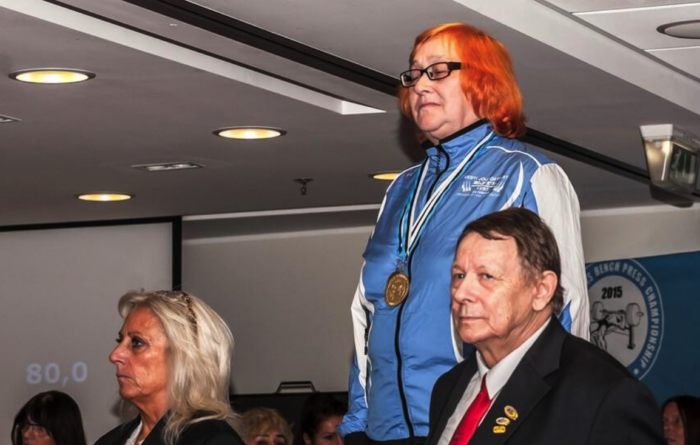
Bench press: Masters European Championships in Estonia
Bench press brought the Masters European Championships to Tallinn on 15-17 October 2015, and Estonian athletes were far from mere extras in front of the home crowd. The result was a full set of medals: gold, silver and bronze.
Why did the bench press matter so much for Estonia?
This competition was not just another weekend of bars and benches. It was the first international championship in powerlifting organized in Estonia. A sport in which Estonians had been bringing medals home for years finally got the chance to show itself in front of its own audience.
A home championship means a lot to an athlete. You don’t have to travel to a different climate, an unfamiliar hall and an unfamiliar rhythm. At the same time, the pressure is greater. The hall is full of familiar faces, training partners, family and people who know exactly what one successful attempt means.
Powerlifting in Estonia has never been only a young men’s sport. The masters category shows well how long strength can be maintained when training is consistent and the body is looked after. That is exactly what makes this result valuable. The medals came from athletes whose experience is just as important as their strength.
How was the bench press turned into medals?
Estonia’s most successful athlete was Tiiu Kimber. Among women over 60, she won gold with 80 kg in the 84+ kg weight class. Even more telling, the weight she locked out on straight arms was the heaviest in her age group across all weight classes.
That detail says more than the color of the medal alone. Weight classes give the comparison a framework, but the best result in an age group across all body weights shows the true level. A simple truth: an attempt like that doesn’t come by accident. Behind it are technique, nerves and years of work.
Among the men, the medals came from Mihkel Laas and Raul Randmäe. Mihkel Laas competed in the over-60 age group and won silver in his debut competition. He lifted 150 kg in the up to 74 kg body weight class. All that stood between him and gold was a heavier body weight, which makes the silver feel even more painfully close.
Raul Randmäe added bronze to Estonia’s haul. His result was 170 kg among the heaviest men. For an experienced athlete, bronze is not just a place in the results. It shows that form and competition nerves hold up even when the competition is tight.
Attempts in front of the home crowd
Also on the platform was Kaido Leesmann, president of the Estonian Powerlifting Association and director of this competition. His result was 290 kg, which gave him 6th place among men over 40. A new absolute Estonian record of 305 kg narrowly escaped him on two attempts.
Honestly, a situation like this is both thrilling and harsh for the audience. The record is within reach, the hall is cheering, the bar moves, but in the end a few centimeters or a split second are missing. In strength sports this feeling is familiar. An attempt either counts or it doesn’t.
Kalev Martsepp, Mihkel Laurits, Siret Sügis, Andres Külaviir and Gert Koovit also competed in front of the home crowd. Martsepp and Laurits finished fourth, Sügis fifth, Külaviir sixth and Koovit seventh. These placings don’t shine like a medal, but at an international championship every finalist spot is a strong sign.
What does the bench press teach masters athletes?
A masters competition is a reminder that strength training doesn’t end in your forties or sixties. You have to choose your training load more wisely, pay more attention to recovery, and technique becomes ever more important. But strength doesn’t disappear overnight.
The bench press looks like a simple exercise: you lie down on the bench, take the bar and press. In reality, the result is decided by small details. Shoulder position, leg drive, grip width, the pause on the chest and whether the athlete can stay calm during the attempt. In the masters category, these small details are often the difference between a medal and fourth place.
For Estonian powerlifting, the home European Championships were also an organizational test. When an international championship goes well, confidence in future major competitions grows. Looking at it then, it was clear that powerlifting could still be seen at a high level in Estonia: in March 2016, the European Championships in classic powerlifting were waiting ahead in Tartu.
FAQ: bench press and the Masters European Championships
Who won gold for the Estonian team?
Gold was won by Tiiu Kimber among women over 60. Her result was recorded as 80 kg in the 84+ kg weight class.
Which Estonian athletes won medals among the men?
The men’s medals came from Mihkel Laas and Raul Randmäe. Laas won silver with 150 kg and Randmäe bronze with 170 kg.
Why was this competition special for Estonian powerlifting?
It was the first international championship in powerlifting organized in Estonia. The home European Championships showed that the sport here is strong enough both athletically and organizationally.
Author: EJTL
Come and train! ArtGym