
Mesomorphs and other body types in training
The mesomorph body type comes up often in gym conversations: muscle seems to come more easily, and the body responds quickly to training. But you shouldn’t build your program around that label alone. Knowing whether you lean more toward an ectomorph, endomorph or mesomorph build can help you train smarter and avoid wasted effort.
Why do mesomorphs and body types matter?
The best-known researcher in morphology in the 20th century was Dr. William H. Sheldon of Harvard University. He divided body types into three main groups: ectomorph, endomorph and mesomorph. This doesn’t mean everyone fits neatly into a single category. Rather, it’s a simple way to understand why one friend gains muscle faster while another needs to pay much closer attention to diet and recovery.
The simple truth is that the same training program doesn’t work the same way for everyone. An ectomorph who blindly follows Ronnie Coleman’s or Chris Cormier’s high-volume programs may end up overtraining. An endomorph who leaves out aerobic exercise altogether may take longer to reduce their body fat percentage. Mesomorphs often see visible results sooner, but they also need a carefully planned training load.
Mesomorph, ectomorph and endomorph: the main body types
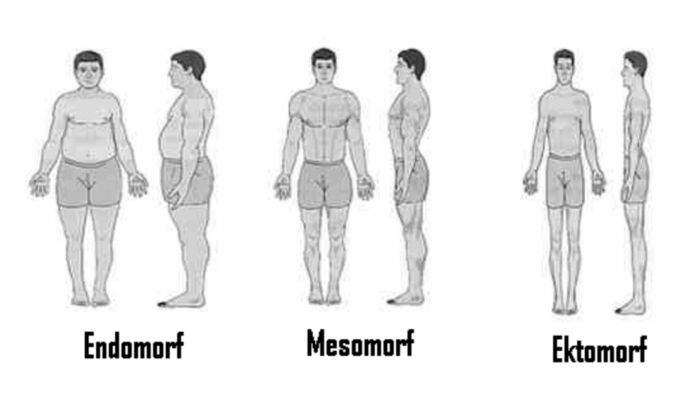
The ectomorph body type is characterized by 1) long, slender limbs, 2) a very low body fat percentage and 3) a naturally fast metabolism. These are the people who get asked what they do to stay so slim, and the answer is often: nothing special. Getting started in the gym can be tough, but endurance sports, running and longer bouts of exercise often suit them better.
The endomorph is the opposite of the ectomorph. Their body may be pear-shaped, and their muscles respond well to training, but they gain fat more easily. Sheldon’s theory also associated endomorphs with a calmer temperament and a more sedentary disposition. An endomorph’s first major goal in the gym is often to reduce their body fat percentage. Initially, 15 minutes of aerobic exercise two to three times a week may help. As the body adapts, both the duration and frequency can increase.
The mesomorph falls between these two extremes. They often have an athletic build, handle strength training well and gain quality muscle mass more easily. That’s why a mesomorph who lifts weights occasionally can sometimes look better than a strong endomorph carrying more body fat or a lean but slight ectomorph.
How should mesomorphs approach training?
Sheldon used a 7-point scale to describe body types. Each person scores between 1 and 7 in each category. Many male bodybuilders may fall anywhere from 1-6-3 to 3-5-1, with the scores listed in the order endo, meso, ecto. An ectomorph whose build may score as high as 2-3-6 might make very little progress on the same bodybuilding programs.
So what’s actually happening? Mesomorphs often have more fast-twitch muscle fibers. These can handle high-intensity exercise and help build muscle mass. The downside is poorer endurance, although training can improve it. That’s why varying reps and sets works well for many people: heavier training on some days, lighter training on others.
Ectomorphs have more slow-twitch muscle fibers. These provide good endurance, but muscle growth is harder to achieve. If you have this body type, you may benefit from strength training using weights at 80-90 percent of your maximum capacity on heavy workout days, where 100%=maximum capacity, and 60-70% on light days. This allows you to build strength without exhausting your body in every workout.
Practical advice for your body type
If you’re an ectomorph, don’t jump straight into the training volume used by professionals. Ectomorphs who are just starting training may do best with light weights and higher-rep sets. As the body develops, the sets become shorter. Taking a week off every four weeks is a good idea to help prevent overtraining and injuries.
If you’re an endomorph, keep strength training in your routine, but don’t dismiss aerobic exercise. The aim is to establish a routine you can actually sustain without constantly wearing yourself out. Alternating heavy and light training helps because different muscle fibers work on different days, leaving more room for recovery.
If you’re a mesomorph, don’t rely solely on good genetics. Yes, your body may respond to training faster, but poor sleep, haphazard eating and letting your ego dictate your weights will still undermine your results. Train hard, watch your form and pay attention to how your body recovers.
Your body type isn’t a verdict. It’s a tool. What matters most is choosing training that suits your body and learning to recognize when you’re putting in productive effort and when you’re simply making more noise than progress.
FAQ: mesomorphs and training
Can mesomorphs gain muscle without a program?
Sometimes it looks that way at first because a mesomorph’s body responds quickly to training. In the long run, though, a program is still necessary; otherwise, progress is left to chance.
Should ectomorphs avoid heavy strength training?
No. Ectomorphs simply need a more carefully managed balance between training load and recovery. Heavy days can help build strength, but training volume must stay within reasonable limits.
Should endomorphs only do aerobic exercise?
No. Strength training helps maintain and build muscle, while aerobic exercise helps reduce body fat percentage. A sensible combination of the two usually produces the best results.
We’ll create a personalized training plan to suit your body type! ArtGym
Author: Mikk-Alvar Olle (translated from Musclemag)
Source: WHO – Physical activity.




